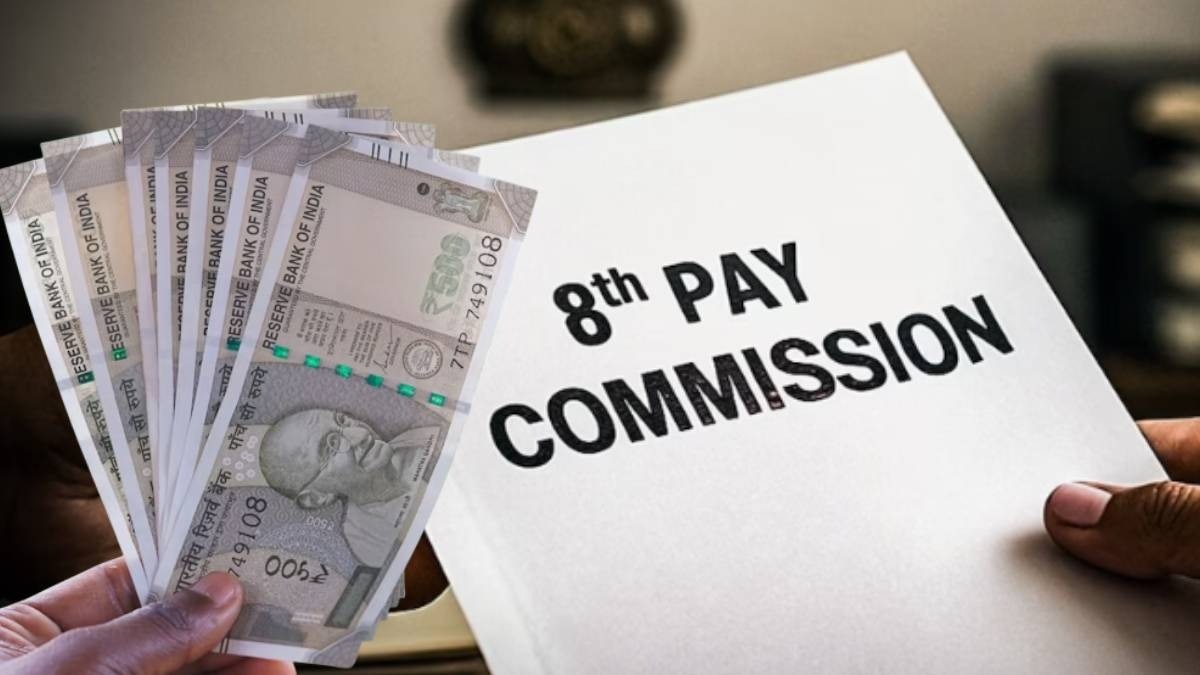
The 8th Pay Commission’s deliberations on House Rent Allowance (HRA) are gaining momentum. This article outlines how different fitment factors may reshape HRA payouts for central government employees across pay levels.
Key Takeaways (मुख्य बिंदु)
- Higher fitment factors raise both basic pay and HRA.
- Current HRA rates remain 30% for X, 20% for Y and 10% for Z cities.
- Employee unions are pushing for revised HRA to match rising housing costs.
The 8th Central Pay Commission, constituted in July 2026, is reviewing the salary structure of India’s central government workforce. A central piece of this review is the House Rent Allowance (HRA), a vital component for staff living in rented premises.
Historical Background
Previous pay commissions—first (1970), fifth (1994) and seventh (2016)—established HRA as a percentage of basic pay, with the seventh commission fixing a ceiling of 30% for X‑category cities, 20% for Y, and 10% for Z. Those percentages have remained unchanged, even as urban housing prices have surged, prompting unions to demand a fresh look.
BankBazaar CEO Adhil Shetty modeled four possible fitment factors (2, 2.1, 2.28, 2.57) to illustrate how HRA could shift across pay levels 1‑10. For instance, a Level‑1 employee earning a current basic salary of ₹18,000 would see an HRA of roughly ₹13,880 in an X‑city if a 2.57 fitment factor is applied, while a Level‑10 employee could receive about ₹43,250 under the same scenario.
"A change in fitment factor can markedly boost take‑home pay for lower‑level staff," said senior economist Dr. Rajesh Sharma.
Fitment Factor vs. HRA (Level 1)
| Fitment Factor | HRA (X‑city, Level 1) |
|---|---|
| 2.00 | ₹10,800 |
| 2.10 | ₹11,340 |
| 2.28 | ₹12,310 |
| 2.57 | ₹13,880 |
Why This Matters (इसके मायने क्या हैं)
The link between basic pay and HRA is straightforward: any increase in basic pay automatically lifts HRA because the allowance is calculated as a fixed percentage of the basic. Consequently, even if the commission retains current HRA percentages, a higher basic salary will enhance the overall monthly income of government employees, especially those burdened by soaring rent.
BozokMedia analysis shows that understanding the range of fitment‑factor scenarios equips staff with realistic expectations and equips unions with data‑driven arguments. Should the commission endorse a higher factor, the ripple effect will extend beyond individual paychecks, stimulating consumer spending and supporting broader economic growth.
Frequently Asked Questions (अक्सर पूछे जाने वाले प्रश्न)
Q1: What is a fitment factor? It is a multiplier applied to the existing basic salary to determine the revised basic pay, which in turn influences the HRA amount.
Q2: How much could HRA change after the 8th Pay Commission? With a fitment factor of 2.57, a Level‑1 employee in an X‑city could see HRA rise to about ₹13,880, while higher pay levels could experience proportionally larger increases.