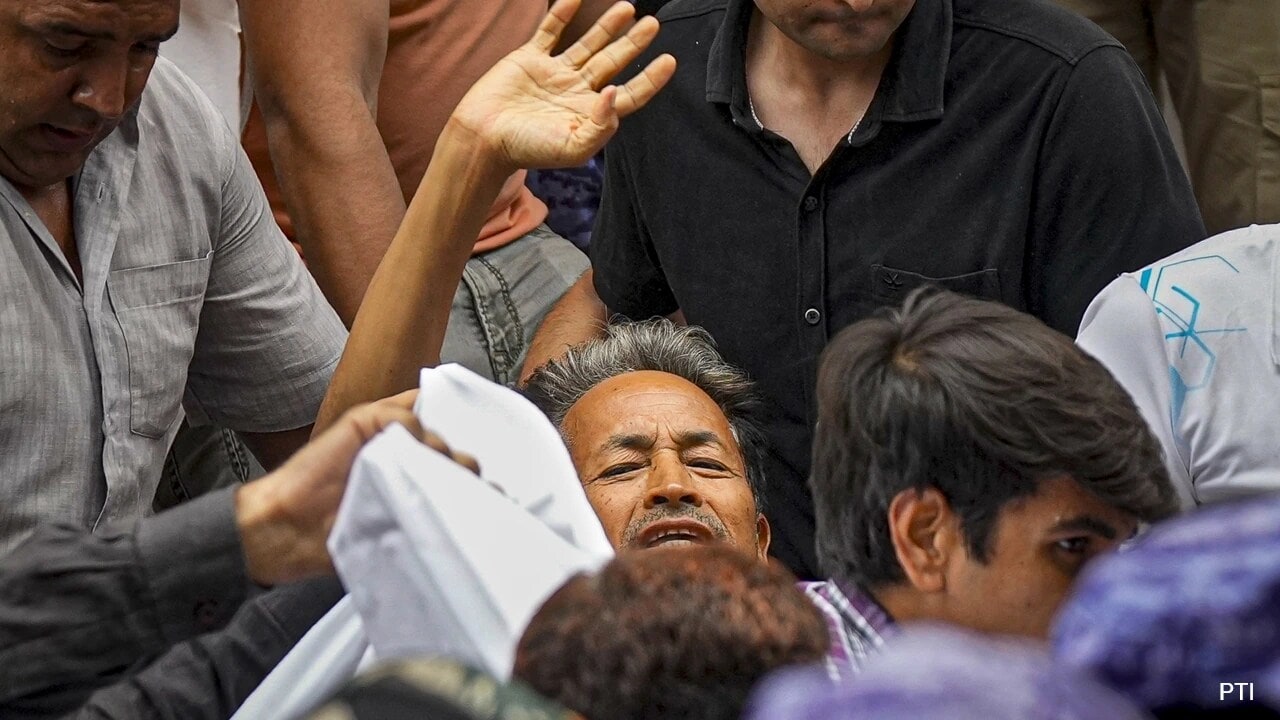
Climate activist Sonam Wangchuk and over 150 Ladakhi marchers were removed by Delhi Police from their protest site and shifted to Safdarjung Hospital. The sudden police action has sparked massive outrage and raised critical questions about democratic dissent.
Key Takeaways
- Climate activist Sonam Wangchuk and Ladakhi protesters were detained by Delhi Police at the border.
- The activists were marching to Delhi to demand Sixth Schedule status and statehood for Ladakh.
- Wangchuk's sudden removal to Safdarjung Hospital has intensified tensions between the administration and supporters.
A deep sense of anxiety and uncertainty gripped the borders of the national capital as Delhi Police executed a swift operation to detain renowned education reformer and climate activist Sonam Wangchuk along with his supporters. Eyewitnesses reported that the protesters were left completely in the dark, unaware of the impending police action. Following the detention, Wangchuk was abruptly shifted to Safdarjung Hospital, raising serious concerns among his followers.
The protest was part of the 'Delhi Chalo Padayatra', a massive foot march that commenced from Leh nearly a month ago. Over 150 people from Ladakh, led by Wangchuk, walked over 700 kilometers to demand constitutional safeguards for their fragile Himalayan ecosystem and democratic representation. The sudden crackdown has not only shocked the peaceful marchers but has also triggered nationwide condemnation from civil society groups.
Historical Background
Following the abrogation of Article 370 in August 2019, Ladakh was carved out of Jammu and Kashmir as a separate Union Territory without a legislature. While the decision was initially celebrated, the local population soon realized that without an assembly, they lacked the legislative power to protect their land, jobs, and unique cultural identity. This led to the formation of the Apex Body of Leh and Kargil Democratic Alliance, demanding statehood and inclusion in the Sixth Schedule of the Indian Constitution, which grants autonomy to tribal-majority areas.
The table below highlights the key differences between the demands of the Ladakhi protesters and the central government's current position:
| Protesters' Key Demands | Government's Stance / Current Status | |
|---|---|---|
| Inclusion of Ladakh in the Sixth Schedule of the Constitution. | The government argues that the UT structure is sufficient for rapid developmental funds. | |
| Full statehood for Ladakh with a legislative assembly. | Reluctance to grant statehood due to strategic border security concerns. | |
| Job reservation and land protection for locals. | Administrative assurances have been offered, but no concrete constitutional guarantee has been provided. |
Why This Matters
According to BozokMedia analysis, the detention of Sonam Wangchuk is not merely a local issue but a litmus test for Indian federalism and democratic dissent. Ladakh is a highly sensitive border region sharing frontiers with both China and Pakistan. Alienating the local population by suppressing peaceful protests could have serious long-term geopolitical and national security implications, as the local community acts as the first line of defense on the borders.
Furthermore, this incident highlights a growing trend of administrative high-handedness when dealing with peaceful democratic movements. Detaining a nationally respected figure like Wangchuk and placing him under medical confinement at Safdarjung Hospital reflects poorly on the government's willingness to engage in dialogue, potentially escalating tensions further in the sensitive region.
"Suppressing peaceful democratic protests and ignoring the voices of sensitive border communities risks alienating the very citizens who stand as our nation's first line of defense."
Frequently Asked Questions (FAQs)
Q1: Why was Sonam Wangchuk marching to Delhi?
Answer: He was leading a peaceful march to demand full statehood for Ladakh, constitutional safeguards under the Sixth Schedule, and environmental protection for the fragile Himalayan region.
Q2: What is the Sixth Schedule, and why is it important for Ladakh?
Answer: The Sixth Schedule of the Indian Constitution allows for the creation of Autonomous District Councils with legislative powers to protect tribal land, culture, and employment from external exploitation.