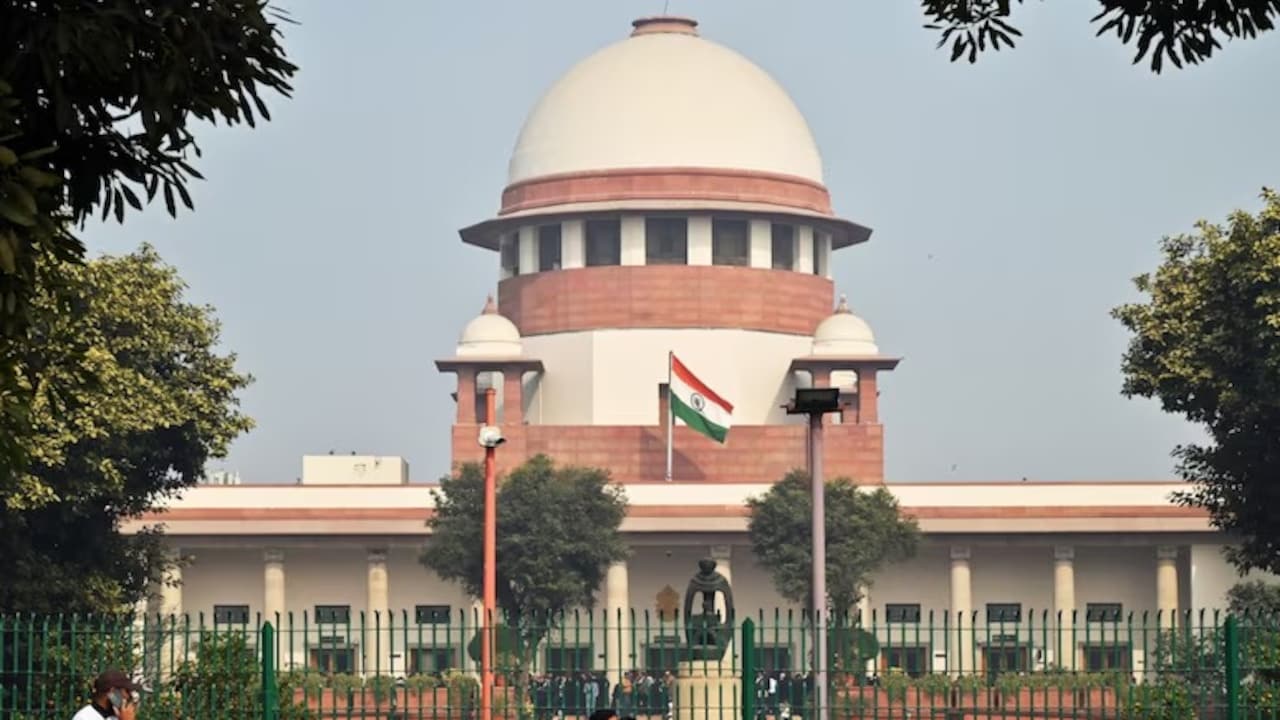
The Supreme Court has agreed to hear the central government’s challenge to the Delhi High Court’s decision that annulled the CPV services tender. The ruling could reshape how passport, visa and consular services are outsourced in India.
Key Takeaways (मुख्य बिंदु)
- Supreme Court will hear the Centre’s plea tomorrow
- Delhi High Court had struck down the CPV services tender
- The outcome will affect government contracts and foreign travelers
The apex court of India has granted the central government’s petition to review the Delhi High Court’s order that cancelled the Consular, Passport and Visa (CPV) services tender. The hearing is scheduled for tomorrow, July 20, and will focus on whether the tender process complied with statutory norms and fairness requirements.
Historical Background: In 2022, the Indian government launched a unified CPV services tender to allow private firms to manage passport, visa and consular functions for foreign nationals. The move was hailed as a step toward efficiency, but in 2023 the Delhi High Court set aside the tender, citing procedural irregularities, possible conflict‑of‑interest concerns, and national‑security risks. The decision sparked a debate among international agencies, private bidders, and civil‑society groups.
The Centre argues that the High Court misinterpreted technical aspects of the tender and that the cancellation could hamper timely services for millions of travelers. Opponents, however, stress the need for a transparent, competitive process to curb corruption and safeguard sovereign interests.
"Re‑examining the tender is not merely a legal exercise; it touches on economic efficiency and public trust," says a senior trade policy analyst.
Why This Matters (इसके मायने क्या हैं)
BozokMedia analysis shows that the Supreme Court’s verdict could set a precedent for how large‑scale public‑private partnerships are evaluated in India. If the Centre’s plea succeeds, private firms may secure the CPV contract, potentially accelerating service delivery and introducing market‑driven innovations. Conversely, upholding the High Court’s ruling would compel the government to redesign the tender with stricter safeguards, possibly attracting more credible bidders.
Economically, the CPV tender is valued at several hundred crore rupees and influences tourism, business travel, and the overall ease of doing business. Socially, a faster, reliable visa process enhances India’s global image and facilitates smoother cross‑border interactions, which are vital for long‑term growth.
| Aspect | High Court Verdict | Centre’s Proposal (Proposed) |
|---|---|---|
| Tender Process | Cancelled – deemed irregular | Re‑validated with transparent criteria |
| Service Provider | Government monopoly | Open competition for private firms |
| Oversight | Limited under existing protocols | Enhanced monitoring, regular audits |
Frequently Asked Questions (अक्सर पूछे जाने वाले प्रश्न)
When is the Supreme Court hearing scheduled? The hearing is set for July 20, where both sides will present their arguments before the bench.
What happens if the Centre’s plea is accepted? The tender could be reinstated, allowing private companies to bid for the CPV services contract, potentially reshaping the delivery model.