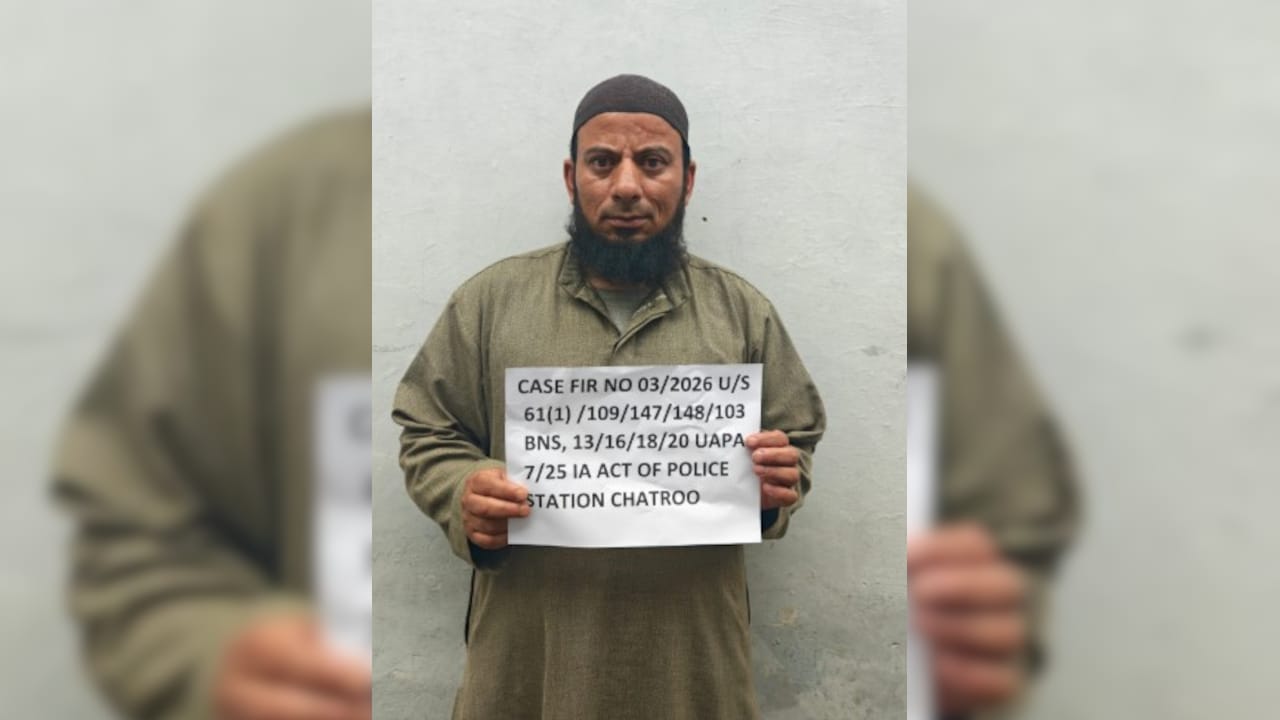
Jammu and Kashmir Police have apprehended a local mosque cleric for providing shelter and logistical support to Pakistani terrorists in the Chatroo area.
Key Takeaways
- J&K Police conducted a major operation against the terror ecosystem in the Kishtwar hinterland.
- A local mosque cleric was arrested for providing safe passage and logistics to Pakistani terrorists.
- Investigations are ongoing to identify other local collaborators in the network.
In a significant breakthrough against the terror ecosystem in the Jammu division, the Jammu and Kashmir Police have arrested a local mosque cleric for allegedly providing safe shelter and logistical assistance to Pakistani terrorists operating in the Chatroo area of Kishtwar. This operation marks a decisive step in dismantling the support structures that sustain cross-border militancy.
According to official reports, the arrested individual played a crucial role in facilitating the movement and sustenance of terrorists. By providing food, shelter, and essential supplies, such individuals act as 'overground workers' (OGWs), enabling terrorists to evade detection by security forces. The police have stated that the investigation is progressing on multiple fronts to uncover the full extent of this network.
Why This Matters (इसके मायने क्या हैं)
BozokMedia analysis shows that the arrest highlights a shift in terrorist tactics, where militants increasingly rely on local facilitators to maintain a presence in difficult terrains. The ability of terrorists to find refuge in local religious or social structures poses a complex challenge for intelligence agencies, as it requires a delicate balance between community engagement and counter-terrorism operations.
Furthermore, this crackdown is vital for the stability of the region. By targeting the logistical backbone of terror groups, security forces are effectively reducing the operational capacity of militants in the Kishtwar hinterland. This disruption is essential to preventing large-scale attacks and ensuring the safety of the local populace and security personnel alike.
Dismantling the local logistics chain is as critical to national security as neutralizing the terrorists themselves.
Historical Background
The Kishtwar district, characterized by its dense forests and rugged mountainous terrain, has historically been a sensitive zone for insurgent activities. The difficult topography provides natural cover for militants attempting to infiltrate or hide within the valley. Over the decades, security forces have faced the persistent challenge of 'hybrid terrorism,' where individuals with no direct militant training provide essential support to active terrorists, making them harder to track through traditional surveillance.
| Aspect | Terrorist Strategy | Law Enforcement Response |
|---|---|---|
| Shelter | Utilizing local structures for concealment | Intelligence-led raids and cordons |
| Logistics | Local procurement of food and supplies | Tracking and arresting facilitators (OGWs) |
Frequently Asked Questions (अक्सर पूछे जाने वाले प्रश्न)
Question 1: What specific roles did the cleric play?
Answer: The cleric is accused of providing safe shelter and logistical support, including food and essential supplies, to Pakistani terrorists.
Question 2: Is the threat in Kishtwar neutralized?
Answer: While this is a major success, the police investigation is ongoing to ensure that all linked sleeper cells and facilitators are identified and apprehended.