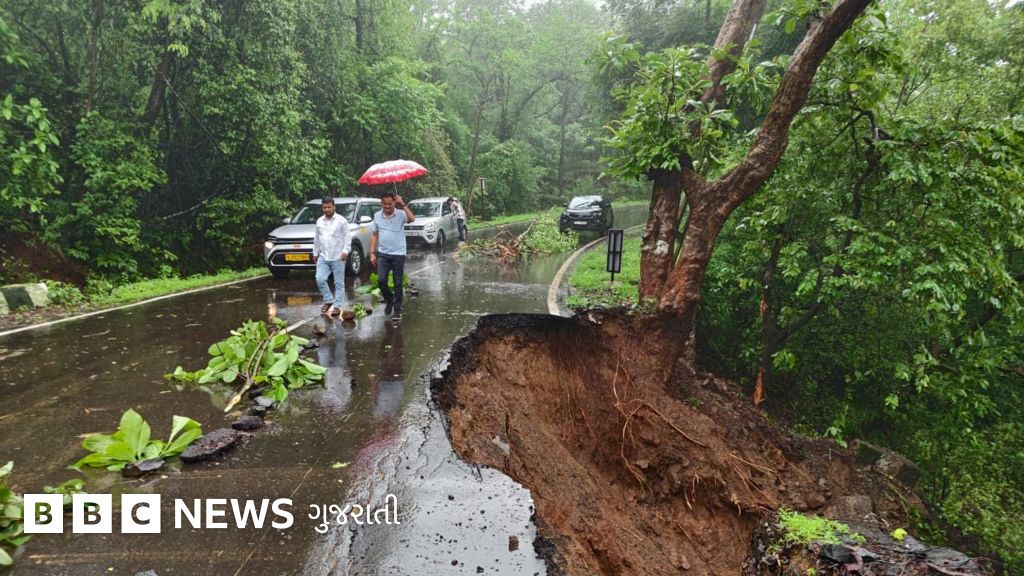
Gujarat is witnessing a stark climatic divide as heavy rains trigger floods in South Gujarat, while regions like Kutch and Saurashtra face a worrying deficit in rainfall.
Key Takeaways
- South Gujarat districts like Valsad and Navsari are on Red/Orange alert due to torrential rains.
- Kutch and Saurashtra report significant rainfall deficits, impacting sowing and fodder.
- Valsad's Kaprada recorded 15.63 inches of rain in 24 hours, the highest in the state.
- Mass evacuations are underway in Navsari due to rising river levels.
The monsoon in Gujarat has effectively split the state into two distinct climatic zones. While the southern belt is struggling to cope with deluge and rising water levels, the western and northern parts are grappling with a significant rainfall deficit that threatens the agricultural backbone of the region.
In South Gujarat, the situation is critical. Valsad's Kaprada taluka recorded a staggering 15.63 inches of rainfall in a 24-hour period. Navsari is facing a crisis as the Ambika and Kaveri rivers have crossed danger levels, forcing authorities to relocate nearly 190 people to safer grounds. Schools have been closed, and several rural roads remain submerged.
Why This Matters (इसके मायने क्या हैं)
BozokMedia analysis shows that this extreme weather volatility poses a dual threat to Gujarat's economy. The flooding in the south causes immediate destruction of infrastructure and loss of life, whereas the rainfall deficit in the west creates a long-term crisis in food security and the dairy industry.
For the common citizen, this means fluctuating commodity prices and increased vulnerability to natural disasters. The economic disparity caused by unequal monsoon distribution can lead to migration from drought-hit areas to flood-prone urban centers, putting additional pressure on city resources.
"The extreme spatial variation in rainfall is a clear indicator of shifting weather patterns that demand more resilient agricultural strategies."
Historical Background
Historically, Gujarat's economy has been deeply intertwined with its seasonal monsoon. The state's diverse topography—from the arid Rann of Kutch to the fertile plains of South Gujarat—means that monsoon patterns are never uniform. Over the years, the state has developed robust irrigation systems, but the increasing frequency of 'extreme weather events' (both floods and droughts) is testing the limits of these traditional systems.
| Region | Rainfall Condition | Primary Concern |
|---|---|---|
| South Gujarat | Excessive | Flooding, Infrastructure Damage |
| Kutch & Saurashtra | Deficit | Crop Failure, Fodder Shortage |
| North Gujarat | Below Average | Delayed Sowing |
Frequently Asked Questions (अक्सर पूछे जाने वाले प्रश्न)
Q1: Which districts are under heavy rain alerts?
A: Navsari and Valsad are under Red Alert, while Surat, Tapi, and Dang are under Orange Alert.
Q2: How is the drought affecting the livestock industry?
A: Low rainfall in Saurashtra and Kutch has led to a shortage of fodder, making cattle rearing difficult for local farmers.