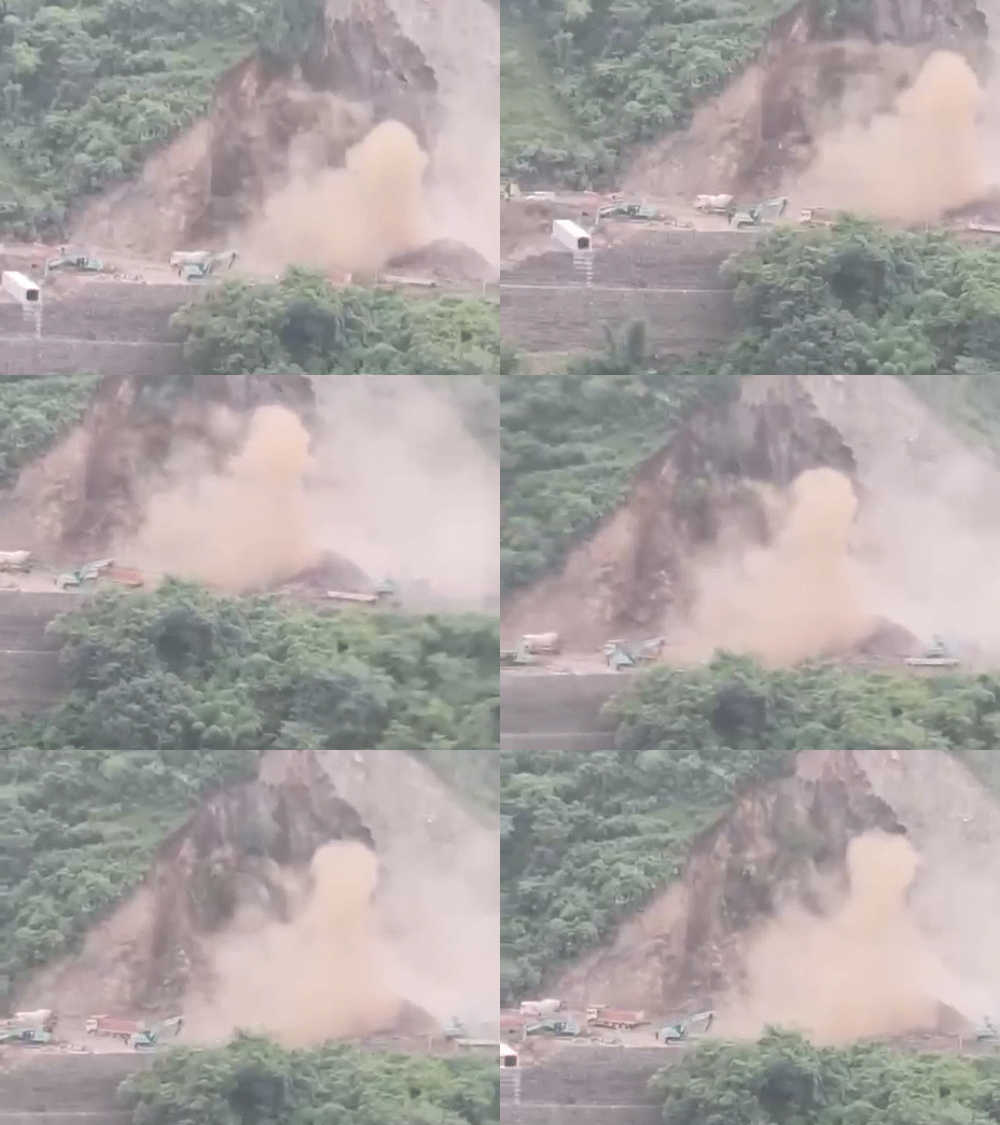
A major landslide occurred on the Bilaspur-Solan Fourlane in Himachal Pradesh. Viral footage shows debris falling near moving vehicles, sparking outrage over improper hill cutting methods.
Key Takeaways
- Major landslide reported on the Bilaspur-Solan Fourlane, Himachal Pradesh.
- Viral video shows debris falling while vehicles were actively traversing the highway.
- Locals allege unscientific 'vertical cutting' of mountains by construction firms.
- No casualties reported, but safety concerns for commuters are at an all-time high.
A terrifying incident has unfolded at the Bilaspur-Solan border in Himachal Pradesh, where a massive portion of a hill collapsed onto the newly constructed fourlane highway. The incident, which occurred on Tuesday evening, was captured in a live video that has since gone viral on social media. The footage reveals a chilling scene where debris was cascading down the slope while vehicles were driving directly beneath the falling rocks, narrowly avoiding a catastrophe.
The incident has triggered intense debate regarding the methods used in highway construction. Local residents have accused the construction companies of employing unscientific and excessive cutting techniques. According to locals, the mountains are being cut vertically rather than following the natural slope, significantly weakening the structural integrity of the hills and making them highly susceptible to landslides during the monsoon.
Why This Matters (इसके मायने क्या हैं)
BozokMedia analysis shows that this incident is a stark warning of the conflict between rapid infrastructure development and environmental preservation. In fragile Himalayan ecosystems, ignoring geological stability in favor of speed and cost-cutting can lead to devastating consequences for both commuters and the local economy.
When highways are constructed through improper mountain cutting, it doesn't just pose an immediate threat to life; it alters the entire landscape's drainage and stability. For a state like Himachal Pradesh, which relies heavily on tourism, such recurring geological instabilities could eventually cripple the regional economy and make travel an unpredictable risk.
"Improper slope management in mountainous terrain is a ticking time bomb for highway safety."
Historical Background
The Himalayan region is geologically young and highly active, making it prone to natural seismic and landslide activities. However, in recent years, the frequency of landslides has increased significantly due to anthropogenic factors. Large-scale infrastructure projects, including the expansion of National Highways, have often bypassed rigorous geological assessments, leading to increased soil instability and frequent road blockages across Himachal Pradesh.
| Feature | Scientific Engineering | Current Unscientific Practice |
|---|---|---|
| Slope Profile | Gradual/Slope-based | Vertical/Steep Cutting |
| Safety Measures | Retaining walls & Rock bolting | Minimal protection |
| Environmental Impact | Controlled & Sustainable | High risk of landslides |
Frequently Asked Questions (अक्सर पूछे जाने वाले प्रश्न)
Q1: Were there any casualties in this landslide?
A: Fortunately, no injuries or fatalities have been reported following this specific incident.
Q2: What are the residents demanding?
A: Local residents are demanding strict adherence to safety protocols and more cautious construction methods in sensitive zones.


