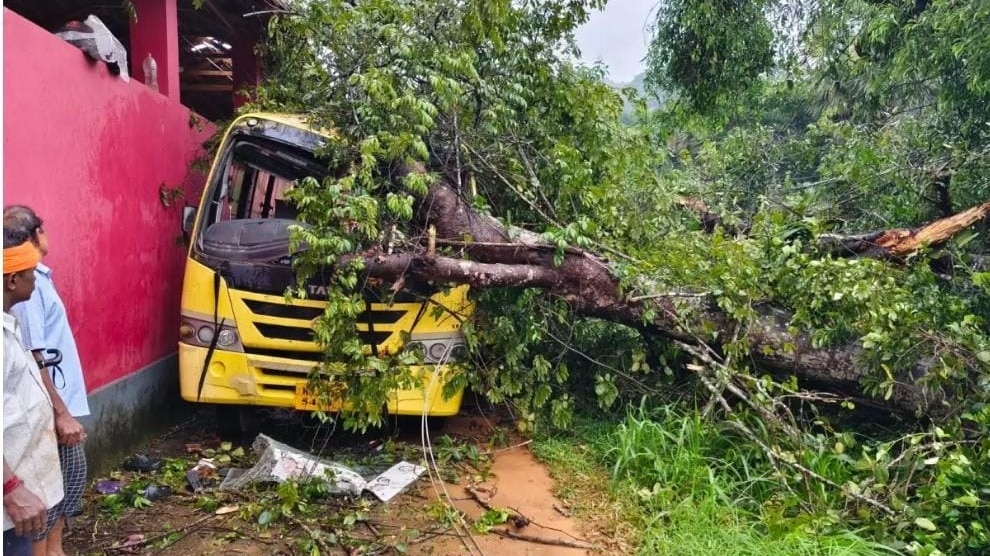
A massive tree toppled onto a school bus in Karnataka's Bantwal taluk, killing a six‑year‑old girl and seriously injuring four other students. Authorities have launched an investigation while the injured are being treated at nearby hospitals.
Key Takeaways
- Tree fell on a school bus in Bantwal, Mangalore
- 6‑year‑old student Chiranvi died
- Four other pupils sustained serious injuries
On the evening of July 22, 2026, a 24‑seat school bus heading home from classes in the Kletti area of Bantwal taluk was struck by a large uprooted tree. The impact threw the vehicle off the road, crushing the seats where the children were seated. Six‑year‑old Chiranvi, a UG‑K student at Shri Ram Vidyakendra, suffered fatal injuries despite emergency medical efforts. Four additional students were left with life‑threatening wounds and were rushed to the nearest medical facility.
The local police arrived promptly, secured the scene, and began a forensic investigation. Injured children received immediate first‑aid before being transferred to a district hospital for advanced care. The deceased child's family expressed deep grief, while other parents demanded swift accountability and support. Both the forest department and traffic police have been called in to assess the cause and prevent recurrence.
Historical Background: School‑bus accidents remain a persistent challenge in India. According to the National Crime Records Bureau (NCRB) 2023 report, over 1,200 school‑bus incidents were recorded nationwide, with more than 15% resulting in severe injuries or fatalities. Natural factors such as falling trees, especially during monsoon‑laden periods, account for a significant share of these tragedies, underscoring the need for rigorous route inspections and infrastructure upgrades.
Authorities are now tasked with examining the tree’s health, recent weather patterns, and road‑maintenance records. This incident adds pressure on policymakers to tighten safety protocols for school transport, enforce stricter vegetation management near highways, and allocate resources for regular safety drills.
Why This Matters (इसके मायने क्या हैं)
BozokMedia analysis shows that such accidents highlight glaring gaps in rural infrastructure and emergency preparedness. When school buses navigate poorly maintained roads and unpredictable natural hazards, the safety of children is compromised, calling for immediate policy interventions at both state and central levels.
For ordinary citizens, the tragedy serves as a stark reminder to scrutinize school‑bus routes, demand transparent safety audits, and press local authorities for rapid remedial actions. A proactive community response can drive systemic change, reducing the likelihood of similar incidents in the future.
"Ensuring school‑transport safety must be a non‑negotiable priority, not an afterthought," said Dr. Anita Sharma, road‑safety specialist.
Frequently Asked Questions (अक्सर पूछे जाने वाले प्रश्न)
Question 1: Who will be held responsible for the accident?
Answer: While investigations are ongoing, both the school management and local authorities could share liability for ensuring safe transport conditions.
Question 2: What measures can prevent such incidents?
Answer: Regular route inspections, strict tree‑removal policies near roads, and mandatory safety certifications for school buses are essential preventive steps.