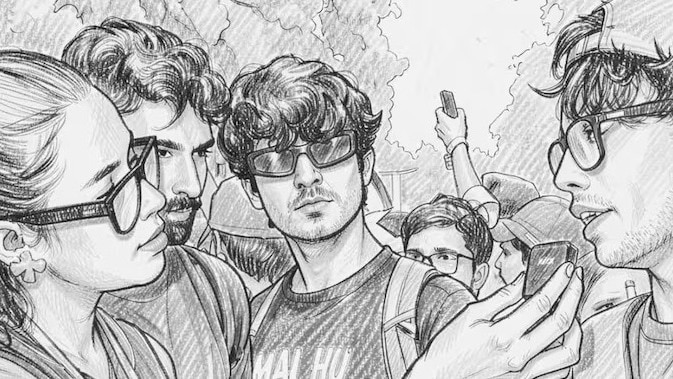
A harrowing experience by a female reporter during the CJP protest at Jantar Mantar has highlighted the urgent need for better crowd management and women's safety in public demonstrations.
Key Takeaways
- Female journalist harassed during CJP 'Chalo Sansad March'.
- Lack of effective crowd management at Jantar Mantar.
- Need for trained volunteers to ensure women's safety.
- Public protests must be inclusive and secure for all genders.
Protests are the lifeblood of democracy, but they must not come at the cost of individual safety. While covering the CJP (Cockroach Janata Party) 'Chalo Sansad March' at Jantar Mantar, a female reporter faced an incident that underscores a grim reality: the vulnerability of women in massive public gatherings.
The protest began peacefully with students advocating for educational reforms. However, as the sun set and the crowd swelled to an unmanageable size, the atmosphere shifted. The reporter noted that it became increasingly difficult to distinguish between legitimate protesters and opportunistic individuals blending into the chaos.
Why This Matters
BozokMedia analysis shows that as political movements gain momentum, the focus often shifts solely to the core agenda, leaving the safety of participants and journalists as a secondary concern. Uncontrolled crowds create 'blind spots' where harassment can occur unnoticed, making structured crowd management a democratic necessity rather than an option.
Protest is the strength of democracy, but women's safety is an equally fundamental pillar of it.
The reporter shared a traumatic experience of being inappropriately touched amidst the surging crowd. She was not alone; a colleague also reported similar harassment. This highlights a recurring pattern where women in public spaces are forced to fend for themselves in the absence of dedicated security protocols.
Historical Background
Jantar Mantar has been the epicenter of Indian dissent for decades. Historically, while it has hosted some of the nation's most significant movements, the evolution of mass gatherings into highly dense, unorganized mobs has necessitated a shift from simple police presence to sophisticated, gender-sensitive crowd management techniques.
Frequently Asked Questions
1. What was the primary issue reported during the CJP protest?
While the protest focused on education, the primary safety issue reported was the harassment of women in the dense crowd.
2. How can organizers prevent such incidents?
Organizers can implement gender-sensitive security, deploy trained female volunteers, and coordinate closely with local law enforcement for better perimeter control.