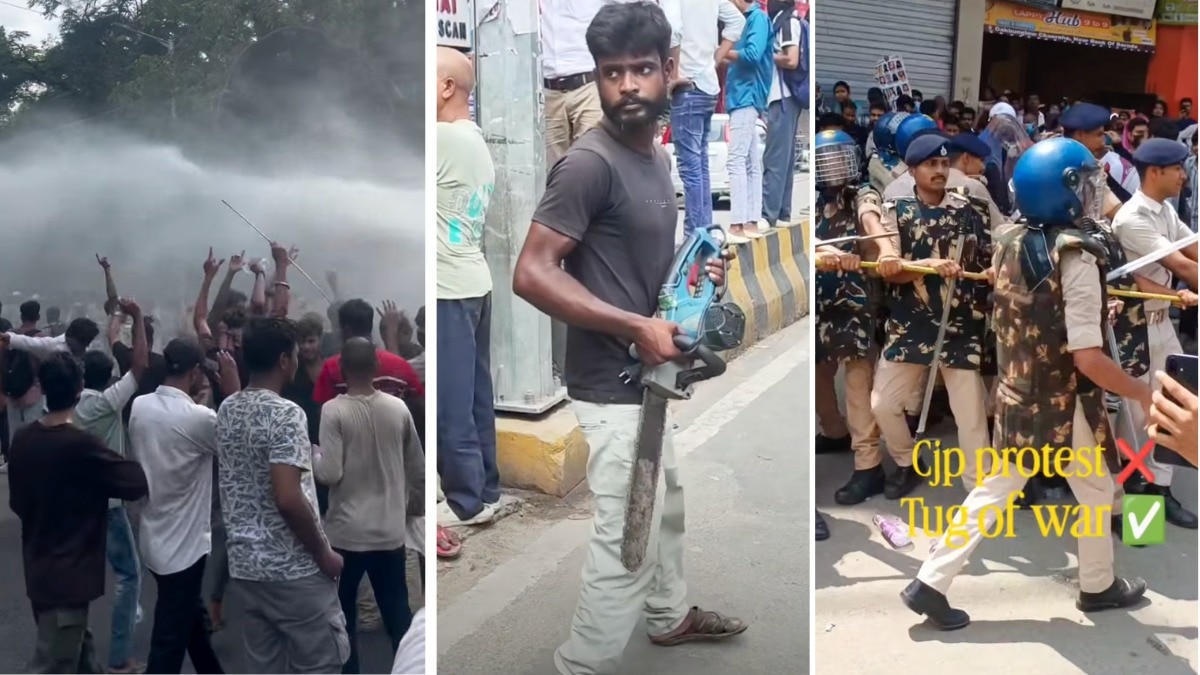
A viral video from Patna shows a surreal moment where students protesting against the NEET paper leak requested police to use water cannons to beat the heat. However, the festive mood quickly turned into widespread violence across Bihar.
Key Takeaways
- Massive protests in Bihar against the alleged NEET paper leak.
- In Patna, students requested police to use water cannons for relief from the heat.
- Protests escalated into violence in districts like Jehanabad, Darbhanga, and Katihar.
- Protesters are demanding the resignation of Union Education Minister Dharmendra Pradhan.
A surreal and viral video has emerged from Patna, Bihar, capturing a bizarre moment during the ongoing student protests against the NEET paper leak. Amidst the intense heat and rising tension, students at the Dak Bungalow crossing were seen requesting police officers to deploy water cannons, not to disperse them, but to provide relief from the scorching sun.
The footage shows that as the water cannons were activated, the atmosphere momentarily shifted from tension to celebration. Some students began dancing to music amidst the water sprays, and even the police personnel were seen smiling at the unexpected turn of events. This 'swag' of Bihar became an instant sensation on social media.
Why This Matters
BozokMedia analysis shows that while these moments of levity suggest a unique rapport between protesters and law enforcement in certain instances, they often mask a deep-seated systemic frustration. The transition from a 'fun' protest to violent clashes within 24 hours highlights the volatility of student-led movements in the region.
The duality of Bihar's protest culture—ranging from celebratory defiance to intense civil unrest—makes it one of the most unpredictable political landscapes in India.
However, the festive mood was short-lived. Within a day, the movement turned violent in several districts, including Jehanabad, Darbhanga, Katihar, and Begusarai. Reports of stone-pelting, aerial firing by police, and lathi charges surfaced, leading to injuries among both students and police officers. Over 100 protesters have reportedly been arrested in connection with the unrest.
Historical Background: Bihar has a storied history of student activism. From the ticket fare protests of 1955 that required Prime Minister Jawaharlal Nehru's intervention to the massive 'Total Revolution' led by Jayaprakash Narayan in 1974, students in Bihar have always been at the forefront of political change.
Frequently Asked Questions
Q1: What is the primary cause of the protests?
A: Students are protesting against the alleged NEET exam paper leak and are demanding the resignation of the Union Education Minister.
Q2: Which districts reported violence?
A: Violent clashes and stone-pelting were reported in Jehanabad, Darbhanga, Katihar, and Begusarai.