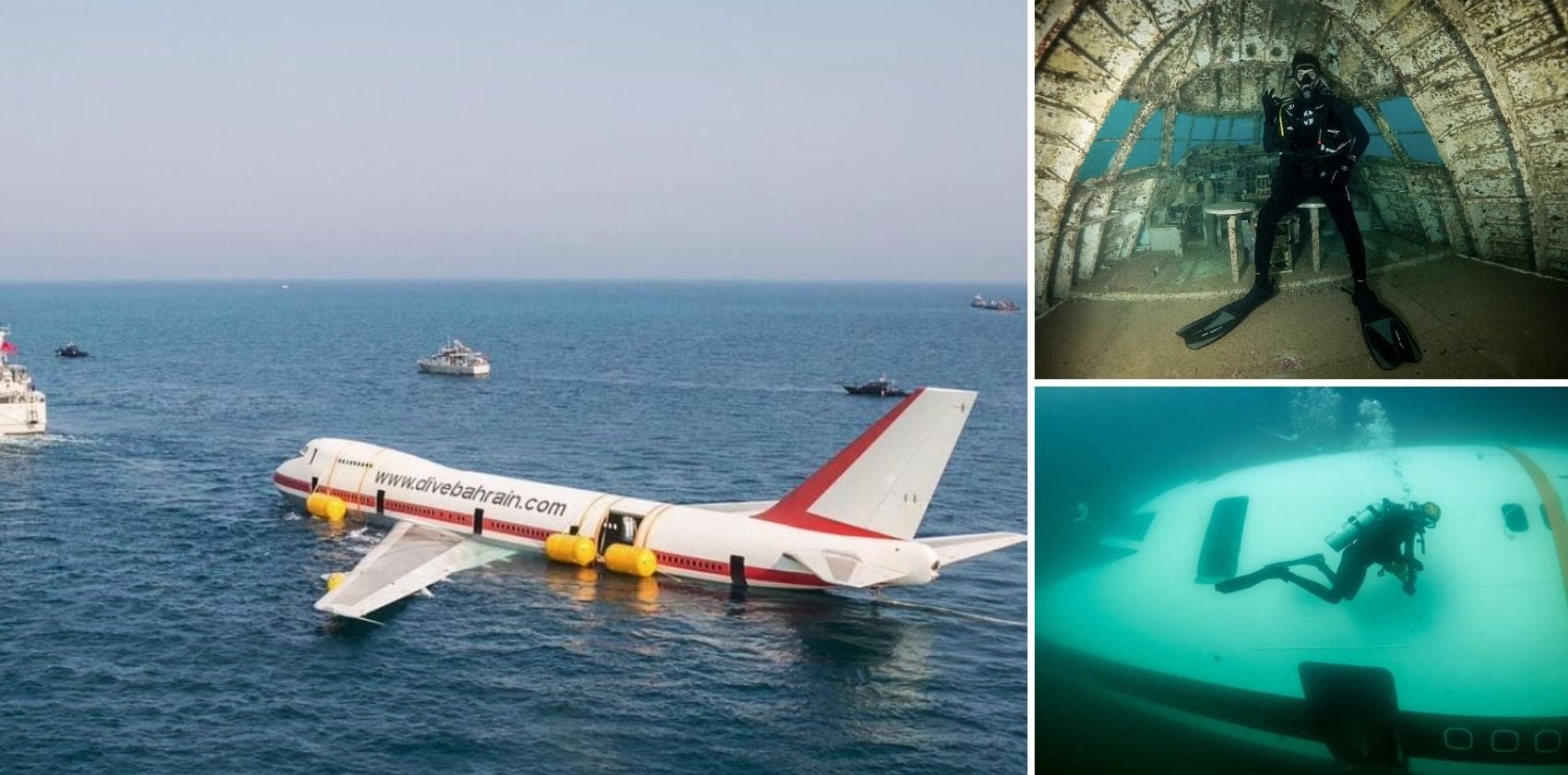
Bahrain purchased a retired Malaysia Airlines Boeing 747 for just $100,000, spent seven months stripping it of all hazardous components, and deliberately sank it to create the world’s biggest artificial reef. The submerged jet now draws divers from across the globe as the centerpiece of Dive Bahrain.
Key Takeaways
- Bahrain bought the 747 for $100,000
- Seven months of meticulous removal of fuel lines, wiring, plastics
- Jet now rests 20‑24 m below sea level as the largest intentional aircraft reef
Overview
Bahrain transformed a retired Malaysia Airlines Boeing 747‑236B into a safe, environmentally‑friendly artificial reef. Officially inaugurated on 6 September 2019, the aircraft now anchors Dive Bahrain, a 100,000‑square‑meter underwater theme park that attracts divers worldwide.
Historical Background
Serial number 22442 was originally built for a British Airways order but entered service with Malaysia Airlines as 9M‑MHJ on 8 April 1982. After a freight career with MASkargo, Focus Air Cargo, and Air Atlanta Icelandic, it was retired in May 2013 and stored in Fujairah, UAE, where Bahrain later acquired it.
Preparation & Conversion
Following the $100,000 purchase, specialists spent roughly eight months removing every fuel, hydraulic, pneumatic, wiring, insulation, plastic, rubber and adhesive component that could pollute the Gulf. Each nut and bolt was cleaned of oil residue and re‑installed to meet strict artificial‑reef standards.
Sinking Operation
The aircraft’s wings were detached for road transport from Fujairah Airport to the port, then re‑attached before a 20‑hour tow to a site 18 miles north of the Amwaj Islands. Using controlled deflation, the 70‑meter jet was gently lowered over two days, now resting nose‑up at 20‑24 m depth for easier access by novice divers.
Beyond the Jet
Dive Bahrain also features a 900‑square‑meter replica of a traditional Bahraini pearl merchant’s house, sail‑shaped structures, reef sculptures and coral‑nursery experiments, creating both a tourist magnet and a living laboratory for marine research.
Why This Matters
BozokMedia analysis shows that converting retired aircraft into artificial reefs sets a new benchmark for sustainable tourism, turning costly de‑commissioning into a revenue‑generating eco‑attraction while supporting marine biodiversity.
“Projects like this not only protect the environment but also unlock new economic opportunities for coastal nations,” says marine ecologist Dr. Lina Patel.
Frequently Asked Questions
Q1: Do divers need a special certification to explore the 747?
A: Yes, only certified scuba divers are permitted to dive the site.
Q2: What was the total cost of the project?
A: Including purchase, cleaning, transport and sinking, the project cost roughly $3 million.