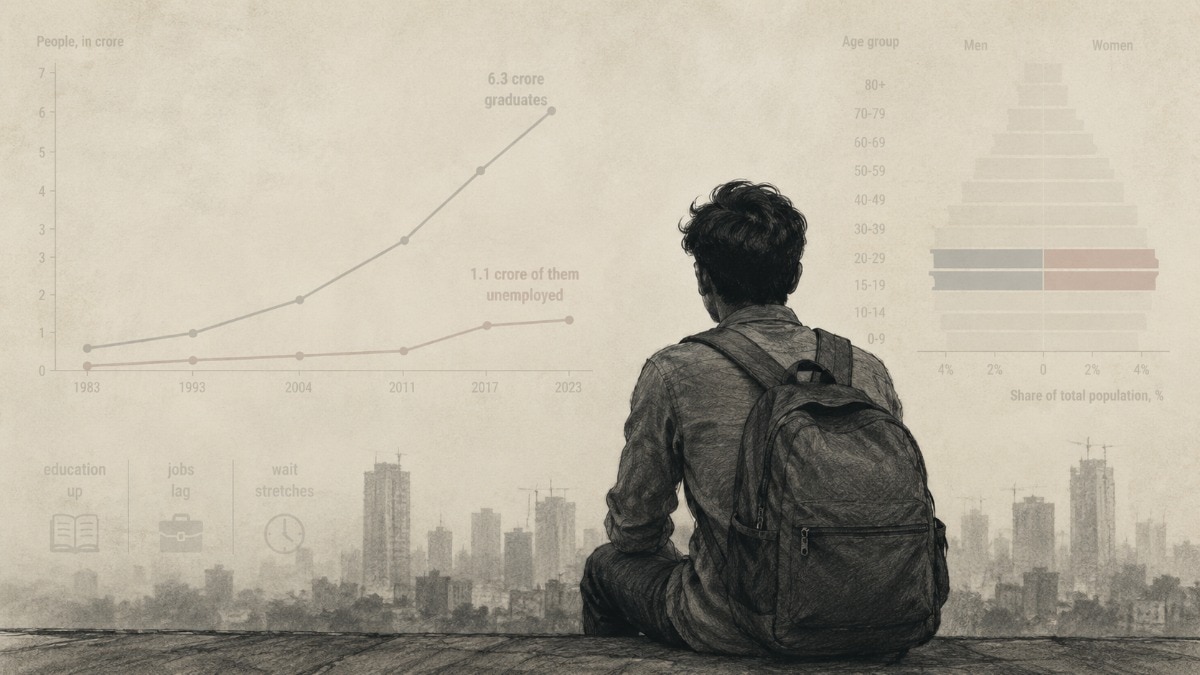
India has produced 13 times more graduates since 1983, yet the unemployment rate among them has barely moved. Today, two out of three unemployed young Indians hold a degree, highlighting a stark mismatch between higher education output and quality jobs.
Key Takeaways
- 6.3 crore graduates aged 20‑29, but 1.1 crore remain unemployed.
- Unemployment for ages 25‑29 rose from 12.2% to 20%.
- Female graduate unemployment hits 36.6% nationally, nearly double that of men.
Overview
The 2026 State of Working India report by Azim Premji University reveals that the number of graduates has surged from 5 million in 1983 to 63 million today, while unemployed graduates have jumped from 0.7 million to 11 million.
Historical Background
In 1983, graduate unemployment for the 25‑29 age group stood at 12.2%. Four decades later, it has almost doubled to 20%, indicating that the expansion of higher education has outpaced the creation of suitable jobs.
State‑wise Disparities
Graduate men’s unemployment ranges from 8.8% in Delhi to 40.3% in Odisha. For women, the figure spikes to 73.5% in Jammu & Kashmir, while states like Maharashtra, Karnataka and West Bengal show lower rates for women than men.
Why This Matters
BozokMedia analysis shows that the widening gap between graduate supply and quality jobs threatens India’s demographic dividend, turning it into a potential development liability if not addressed swiftly.
"Without aligned skill‑training and industry‑focused curricula, the surge in graduates will not translate into meaningful employment," says economist Dr. Rajat Singh.
Frequently Asked Questions
Q1: Does a degree still command a salary premium?
A: Yes, graduates earn roughly twice as much as non‑graduates at entry, though the premium is narrowing.
Q2: What is the government doing to address this?
A: Prime Minister Narendra Modi has urged states to focus on education, skilling, and capacity‑building, but implementation gaps remain.