Catastrophic flooding in Assam has wreaked havoc on both human settlements and wildlife habitats. Heartbreaking images reveal the struggle to save livestock and the tragic loss of rare rhinoceroses.
Key Takeaways
- Rare one-horned rhinoceroses found dead due to flooding in national parks.
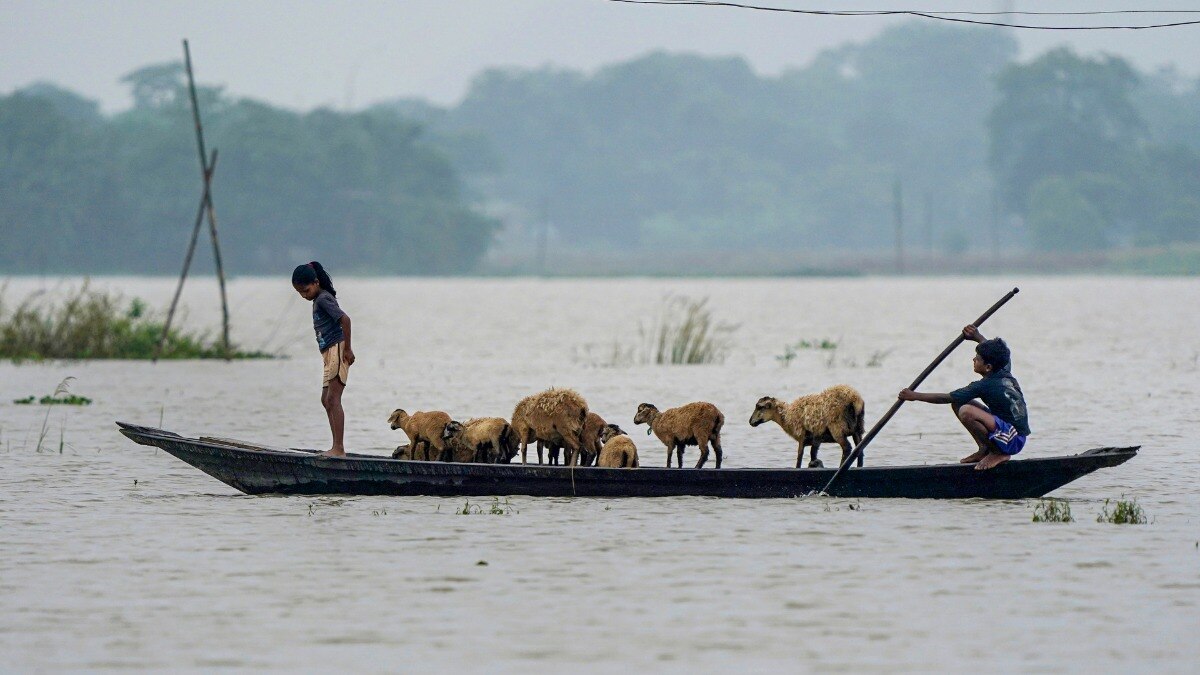
- Villagers struggling to rescue livestock and essential household belongings using makeshift rafts.
- Complete disruption of transportation as roads remain submerged under deep water.
- Humanitarian crisis intensifies as relief materials are distributed amidst widespread destruction.
The monsoon fury in Assam has unleashed a wave of devastation, leaving behind a trail of destruction that spans across human settlements and wildlife sanctuaries. Heartbreaking visual evidence shows the tragic death of a one-horned rhinoceros, a symbol of the region's biodiversity, highlighting the lethal impact of rising water levels on endangered species.
For the local population, the struggle is nothing short of a battle for survival. As floodwaters inundate homes, villagers are seen wading through chest-deep water to salvage their meager possessions. The sight of cattle—cows and buffaloes—struggling to keep their heads above water while being guided by desperate owners, paints a grim picture of the economic toll on rural families.
Why This Matters
BozokMedia analysis shows that the recurring nature of these floods in Assam is creating a cycle of poverty and ecological instability. The loss of livestock directly hits the livelihood of small-scale farmers, while the death of iconic wildlife damages the delicate balance of the ecosystem and the state's tourism economy.
The intensifying flood patterns in Assam represent a critical intersection of climate change and wildlife conservation challenges.
Infrastructure has been completely crippled. With roads submerged, bamboo boats have become the only lifeline for transportation. Aerial views reveal a landscape transformed into a vast expanse of water, where villages appear as isolated islands amidst the deluge.
Frequently Asked Questions
1. What is causing the severe flooding in Assam?
Heavy monsoon rainfall and the swelling of the Brahmaputra river are the primary drivers of the floods.
2. How are people moving around during the floods?
Due to submerged roads, people are primarily relying on boats and temporary bamboo rafts for movement and rescue.