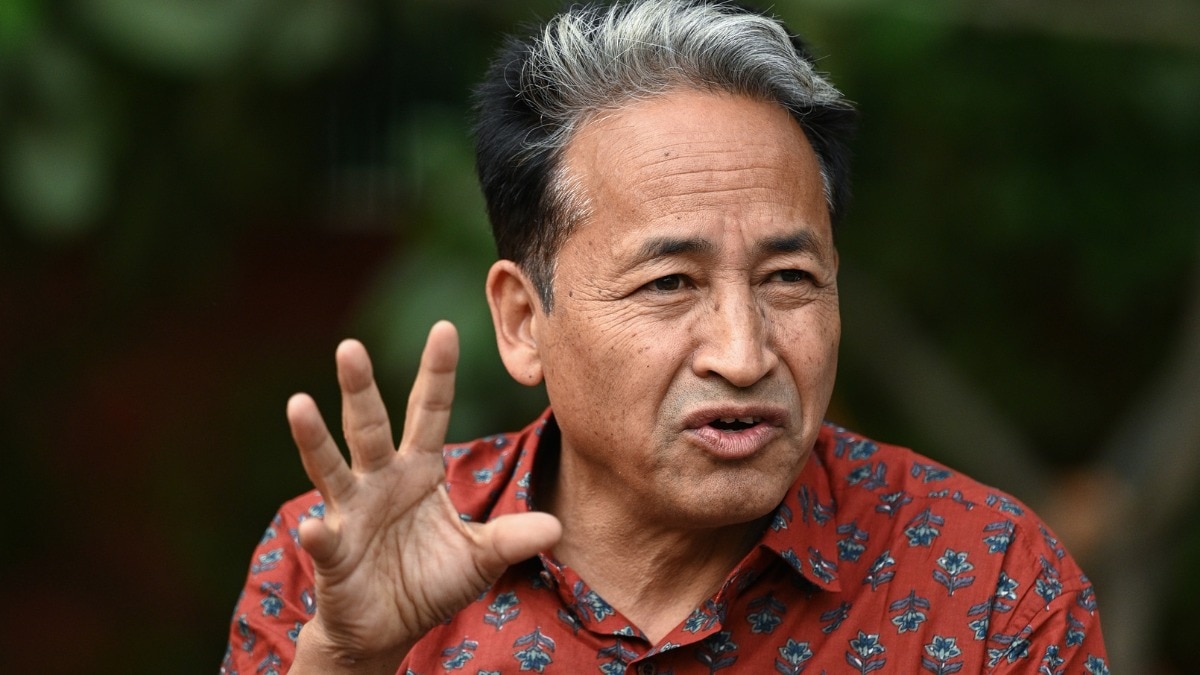
Returning from Kashmir, activist Sonam Wangchuk has urged the government to honor written promises made during his hunger strike and called for compensation for families of students who committed suicide.
Key Takeaways
- Sonam Wangchuk demanded the fulfillment of written promises made by the government during his fast.
- He urged that no legal action be taken against protesting students.
- He called for compensation for the families of students who committed suicide.
- Wangchuk criticized blind partisanship, urging people to praise good work regardless of political affiliation.
Prominent Ladakhi activist and innovator Sonam Wangchuk has returned to his village after his journey from Kashmir. Seated by the banks of the Indus River, he released a poignant video message addressed to both the government and the citizens of India, emphasizing accountability and impartiality.
Demands for Justice and Accountability
In his address, Wangchuk reminded the central government of the written commitments made during the negotiations to end his hunger strike. He insisted that these promises must be honored without delay. Furthermore, he made a strong plea against any legal repercussions for the students who participated in the protests, stressing that the youth should not be penalized for demanding their rights.
Why This Matters
BozokMedia analysis shows that Wangchuk's stance is a critical litmus test for the government's commitment to the Ladakh region. His demand for compensation for the families of students who lost their lives to suicide highlights the deep emotional and social distress currently permeating the Himalayan region. The resolution of these promises is vital to maintaining social harmony in Ladakh.
'Wrong should be called wrong, but good work must be appreciated; we shouldn't become blind followers of any single side.'
Addressing recent backlash, Wangchuk defended his praise for the Indian Railways' engineering feat in reaching Kashmir. He pointed out that after being criticized for 'supporting the government,' he should be allowed to appreciate technical excellence. He compared this to the pride felt for ISRO, stating that engineering achievements belong to the nation, not a political party.
Historical Background
The demand for inclusion under the Sixth Schedule of the Indian Constitution has been a central pillar of Ladakh's recent protests. Led by figures like Wangchuk, the movement seeks to protect the fragile ecology and cultural identity of the region through constitutional safeguards and greater autonomy.
Frequently Asked Questions
1. What are Sonam Wangchuk's primary demands?
His primary demands include fulfilling written government promises, ensuring no legal action against student protesters, and providing compensation to the families of deceased students.
2. Why did Wangchuk defend the Indian Railways?
He defended his praise for the railway connectivity in Kashmir, arguing that engineering achievements should be celebrated for their merit rather than being viewed through a political lens.

