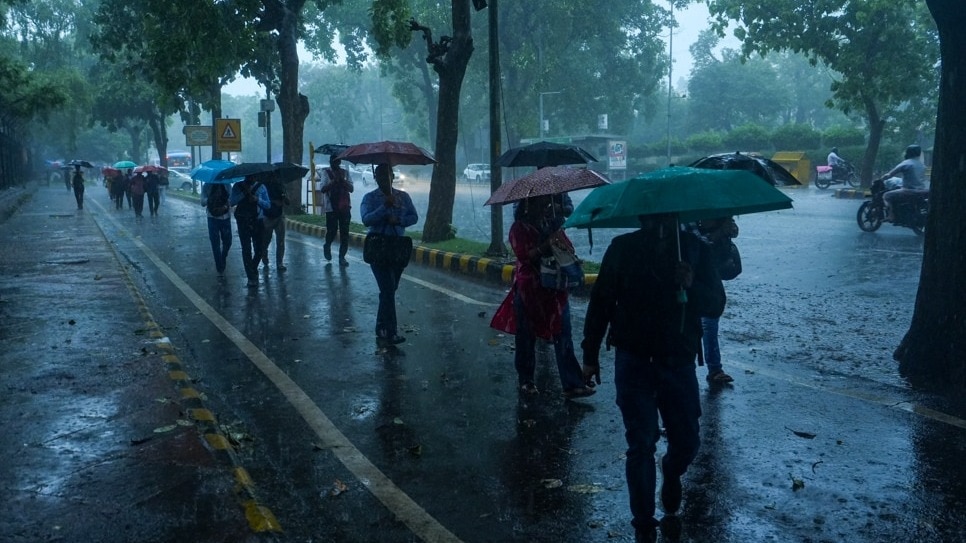
Torrential rains in Delhi on Thursday led to widespread waterlogging and severe traffic congestion across the city. While the downpour provided relief from humidity, it brought the capital's movement to a near standstill.
Key Takeaways
- Delhi experienced its wettest day of August so far this year.
- Major areas like Sangam Vihar, ITO, and Rohtak Road faced severe waterlogging.
- Temperatures dropped significantly, providing relief from the heat.
- IMD has issued a yellow alert for continued rainfall.
New Delhi: Heavy downpours lashed several parts of Delhi on Thursday, transforming streets into rivers and causing widespread disruption to daily life. The intense rainfall not only cooled the city sharply but also triggered massive traffic snarls, leaving commuters stranded in various parts of the national capital.
Rainfall Statistics and Impacted Areas
According to the India Meteorological Department (IMD), Lodi Road recorded the highest rainfall at 60.4 mm, followed closely by Safdarjung at 56.0 mm. The heavy showers led to significant waterlogging in vulnerable zones, including Sangam Vihar, Sainik Farms, Shastri Park, and Tughlaqabad. Areas near the Red Fort and ITO also saw submerged roads, slowing down vehicle movement significantly.
Traffic Gridlock Across the City
The rain caused a ripple effect on the city's transport network. Heavy congestion was reported on Aruna Asaf Ali Marg, the JNU Gate-Jia Sarai stretch, and NH-48 between Dhaula Kuan and the Rajokri flyover. Commuters traveling towards Gurugram and those using the Delhi-Dehradun Expressway faced long delays due to the inundated roads.
Why This Matters
BozokMedia analysis shows that despite the cooling effect, the recurring issue of urban flooding highlights the critical need for improved drainage infrastructure in Delhi. The synchronicity of weather systems often overwhelms the city's capacity to manage runoff, leading to economic and logistical paralysis.
Multiple weather systems, including a western disturbance and an active monsoon trough, are expected to keep rainfall activity active across North India.
Historical Background: Delhi's monsoon season is characterized by intense bursts of rain that frequently test the city's drainage systems. Historically, low-lying areas and major arterial roads become hotspots for waterlogging every year during the July-August period.
Rainfall and Temperature Comparison
| Location | Rainfall (mm) | Temp Deviation (°C) |
|---|---|---|
| Lodi Road | 60.4 | -5.2 |
| Safdarjung | 56.0 | -6.6 |
| Ridge | 54.4 | -6.4 |
| Palam | 14.6 | -7.1 |
Frequently Asked Questions
1. Is more rain expected in Delhi?
Yes, the IMD has issued a yellow alert, indicating that heavy rain is likely to continue over the next few days.
2. Which areas are most affected by waterlogging?
Sangam Vihar, ITO, Rohtak Road, and Tughlaqabad are among the worst-hit areas.