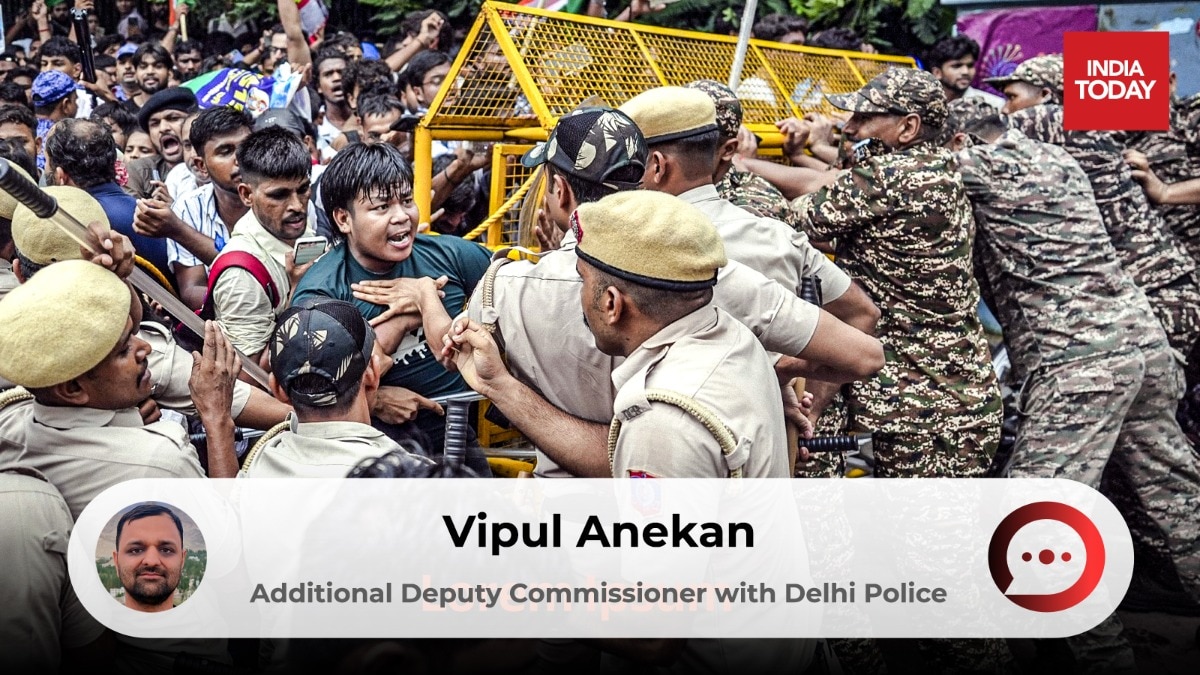
Despite a massive gathering of over 1 lakh people near Jantar Mantar, the July 20 protest avoided major violence, highlighting the power of collective restraint and human dignity.
Key Takeaways
- An estimated 1 to 1.3 lakh protesters gathered near Jantar Mantar.
- Despite high tension and narrow spaces, there were no fatalities.
- Over 99% of participants on both sides exhibited peaceful conduct.
- The event underscores the need for dialogue over polarization.
The events of July 20 near Jantar Mantar and Tolstoy Lane served as a profound reminder of shared humanity. In a moment characterized by massive crowds and heavy police deployment, the expected chaos was met with an unexpected wave of restraint. The sheer scale of the gathering—estimated between 100,000 and 130,000 people—against 5,000 police personnel created a high-pressure environment.
Why This Matters
BozokMedia analysis shows that the ability to maintain order in such volatile conditions is a testament to the underlying social fabric. In an era of extreme polarization, the fact that injuries remained minimal (less than 0.5% of those present) is statistically significant and socially vital. It proves that even under immense psychological and physical pressure, peace is a choice that can be made by the masses.
True democratic strength lies not in the volume of the protest, but in the restraint shown by both the state and the citizens.
While the topography of the area made crowd management difficult, the absence of a stampede-like tragedy is noteworthy. Although some police personnel suffered fractures and a few protesters required medical attention, the overwhelming majority chose ahimsa (non-violence) and shanti (peace) over aggression.
Historical Background
Jantar Mantar has long been the epicenter of civil dissent in India. Historically, these protests have tested the limits of the state's patience and the protesters' discipline. The July 20 incident adds a new chapter to this history, where the focus shifted from the grievances themselves to the manner in which they were expressed.
Moving forward, the challenge is to avoid the pitfalls of vulgarity and personal attacks. As suggested by the Buddhist 'Middle Path,' the goal should be measured engagement rather than aggressive confrontation or passive surrender. We must strive for what B.R. Ambedkar called 'social endosmosis'—the free flow of ideas across opposing groups.
Frequently Asked Questions
1. Was there any major violence during the July 20 protest?
No, despite the massive crowd and tight spaces, there were no fatalities and very few serious injuries reported on either side.
2. How many people were present at the protest?
Independent estimates suggest that between 100,000 and 130,000 people participated in the gathering.
