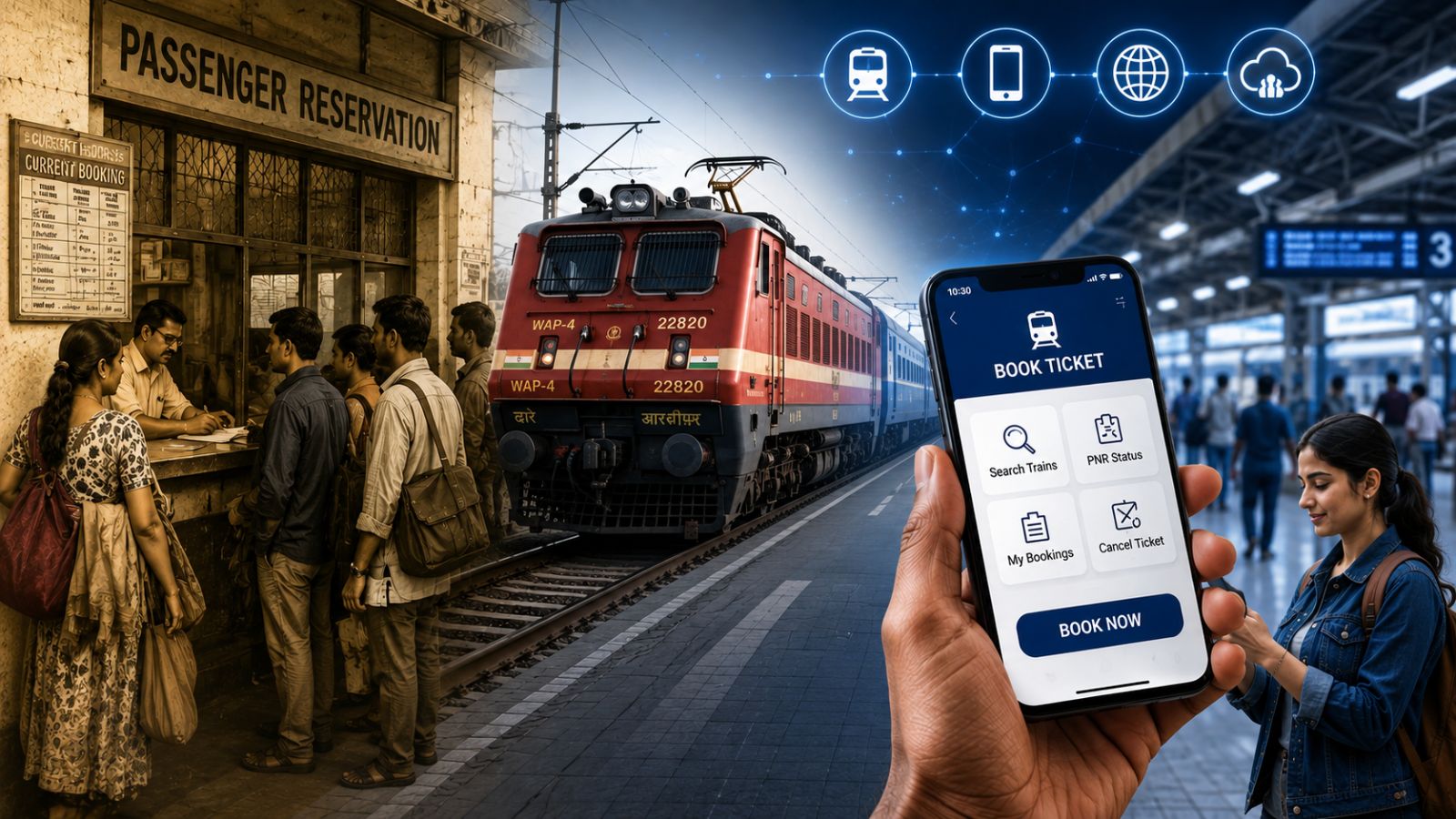
Indian Railways is set to overhaul its 40-year-old Passenger Reservation System (PRS) to handle massive digital traffic and accelerate ticket bookings.
Key Takeaways
- The 40-year-old PRS is undergoing a massive technological upgrade.
- The new system will handle over 1.5 lakh bookings per minute.
- Phased migration of the system has already commenced in August 2026.
- Expected to significantly improve Tatkal booking success rates.
Indian Railways is embarking on a massive digital transformation to modernize its Passenger Reservation System (PRS). Developed by the Centre for Railway Information Systems (CRIS), the current system has been the backbone of Indian travel since 1986. However, with the explosion of online bookings, a high-speed upgrade is now essential to meet modern demands.
The Need for Modernization
The scale of operations at Indian Railways is staggering. Between June 2025 and June 2026, passengers booked a whopping 65.08 crore reserved tickets, with nearly 89% of these transactions occurring online. BozokMedia analysis shows that the sheer volume of digital traffic necessitates a system that can scale instantly during peak hours, especially during the highly competitive Tatkal window.
Why This Matters
This upgrade is a game-changer for millions of commuters. Currently, the system manages approximately 32,000 bookings per minute. The upgraded PRS is designed to skyrocket this capacity to over 1.5 lakh bookings per minute. Furthermore, its ability to handle enquiries will jump from 4 lakh to an unprecedented 40 lakh per minute, ensuring that passengers get real-time information without delays.
The transition to a high-capacity PRS is not just an upgrade; it is a fundamental necessity for a nation moving towards a fully digital transit ecosystem.
The migration process is being handled with extreme caution. According to Dharmendra Tewari, Additional Director General of Public Relations at the Railway Board, the transition is happening in a phased manner. This 'layer-by-layer' approach ensures that the new, user-friendly interface is tested under various load conditions before the old system is completely decommissioned.
Evolution of India's PRS
| Year | Milestone |
|---|---|
| 1986 | Introduction of computerized PRS |
| 2002 | Launch of Internet-based booking |
| 2014 | Next Generation e-Ticketing (NGeT) launched |
| 2026 | Implementation of Next-Gen High-Speed PRS |
Frequently Asked Questions
1. When will the new system be fully operational?
The migration is being carried out in phases starting from August 2026.
2. Will this help with Tatkal booking failures?
Yes, the increased processing speed is specifically designed to handle the surge in Tatkal bookings more efficiently.