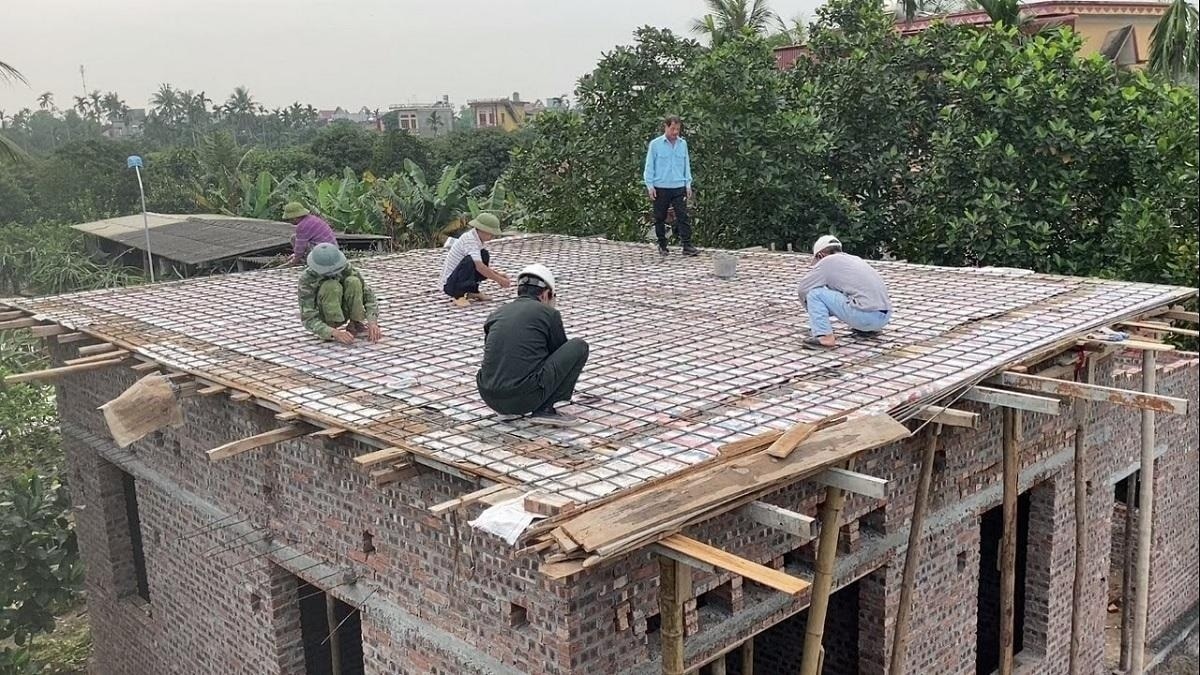
By switching to a load‑bearing structure, a one‑storey house can be built for about ₹5 lakh, cutting the usual ₹7.5 lakh cost dramatically. Savings stem from reduced steel, cement, and brick usage, plus lower labor expenses.
Key Takeaways
- Load‑bearing structure halves steel (rebar) usage.
- Fly‑ash bricks and concrete lintels cut brick and plaster costs.
- Total savings can exceed ₹2 lakh.
Unlike conventional frame structures, a load‑bearing system relies on walls that support the roof, eliminating the need for columns and beams. This reduces the amount of steel (rebar) required to roughly 20% of the traditional cost.
Fly‑ash bricks cost ₹4‑5 less per unit than ordinary bricks and can be directly painted, removing plaster work and associated labor. For a 500 sq ft house, about 5,000 bricks are needed, translating to roughly ₹25,000 saved.
Cement consumption also drops by about 50 bags for the same floor area, equating to a direct saving of ₹20,000 at ₹400 per bag. Combined with reduced rebar, the overall construction budget shrinks from around ₹7.5 lakh to about ₹5 lakh.
Why This Matters
BozokMedia analysis shows that adopting load‑bearing structures can democratize home ownership in India, especially for first‑time buyers and low‑income families, by reducing the entry barrier of construction costs.
"Load‑bearing construction not only slashes expenses but also enhances long‑term durability," says civil engineer Ajay Singh.
Frequently Asked Questions
Question 1: Is the load‑bearing method suitable only for single‑storey homes?
Answer: Primarily, yes. Multi‑storey buildings require additional reinforcement, making the method most effective for one‑storey houses.
Question 2: How does the quality of fly‑ash bricks compare to regular bricks?
Answer: Fly‑ash bricks exhibit higher compression strength and water resistance, offering greater durability and eco‑friendliness than conventional bricks.
