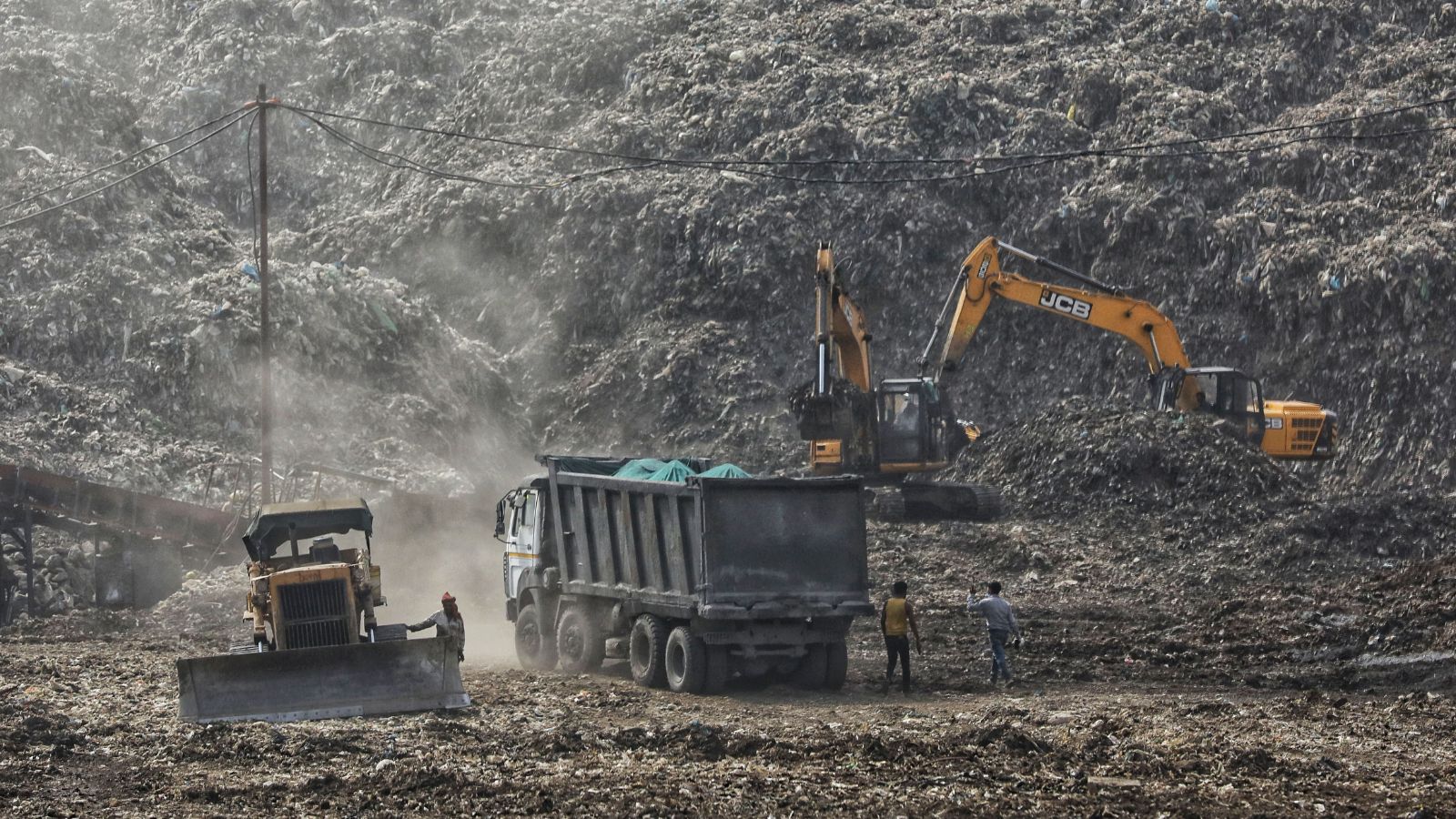
Heavy monsoon rains have severely hampered biomining operations at Delhi's major landfills, causing a sharp decline in waste processing at Okhla, Bhalswa, and Ghazipur.
Key Takeaways
- Monsoon rains have significantly slowed biomining at Okhla, Bhalswa, and Ghazipur landfills.
- Okhla's daily output dropped from a 9,000 TPD average to just 650 TPD.
- Wet waste is clogging trommel machinery, requiring frequent cleaning and reducing efficiency.
- MCD aims to eliminate these landfills by December, a goal now under threat.
The onset of the monsoon has dealt a significant blow to the Municipal Corporation of Delhi's (MCD) mission to clear decades of accumulated waste. Biomining operations at the city's three largest landfill sites—Okhla, Bhalswa, and Ghazipur—have seen a drastic reduction in output, potentially delaying the deadline to reclaim landfill land.
According to official MCD dashboards, the slowdown is most severe at the Okhla landfill. Daily biomining output, which previously averaged between 6,000 and 9,000 metric tonnes per day (TPD), plummeted to approximately 650 TPD between August 3 and 11. Adding to the crisis, nearly 2,800 TPD of fresh municipal waste continues to arrive at the site daily, offsetting the clearing efforts.
Why This Matters
BozokMedia analysis shows that the intersection of seasonal weather patterns and industrial-scale waste processing creates a high-risk bottleneck. The rain doesn't just stop work; it changes the physical properties of the waste. Wet waste becomes heavy and sticky, causing it to clog the trommels (large rotating drums used for sorting), which requires constant manual intervention and machine cleaning.
Heavy rainfall makes the waste saturated, causing it to clump inside the machinery and severely disrupting the separation process.
At the Bhalswa landfill, processing has fallen to roughly 1,700 TPD from its usual high of 11,500 TPD. Similarly, at Ghazipur, the city's largest dump, the output has struggled to meet the 7,000 TPD target, recording only 1,400 TPD over the recent nine-day period.
Historical Background
The struggle against Delhi's mountains of trash dates back to the 1980s. Following directives from the National Green Tribunal (NGT), the MCD initiated scientific biomining in 2019 to process 'legacy waste.' The Ghazipur landfill, which stands approximately 65 meters high, remains one of the most prominent symbols of the city's long-standing waste management challenges.
| Landfill Site | Typical Output (TPD) | Recent Output (TPD) |
|---|---|---|
| Okhla | 6,000 - 9,000 | ~650 |
| Bhalswa | 6,000 - 11,500 | ~1,700 |
| Ghazipur | 7,000 (Target) | ~1,400 |
Frequently Asked Questions
1. What is biomining?
It is a process of using large rotating drums called trommels to separate legacy waste into recyclables, fuel, and inert materials.
2. How does rain affect it?
Rain makes the waste wet and heavy, which causes it to stick to the machinery and slows down the sorting process.