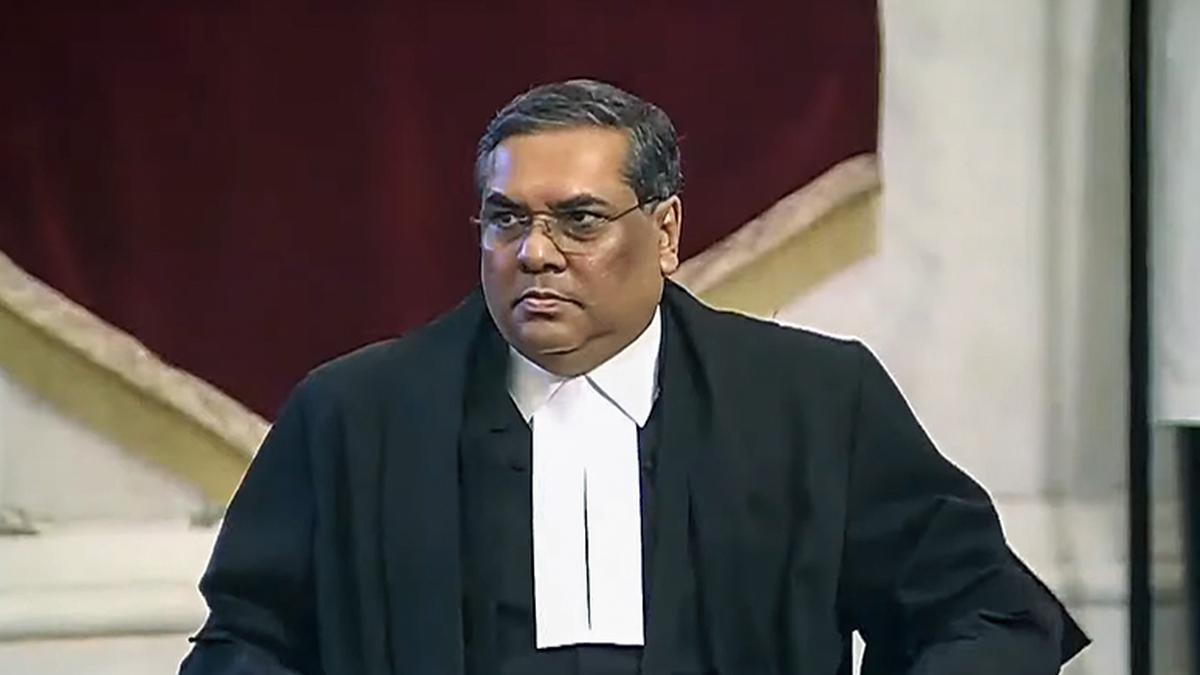
Chief Justice of India Sanjiv Khanna has formed a high-level committee to investigate allegations of massive cash being found at Justice Yashwant Varma's residence following a fire. The Delhi High Court has been instructed to withhold judicial assignments for the judge.
Key Takeaways
- CJI Sanjiv Khanna has established a three-member committee to investigate Justice Yashwant Varma.
- Allegations involve the discovery of 'huge' amounts of cash during a fire at the judge's official residence.
- The committee includes Chief Justices from Punjab & Haryana and Himachal Pradesh, plus a Karnataka High Court judge.
- The Delhi High Court has been directed not to assign any judicial work to Justice Varma pending investigation.
In a significant move to uphold judicial integrity, Chief Justice of India Sanjiv Khanna on Saturday constituted a high-level three-member committee to conduct a deep inquiry into allegations involving senior Delhi High Court Judge, Justice Yashwant Varma. The probe follows a recent incident where massive amounts of cash were allegedly discovered at his official residence during a blaze.
Composition of the Inquiry Committee
The committee comprises some of the most distinguished members of the Indian judiciary. The members include Chief Justice Sheel Nagu of the Punjab and Haryana High Court, Chief Justice G.S. Sandhawalia of the Himachal Pradesh High Court, and Justice Anu Sivaraman of the Karnataka High Court. This panel is tasked with conducting a thorough and impartial investigation into the findings.
Why This Matters
BozokMedia analysis shows that such allegations strike at the very heart of public trust in the legal system. When a high-ranking judicial officer is linked to unexplained wealth, it necessitates immediate and transparent corrective action. The CJI has characterized this in-house probe as a "confidential procedure for institutional credibility," emphasizing that the judiciary must self-regulate to maintain its sanctity.
The speed and transparency of this internal probe will be critical in restoring public confidence in the judicial hierarchy.
Historical Background
The Indian judiciary utilizes an 'in-house procedure' to deal with complaints against its own members. This mechanism is designed to ensure that the independence of the judiciary is not compromised by external political pressure, while still allowing for rigorous accountability and self-correction within the institutional framework.
Frequently Asked Questions
Question 1: What triggered the investigation against Justice Varma?
Answer: The discovery of a large sum of cash during a fire at his official residence.
Question 2: Is Justice Varma currently presiding over court cases?
Answer: No, the Delhi High Court has been asked not to assign him any judicial work during this period.