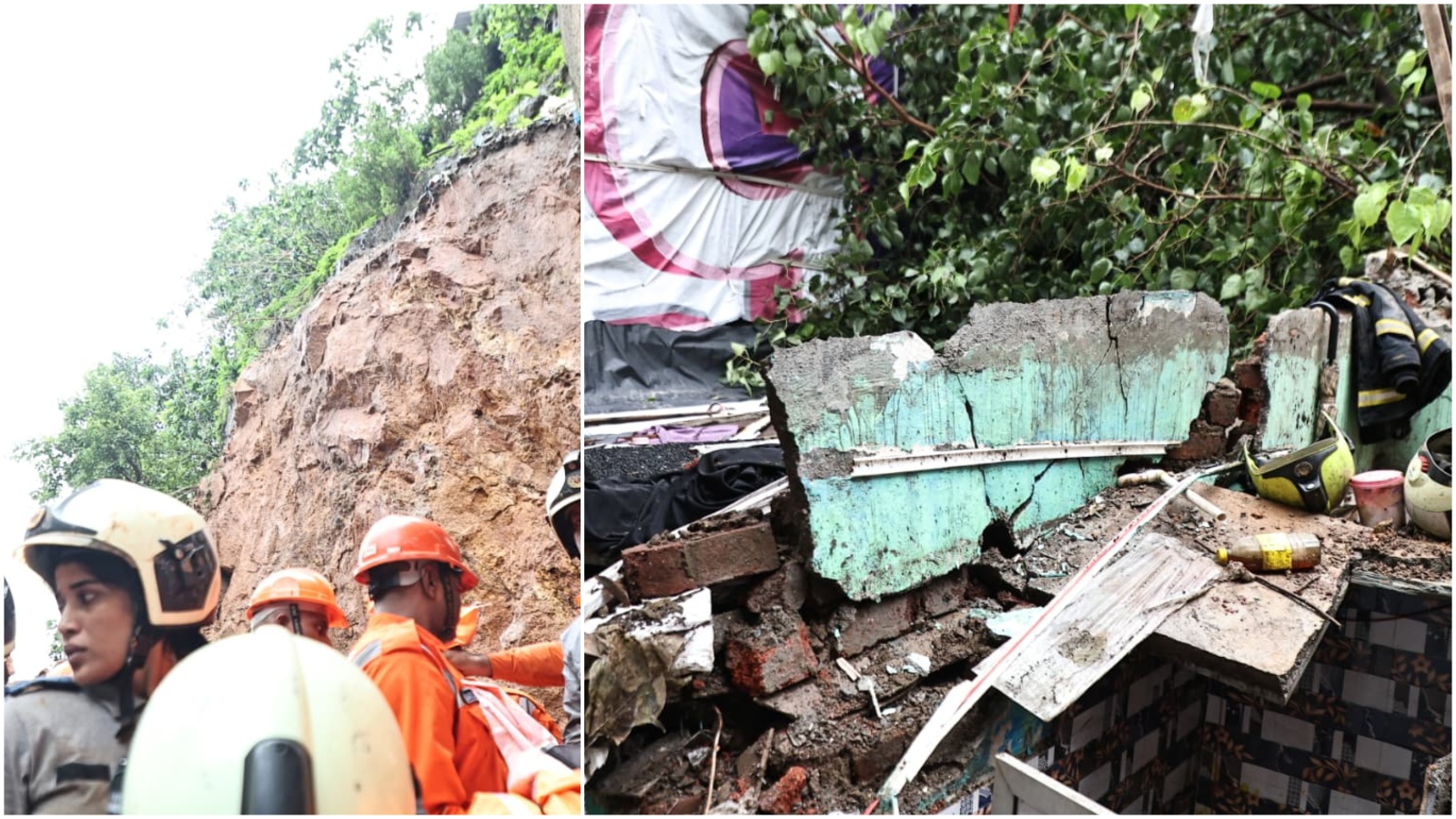
Over 30 hours after a massive landslide in Mumbai's Kurla area, rescue operations continue as Saddam Hussain Shaikh remains trapped under heavy boulders. Rescuers face extreme challenges due to narrow terrain.
Key Takeaways
- A massive landslide in Mumbai's Kurla area has claimed seven lives.
- Saddam Hussain Shaikh remains trapped under a massive boulder after 30 hours.
- Narrow passages and unstable ground are hindering NDRF and Fire Brigade efforts.
- Heavy machinery cannot reach the site due to lack of road access.
The devastating landslide that struck the Gaushiya chawl in the Kurla area of Mumbai has left a trail of destruction. Even after 30 grueling hours of continuous operation, the search for Saddam Hussain Shaikh continues as he remains pinned beneath a massive boulder. The landslide, which occurred on Wednesday, has already resulted in the tragic death of seven individuals.
Extreme Challenges for Rescuers
The National Disaster Response Force (NDRF) and the Mumbai Fire Brigade (MFB) are facing unprecedented difficulties. The terrain is characterized by extremely narrow lanes, sometimes measuring only 2 to 2.5 feet, making it nearly impossible for personnel to maneuver with equipment. Furthermore, the ground remains highly unstable, posing a constant threat to the lives of the rescuers themselves.
Why This Matters
BozokMedia analysis shows that the intersection of dense urban settlements and unstable mountainous topography creates a high-risk zone where traditional rescue methodologies often fail, necessitating specialized, high-risk manual interventions.
In mountainous conditions, when a person remains trapped under heavy boulders for a prolonged period, the chances of survival are critically low.
Because the site is located on a hilltop without proper road access, emergency vehicles like cranes or JCBs are useless. Rescuers must trek nearly 2 kilometers uphill from the last accessible road point, carrying all supplies and tools manually. This has forced the teams to rely on hammers, shovels, and sheer manual labor to clear the debris.
Historical Background
Mumbai's topography, characterized by many hills and valleys, makes it highly susceptible to landslides during the intense monsoon seasons. Urban encroachment on these slopes has historically increased the frequency and lethality of such geological disasters.
Frequently Asked Questions
Question 1: Why can't heavy machinery be used at the site?
Answer: The site is located on a hilltop with no road access and is surrounded by extremely narrow, congested lanes.
Question 2: What is the current status of the rescue mission?
Answer: The mission is ongoing, with NDRF and Fire Brigade personnel working manually to clear boulders and debris.