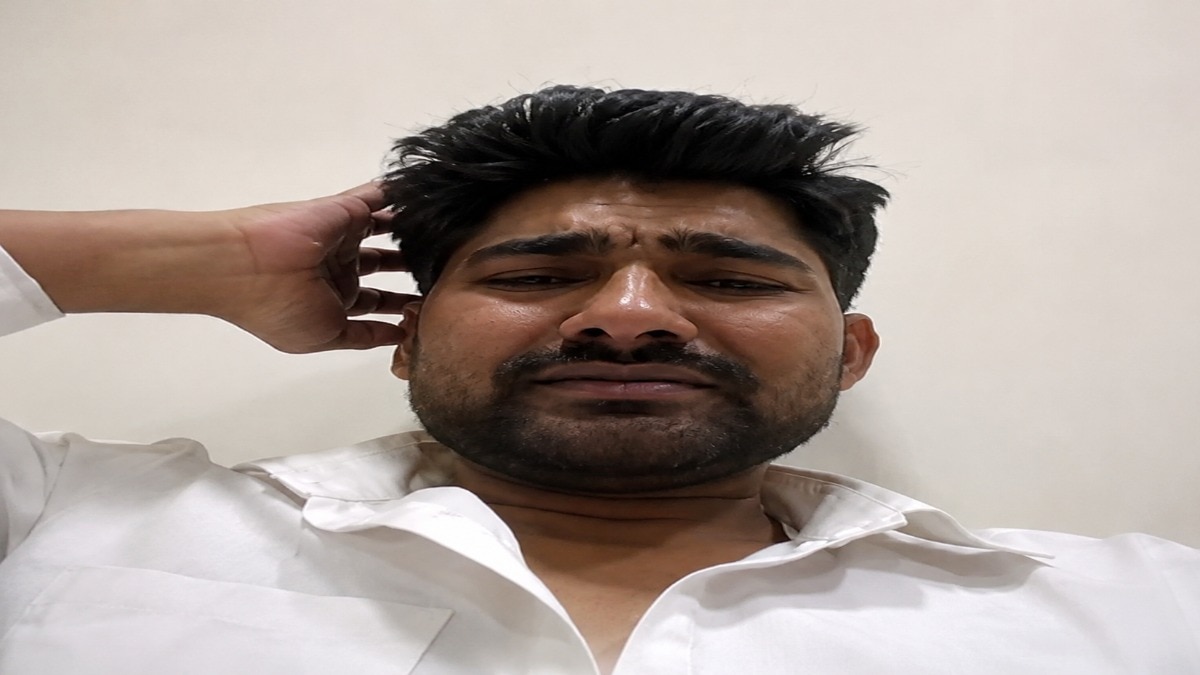
A Delhi court has ordered the attachment of movable properties belonging to advocate Mehmood Pracha after he failed to pay a ₹6 lakh fine. The penalty was imposed for filing a 'frivolous' suit seeking to nullify the Supreme Court's landmark 2019 Ayodhya verdict.
- Delhi Court orders attachment of Mehmood Pracha's movable assets for non-payment of a ₹6 lakh fine.
- The fine stemmed from a suit attempting to declare the 2019 Ayodhya verdict null and void.
- Court rejected claims that former CJI D.Y. Chandrachud's spiritual remarks indicated judicial bias.
In a significant move against the misuse of legal machinery, a Delhi court has issued warrants to attach the movable properties of Advocate Mehmood Pracha. The order comes after the lawyer failed to settle a ₹6 lakh fine imposed upon him for challenging the sanctity of the Supreme Court's historic 2019 judgment on the Ayodhya Ram Janambhoomi case.
Judge Medha Arya of the Patiala House Court passed the order on August 14 following an execution petition filed by the New Delhi District Legal Services Authority (NDLSA). The court noted that Mr. Pracha had been given multiple opportunities to file objections or clear the dues but failed to do so. Consequently, the court authorized the bailiff to seize assets up to the decretal amount and, if necessary, break open locks to execute the order.
The Core of the Controversy
The legal battle began when Mr. Pracha filed a suit seeking to have the Ayodhya verdict declared null and void. His argument was based on a 2024 public speech by former Chief Justice of India (CJI) D.Y. Chandrachud. Pracha alleged that the former CJI admitted the judgment was based on a solution provided to him by 'Bhagwan Shri Ram Lala Virajman', who was a plaintiff in the original case.
The judiciary cannot allow the personal spiritual reflections of a judge to be weaponized to undermine final verdicts of the highest court in the land.
The trial court, led by Judge Dharmender Rana, dismissed the suit as an 'abuse of the judicial process'. The court clarified that Justice Chandrachud's remarks regarding praying for guidance were personal spiritual experiences and did not constitute evidence of fraud, external influence, or judicial bias.
Why This Matters
BozokMedia analysis shows that this case sets a stern precedent against 'litigation terrorism'—the practice of filing baseless suits to gain publicity or harass judicial officers. By increasing the fine from ₹1 lakh to ₹6 lakh on appeal, the district court sent a clear message that attempts to destabilize settled legal precedents through frivolous claims will meet with severe financial consequences.
Furthermore, the court highlighted the protection offered by the Judges Protection Act, 1985, which shields judges from legal proceedings for acts performed in their official judicial capacity, ensuring that the independence of the judiciary remains intact.
| Stage of Litigation | Court Action | Penalty Imposed |
|---|---|---|
| Trial Court | Dismissed suit as 'frivolous' | ₹1 Lakh |
| District Court | Upheld dismissal; rejected appeal | Increased to ₹6 Lakh |
| Execution Stage | Ordered property attachment | Asset Seizure |
Frequently Asked Questions
Q1: Why was Mehmood Pracha's property ordered to be attached?
The order was issued because he failed to pay a ₹6 lakh fine imposed by the court for filing a suit that was deemed an abuse of the legal process.
Q2: On what grounds did Pracha challenge the Ayodhya verdict?
He claimed that former CJI D.Y. Chandrachud's public remarks about spiritual guidance implied the verdict was influenced by the deity Ram Lalla.