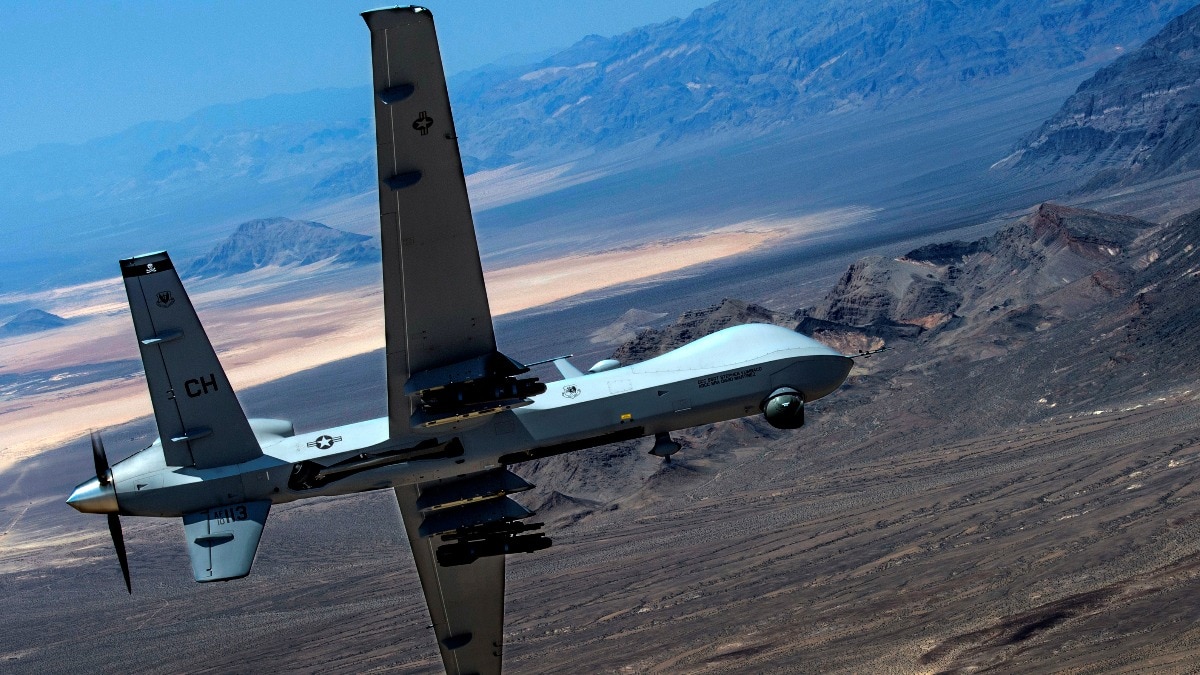
The Indian Army has embarked on a massive ₹20,000 crore technological overhaul, pivoting toward network-centric, drone-led warfare. The move emphasizes indigenous production to secure high-altitude borders like Ladakh and Arunachal Pradesh.
- Contracts exceeding ₹20,000 crore signed for indigenous loitering munitions and surveillance systems.
- Strategic shift from platform-centric to network-centric operational warfare.
- Deployment of AI-enabled sensors and high-altitude UAVs for regions above 15,000 feet.
- Strong alignment with the 'Aatmanirbhar Bharat' and 'Buy Indian' initiatives.
The Indian Army is initiating one of its most significant technological transformations in a decade. The Ministry of Defence has finalized contracts worth over ₹20,000 crore to procure indigenous loitering munitions, advanced surveillance grids, and unmanned aerial platforms specifically engineered for extreme environments. This overhaul represents a decisive move toward modernizing the frontline capabilities of the force.
According to defense sources, the primary objective of this modernization drive is to transition toward network-centric warfare. By integrating drones and AI, the Army aims to enhance its surveillance and precision-strike capabilities along India's volatile northern borders, with a particular focus on the high-altitude terrains of Ladakh and Arunachal Pradesh.
Why This Matters
BozokMedia analysis shows that the Indian Army is consciously moving away from mass deployment of manpower toward a 'precision-first' approach. In the context of escalating tensions in the Himalayas, the ability to identify and neutralize targets without risking soldier lives is a strategic game-changer. This shift reduces logistical burdens while increasing the lethality of frontline units.
The procurement includes sophisticated 'kamikaze drones'—loitering munitions that can hover over target zones for extended periods before striking with surgical precision. Additionally, the Army will integrate AI-enabled ground and aerial sensors to create a real-time battlefield picture, allowing commanders to make data-driven decisions in seconds.
"The future battlefield will be dominated by sensors and unmanned systems; this procurement moves us to a state where every soldier, drone, and weapon system is connected in real time."
Historically, the Indian military has relied heavily on imports from Russia and the West. However, this massive investment under the 'Aatmanirbhar Bharat' initiative marks a pivot toward domestic defense industrialization. By utilizing the 'Buy Indian' category, the government is fostering a local ecosystem of defense startups and established firms.
| Feature | Traditional Warfare | Network-Centric Warfare |
|---|---|---|
| Surveillance | Manual Patrols/Fixed Radar | AI-Driven Persistent Drone Feed |
| Strike Capability | Heavy Artillery/Infantry | Precision Loitering Munitions |
| Command & Control | Hierarchical/Delayed | Real-time Integrated Data-link |
Frequently Asked Questions
1. Which regions will benefit most from this upgrade?
The high-altitude regions of Ladakh and Arunachal Pradesh will see the most significant deployment due to their strategic importance.
2. What is the timeline for the induction of these systems?
The systems are expected to be inducted in phases over the next 24 to 36 months, with trials already underway.