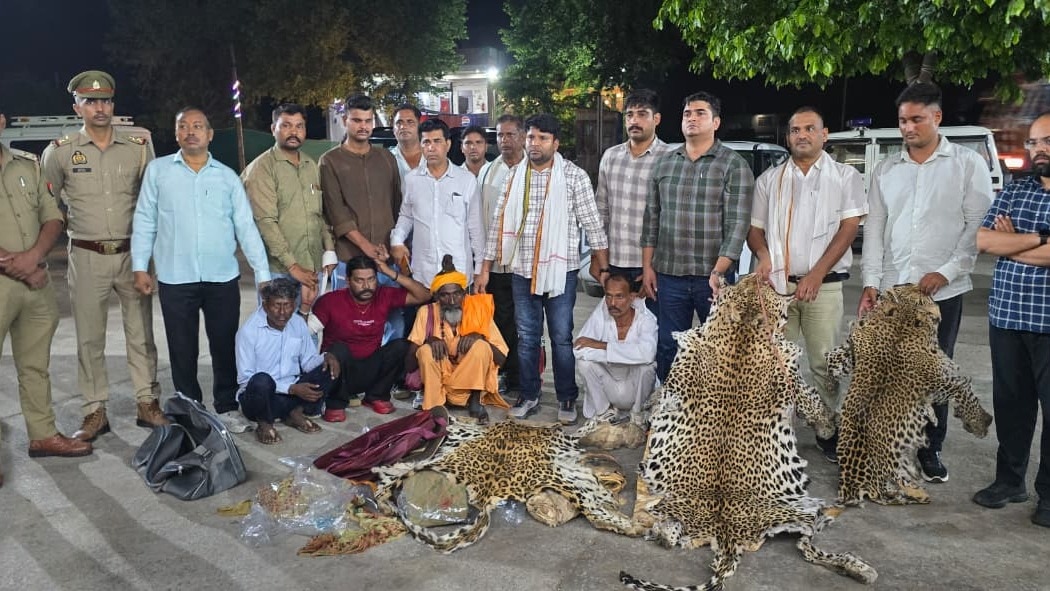
A massive joint operation has uncovered an interstate wildlife trafficking syndicate operating across Madhya Pradesh and Uttar Pradesh, with startling links to a Delhi-based conservation NGO.
- Nine suspects arrested for poaching leopards and trafficking body parts across five states.
- 10 leopard skins and various body parts recovered during raids in Agra and surrounding areas.
- Investigation focuses on the alleged nexus between arrested traffickers and a Delhi-based wildlife NGO.
In a coordinated strike against wildlife crime, a joint task force comprising the Uttar Pradesh Forest Department, the Madhya Pradesh State Tiger Strike Force (STSF), and the Wildlife Crime Control Bureau (WCCB) has dismantled a sophisticated interstate leopard poaching network. The operation has exposed a brutal supply chain that spanned from the dense forests of Madhya Pradesh to the urban markets of Delhi and Rajasthan.
The investigation gained momentum following a high-stakes raid on July 23 at the Rajputana Hotel in the Saiyan area, located along the Agra-Gwalior Highway. This raid led to the arrest of four key traffickers and the recovery of leopard skins and severed heads, acting as the catalyst for a wider crackdown on the syndicate.
Why This Matters
BozokMedia analysis shows that the most alarming aspect of this case is the potential infiltration of poaching networks into conservation organizations. When individuals associated with a wildlife NGO are implicated in trafficking, it suggests a dangerous breach of trust and a possible leak of sensitive forest intelligence, which could compromise national conservation efforts.
The probe took a critical turn with the arrest of Bhagwan Singh (alias Salim), a known history-sheeter in wildlife crimes, and his associate Wasim. Investigators discovered that both men had been associated with a Delhi-based wildlife conservation NGO for approximately five years. The STSF has since summoned the NGO's CEO to Shivpuri to determine if the organization's resources or data were weaponized to facilitate the poaching operations.
The intersection of conservationist fronts and poaching syndicates represents a new, sophisticated evolution in wildlife crime that requires deeper intelligence surveillance.
The brutality of the operation has left officials appalled. According to interrogated suspects, leopards were trapped using nylon nets and beaten to death with sticks. The syndicate targeted the Kuno Wildlife Division (6 kills), Sheopur (2 kills), and the Chambal Sanctuary in Morena (2 kills). To evade detection, the carcasses were buried in hidden pits within the forest after the skins, claws, teeth, and whiskers were harvested.
Currently, the STSF is working to map the entire supply chain, tracing the movement of contraband through Haryana, Rajasthan, and Delhi to identify the ultimate buyers and financiers of this illegal trade.
Frequently Asked Questions
Which areas were the primary hunting grounds for this network?
The poaching primarily occurred in the Kuno Wildlife Division, Sheopur, and the Chambal Sanctuary in Morena.
What is the current status of the Delhi NGO's involvement?
The NGO's CEO has been summoned for questioning, but official involvement of the organization has not yet been legally established.