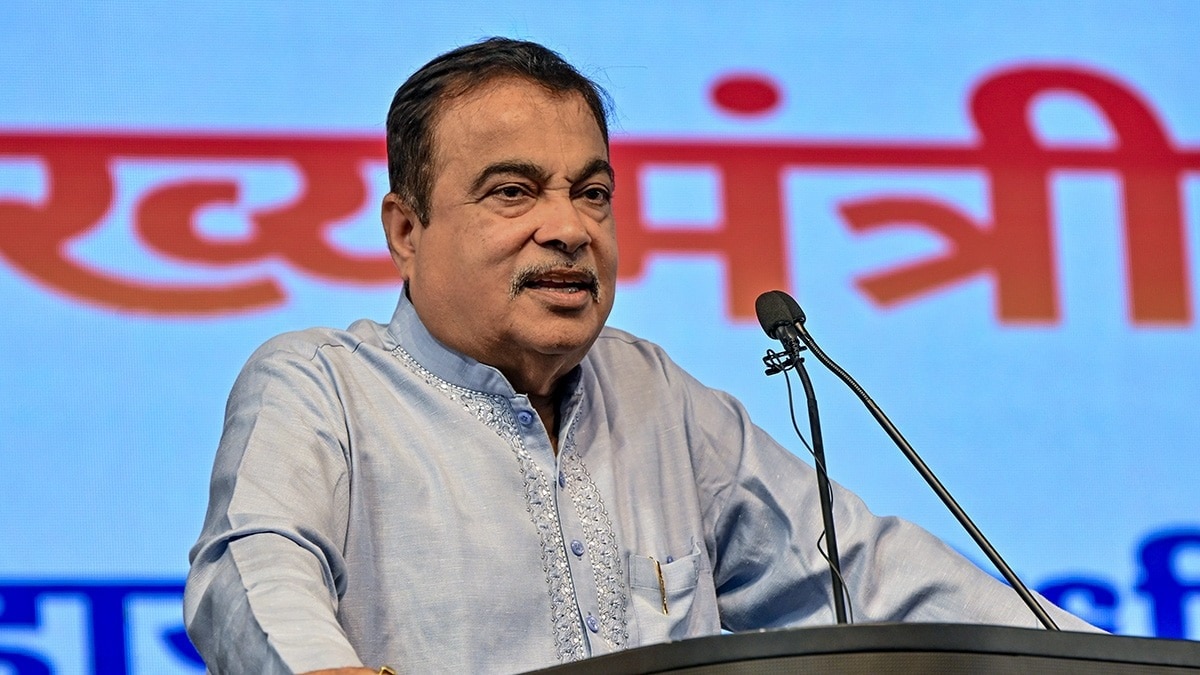
Union Minister Nitin Gadkari defended the longevity of the Mumbai-Pune Expressway and urged the integration of AI, drones, and LiDAR technology to preemptively identify road defects and ensure long-term infrastructure durability.
- Mumbai-Pune Expressway remains pothole-free 27 years after construction.
- Call for AI, LiDAR, and Satellite technology for early detection of road defects.
- Infrastructure projects worth ₹60,000 crore planned for Pune city.
- Emphasis on a 25-50 year long-term vision for national infrastructure.
Union Minister for Road Transport and Highways Nitin Gadkari on Monday stood by the record of the Mumbai-Pune Expressway, asserting that the artery remains pothole-free nearly 27 years after its inception. Speaking at the 'Festival of Thinkers' hosted by Symbiosis International University in Pune, the Minister addressed the dichotomy between long-term success and short-term failures.
Gadkari specifically addressed the social media backlash following a recent collapse at the 'Missing Link' section. He clarified that the Missing Link was a state government project, distancing the central ministry from the failure while ironically noting that "social media is good for quality control."
Why This Matters
BozokMedia analysis shows that Gadkari is shifting the narrative from mere construction to 'intelligent maintenance.' By advocating for high-tech monitoring, the ministry aims to move away from reactive repairs—which often lead to the dreaded monsoon potholes—toward a predictive maintenance model that ensures asset longevity.
"Infrastructure development is the foundation for economic growth and plays a crucial role in creating employment and reducing poverty."
The Minister emphasized that future-ready infrastructure requires a vision spanning 25 to 50 years. To achieve this, he proposed the mandatory use of Drones, Artificial Intelligence (AI), LiDAR, and Satellite technology to monitor road health in real-time. Reflecting on his career, Gadkari mentioned that while he once pushed for eight lanes, his global exposure now makes him believe that even larger capacities, like the 40-lane road constructed between Delhi and Meerut, are necessary for future demand.
Turning his focus to local development, Gadkari revealed that projects valued at approximately ₹60,000 crore are planned for Pune. He argued that superior connectivity reduces transportation costs, enhances the competitiveness of Indian industries, and provides farmers with wider market access, thereby fueling the 'knowledge to wealth' transition.
Beyond roads, Gadkari highlighted the growth of India's automobile sector through electric vehicles and biofuels. He urged students to pursue 'knowledge with ethics,' stressing that integrity and reliability are the only sustainable paths to success in a competitive global economy.
Frequently Asked Questions
Q1: What was Gadkari's response to the Missing Link collapse?
He clarified that the project was managed by the state government and suggested that such incidents highlight the need for better quality control.
Q2: Which technologies did the Minister suggest for road monitoring?
He recommended the use of AI, LiDAR, drones, and satellite imagery to detect defects early.