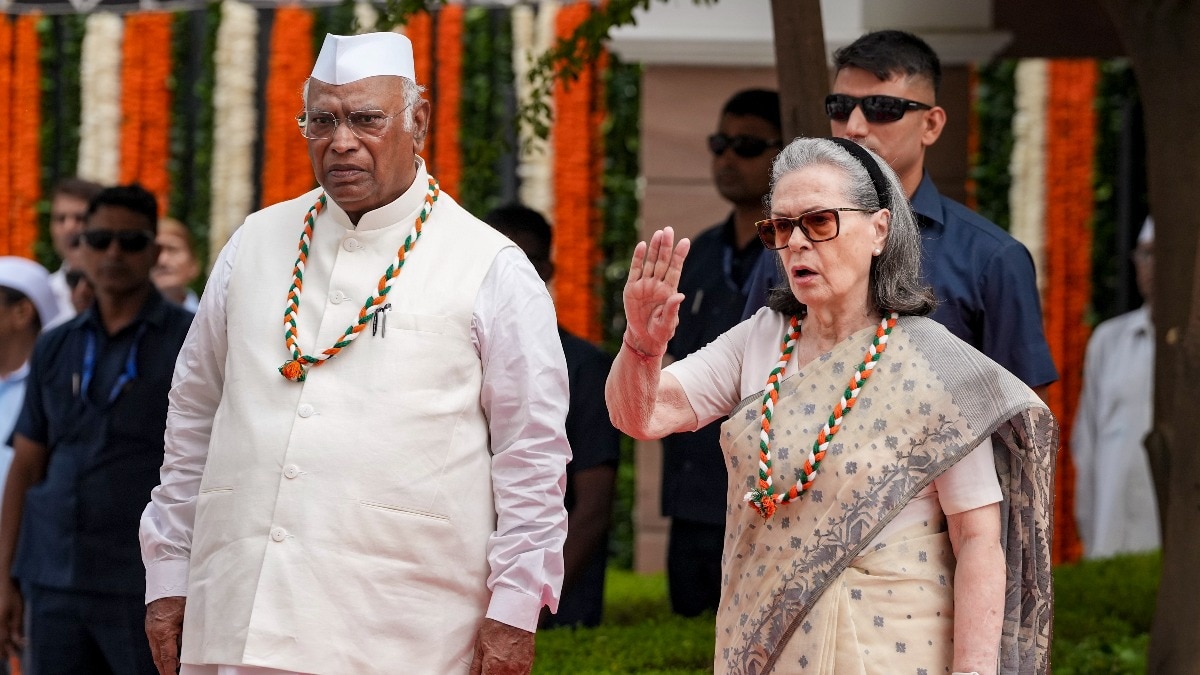
A lack of internal communication at the AICC headquarters led to a major political storm after senior leaders were left uninformed about the full rendition of the national song. The incident has sparked accusations of disrespect and internal frustration within the party.
- Confusion arose during Independence Day celebrations at Indira Bhawan over the full singing of Vande Mataram.
- Sonia Gandhi's gestures were misinterpreted by the BJP as disrespect, though Congress claims she was requesting a chair for Mallikarjun Kharge.
- Senior leaders, including Rahul Gandhi and Sonia Gandhi, were reportedly not briefed on the program changes despite prior rehearsals.
- The incident has exposed significant lapses in event management and internal coordination within the Congress party.
The Independence Day flag-hoisting ceremony at the Congress headquarters, Indira Bhawan, which was intended to be a solemn patriotic event, instead became a source of profound embarrassment for the party's top brass. What began as a logistical failure regarding the rendition of Vande Mataram quickly spiraled into a national political controversy, providing the BJP with ammunition to allege a lack of respect for the national song.
The flashpoint occurred when Sonia Gandhi was observed gesturing as the rendition of the national song extended beyond the second stanza. While the BJP immediately framed this as an act of disrespect, Congress sources maintain that the gesture was entirely unrelated to the song; specifically, that she was merely requesting a chair for Party President Mallikarjun Kharge. Despite these clarifications, the optics of the situation created a narrative of confusion and discord.
Why This Matters
BozokMedia analysis shows that this incident is less about the song itself and more about the systemic breakdown of communication within the AICC. When the top leadership—including the Party President and the Gandhi family—is kept in the dark about the basic sequence of a high-profile event, it signals a deeper organizational dysfunction. In the high-stakes environment of Indian politics, such 'avoidable embarrassments' are often weaponized by opponents to portray a party as disorganized and out of touch.
Internal reports suggest that while Jairam Ramesh and the President's office had agreed on singing the full version days prior, this critical decision never reached the leaders who were actually standing on the podium. Even though a full rehearsal was conducted a day before the event, the briefing process failed spectacularly, leaving Rahul Gandhi and others unaware of the updated flow.
"The gap between decision-making and execution in political organizations often creates vacuum spaces where controversies thrive, regardless of the actual intent."
The management of the event fell under the purview of administrative officer Manish Chatrath, with broader oversight usually handled by the treasurer and general secretary (organisation). However, with treasurer Ajay Maken merely present as a guest and general secretary KC Venugopal away in Kerala, there was a visible lack of authoritative oversight on the ground to ensure the leaders were synchronized with the program.
Adding an ideological layer to the row, Jairam Ramesh referenced a 1937 Congress Working Committee resolution, based on Rabindranath Tagore's recommendations, which suggested singing only the first two stanzas. A senior leader noted that if the matter had been discussed properly, the party could have taken a clear ideological stand rather than falling into a trap of poor coordination.
Frequently Asked Questions
Q1: Why did the controversy start?
The controversy began when Sonia Gandhi gestured during the third stanza of Vande Mataram, which the BJP interpreted as disrespect toward the national song.
Q2: What was the Congress party's official explanation?
The party stated that the gesture was meant to request a chair for Mallikarjun Kharge and that there was a communication gap regarding the decision to sing the song in full.

