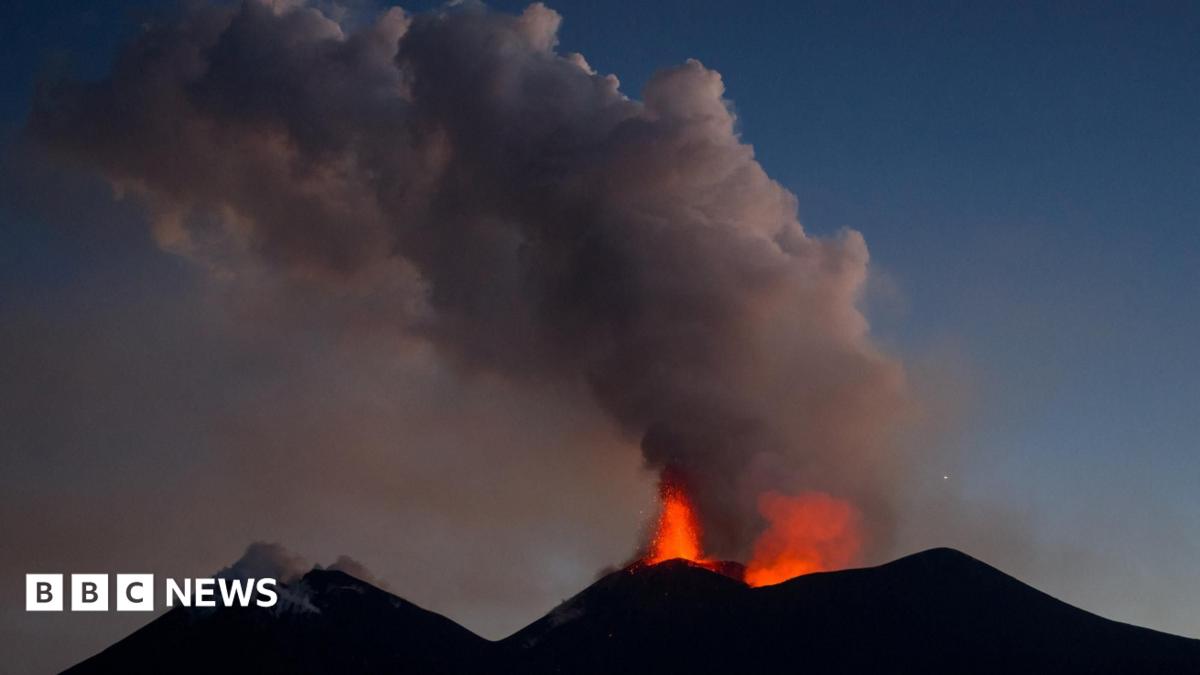
A 30-year-old American hiker has tragically passed away after being struck by lightning on Europe's most active volcano, Mount Etna, during a sudden thunderstorm.
- 30-year-old American tourist killed by lightning strike on Mount Etna.
- Incident occurred in a restricted area near the summit.
- Increased volcanic activity has led to hazardous weather and air travel disruptions.
In a tragic turn of events, a 30-year-old American tourist lost his life on Sunday after being struck by lightning while hiking on Mount Etna in Sicily. The victim, whose identity has not been officially disclosed, was exploring the active volcano when a sudden and violent thunderstorm erupted.
Emergency services and firefighters discovered the man around 20:00 local time in a restricted zone, an area frequently used by adventurous hikers to bypass standard routes and get closer to the summit. He was found in a state of cardiac arrest and was immediately airlifted via helicopter to Cannizzaro Hospital in Catania. Despite the rapid response, he was declared dead upon arrival.
Why This Matters
BozokMedia analysis shows that the allure of "volcano tourism" often outweighs the perceived risks of environmental hazards. While recent eruptions have drawn thousands of visitors, the combination of volatile volcanic gases and erratic high-altitude weather creates a high-risk environment that demands strict adherence to safety zones.
"The intersection of geological instability and sudden meteorological shifts makes high-altitude volcanic treks inherently perilous without professional guidance."
Italy's civil protection agency has repeatedly warned that conditions on the upper slopes are treacherous. Above the tree line, there is virtually no natural shelter, leaving hikers completely exposed to lightning strikes during the rapid storm developments typical of the region.
Historical Background: Mount Etna is renowned as Europe's most active volcano. Its consistent activity not only shapes the Sicilian landscape but also poses a recurring threat to aviation. In the past week alone, ash plumes from the volcano clouded the skies over eastern Sicily, forcing the downgrade of aviation alerts from 'red' to 'orange' only on Saturday after hundreds of flights at Catania International Airport were disrupted.
Frequently Asked Questions
Q1: Is hiking on Mount Etna prohibited?
A: No, but authorities strictly limit access to upper slopes and specific restricted zones depending on the current volcanic activity level.
Q2: How has the volcano affected local travel recently?
A: Recent eruptions released massive amounts of ash, causing significant disruptions to flights at Catania International Airport.