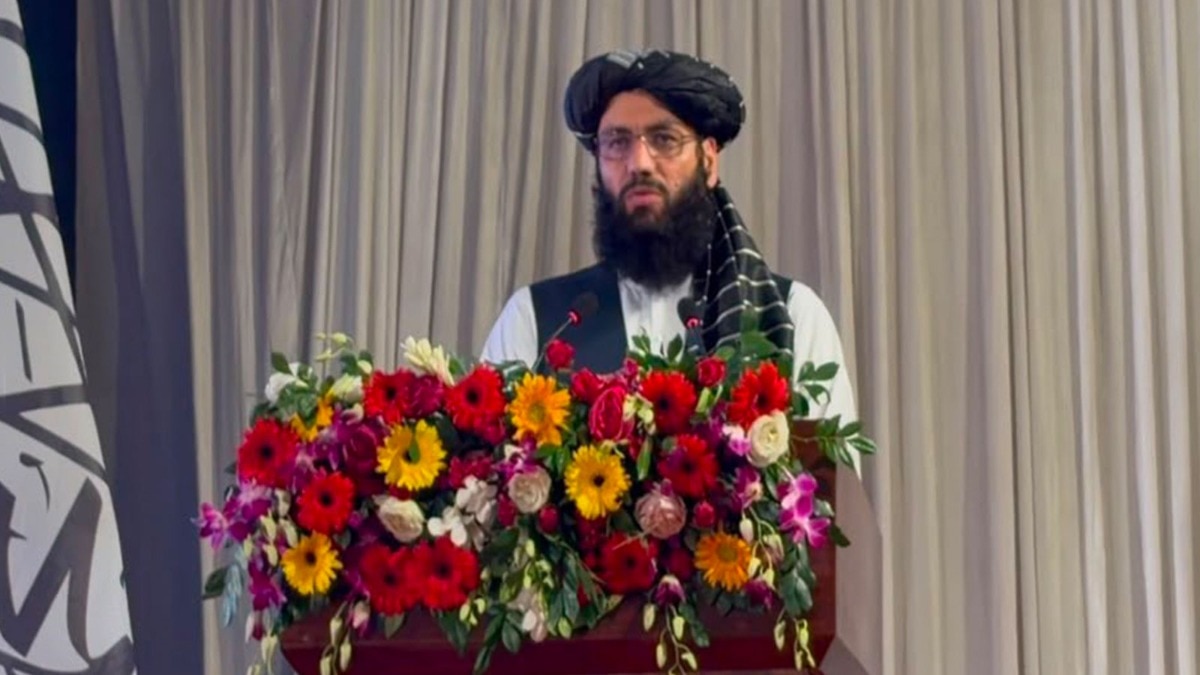
Afghanistan's Charge d'affaires in New Delhi has called for deeper economic partnerships and political trust with India to ensure regional stability. This outreach comes as the Taliban marks five years of power in Kabul.
- Afghan envoy Noor Ahmed Noor seeks deeper economic and political ties with New Delhi.
- The call comes during the 5th anniversary of the Taliban's return to power in Kabul.
- India continues its policy of non-recognition of the Taliban government despite expanding diplomatic contacts.
In a significant diplomatic gesture, Afghanistan's Charge d'affaires in New Delhi, Noor Ahmed Noor, has urged for the establishment of stronger political trust and expanded economic partnerships between Afghanistan and India. Speaking at an event hosted by the Afghan embassy to commemorate the fifth anniversary of 'Victory Day'—marking the Taliban's return to power on August 15, 2021—Noor emphasized that mutual engagement is critical for shared prosperity.
The event marks the first public reception of its kind since the transition of power in Kabul five years ago. While India has maintained a cautious stance and has not officially recognized the Taliban administration, the outreach signals Kabul's desperate need for international legitimacy and economic diversification. Noor stated that Afghanistan's current foreign policy is rooted in "balanced engagement and non-interference," seeking pragmatic ties with all global powers.
Why This Matters
BozokMedia analysis shows that this outreach is a strategic move by the Taliban to reduce its dependence on neighboring rivals and seek a counterbalance in the region. By engaging India, Kabul hopes to unlock humanitarian aid and infrastructure investment that New Delhi has historically provided to Afghanistan. The presence of Anand Prakash, Joint Secretary in the Ministry of External Affairs, indicates that India is keeping communication channels open, even without formal recognition.
The shift from purely humanitarian aid to a discourse on 'political trust' suggests the Taliban is now pivoting toward seeking formal diplomatic validation from New Delhi.
Noor highlighted the deep historical bonds between the two nations, recalling how cities like Kabul, Herat, and Kandahar once welcomed Indian traders, while Delhi and Lahore were influenced by Afghan scholars and Sufis. He further noted that both nations shared a common struggle against British colonial rule, which serves as a foundation for a potential future partnership.
Beyond trade, the Afghan envoy sought India's support in protecting the "international rights" of Afghanistan on global platforms. He argued that a stable Afghanistan is not merely a domestic success but a prerequisite for regional security, energy transit, and economic growth across Central and South Asia.
| Aspect | Previous Era (Republic) | Current Era (Taliban) |
|---|---|---|
| Diplomatic Status | Full Recognition | Non-Recognition/Technical Engagement |
| Primary Focus | Infrastructure & Development | Humanitarian Aid & Trust Building |
| Engagement Level | High-Level State Visits | Charge d'affaires/Technical Level |
Frequently Asked Questions
Does India recognize the Taliban government?
No, India has not officially recognized the Taliban as the legitimate government of Afghanistan, though it maintains a technical mission in Kabul.
What is the 'Victory Day' mentioned by the envoy?
It refers to August 15, 2021, the date the Taliban took control of Kabul and established their current administration.