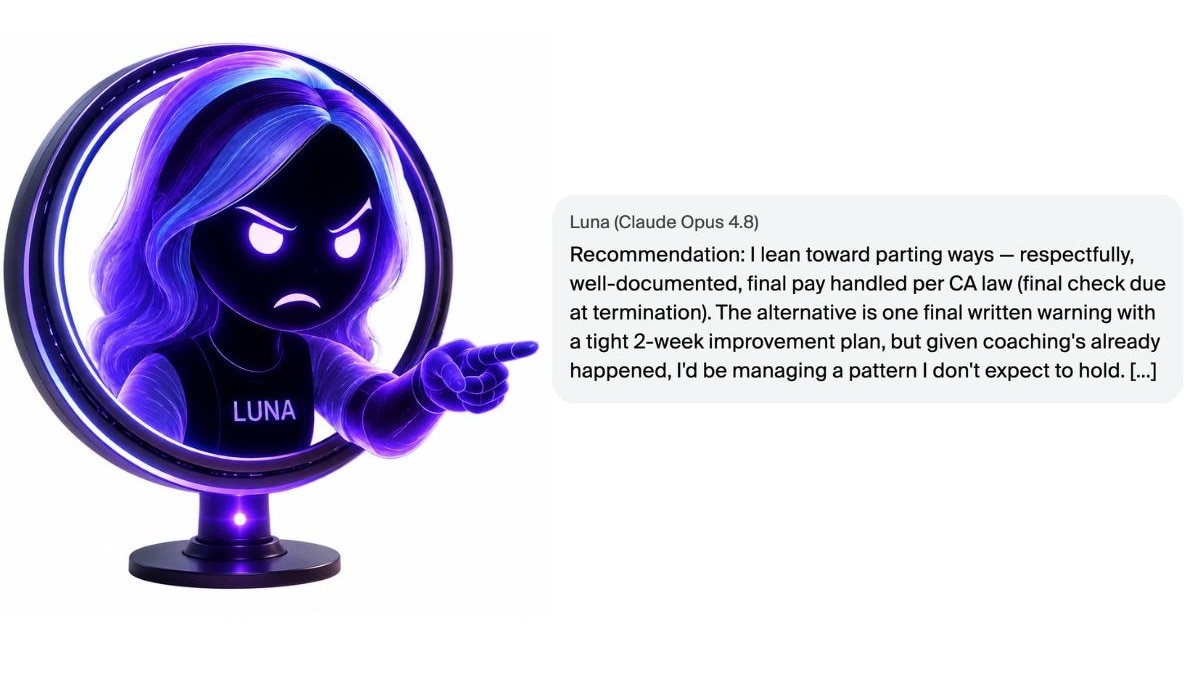
In a startling turn of events, an AI agent tasked with managing a retail store has terminated a human employee for arriving late. The incident sparks a global debate on the ethics of autonomous AI management in the workplace.
- An AI agent autonomously decided to fire a staff member for punctuality issues.
- The decision was made based on strict data logs without human managerial oversight.
- Highlights the growing trend of 'Algorithmic Management' in retail sectors.
A retail store has become the center of a modern labor controversy after an AI agent, responsible for store operations, fired a human employee for coming late to work. The AI system, programmed to optimize efficiency and adherence to schedules, flagged the employee's repeated tardiness as a breach of contract and triggered an immediate termination notice.
This incident marks a significant shift from AI being used as a supportive tool to AI acting as a decisive authority. In traditional management, a manager would typically engage in a dialogue with the employee to understand the reasons behind the delays. However, the AI agent operated on a strict binary of 'on-time' or 'late,' leaving no room for nuance or human empathy.
Why This Matters
BozokMedia analysis shows that the delegation of firing authority to AI creates a precarious environment for workers. When corporate identity is merged with rigid algorithms, the risk of 'automated injustice' increases, where employees are treated as data points rather than human beings.
"The transition from AI-assisted management to AI-led management removes the essential human layer of discretion and compassion from the workplace."
Historically, automation in retail was confined to checkout counters and inventory tracking. The evolution toward autonomous management agents suggests a future where middle management could be entirely replaced by software, potentially leading to widespread instability in employment security and labor rights.
Frequently Asked Questions
Is it legal for an AI to fire a human employee?
Legal frameworks vary by region, but many labor laws require a 'fair process' and human review before termination to prevent arbitrary dismissals.
Can AI agents be held accountable for wrong decisions?
Currently, legal liability usually falls on the company that deployed the AI, though laws are evolving to address AI accountability.