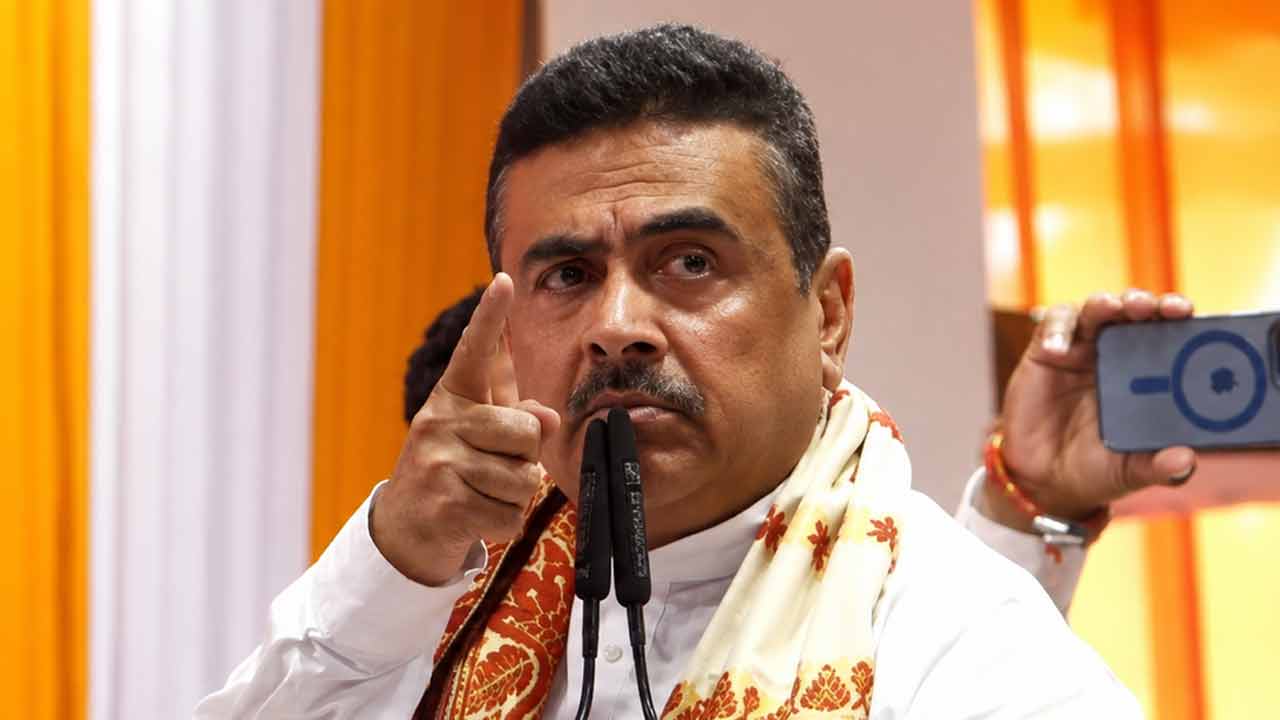
Chief Minister Suvendu Adhikari has declared that his government will avoid forced land acquisitions for industries, opting instead for land purchase and pooling policies to drive economic growth.
- The government will strictly avoid forced land acquisition for industrial setup.
- Implementation of Land Purchase and Land Pooling policies to ensure transparency.
- Single-window clearance at the central level for investments exceeding ₹100 crore.
- Strong criticism of the previous Left and TMC regimes' industrial failures.
Chief Minister Suvendu Adhikari, accompanied by Industry Minister Tapas Roy, has outlined a transformative vision for West Bengal's industrial landscape during a visit to Purulia. In a decisive move, the CM asserted that his administration will not resort to the coercive seizure of land to establish factories or industrial zones.
Reflecting on the state's political trajectory, Adhikari criticized the 34-year tenure of the Left Front, stating that land was often acquired 'at gunpoint,' a practice he deemed detrimental to democratic values. He further targeted the subsequent 15 years of the TMC government, alleging a period of industrial stagnation where the state failed to provide land to eager industrial houses.
Why This Matters
BozokMedia analysis shows that by introducing 'Land Pooling' and 'Land Purchase' policies, the administration is attempting to solve the historic 'land-lock' of West Bengal. This strategy aims to mitigate the fear of dispossession among rural populations while creating a predictable environment for capital investment.
"By shifting to a consent-based procurement model, the government is attempting to decouple industrialization from political conflict, potentially reopening Bengal to large-scale FDI."
During the foundation stone laying ceremony of a private steel plant in Raghunathpur, Purulia, the CM emphasized his desire to move away from 'lock-out politics' and the influence of militant trade unions. He argued that industrialization is the only viable path to enhancing the economic condition of the state and generating sustainable employment.
To further streamline the 'Ease of Doing Business,' Adhikari announced a major regulatory relief: investors planning to inject more than ₹100 crore into the state will no longer need to navigate the bureaucracy of municipalities or district councils, as approvals will be facilitated at the central level.
| Regime/Policy | Land Approach | Outcome |
|---|---|---|
| Left Front (34 Years) | Forced Acquisition | Civil Unrest & Violence |
| TMC (15 Years) | Inability to provide land | Industrial Stagnation |
| Current Govt | Land Pooling/Purchase | Transparent & Consent-based |
Frequently Asked Questions
1. What is the Land Pooling Policy?
It is a mechanism where landowners voluntarily pool their land for a project and receive a portion of the developed land or a share in the project's profits.
2. How does the new investment rule benefit large companies?
Companies investing over ₹100 crore can bypass local municipal/district hurdles and obtain approvals at the central level, significantly reducing red tape.