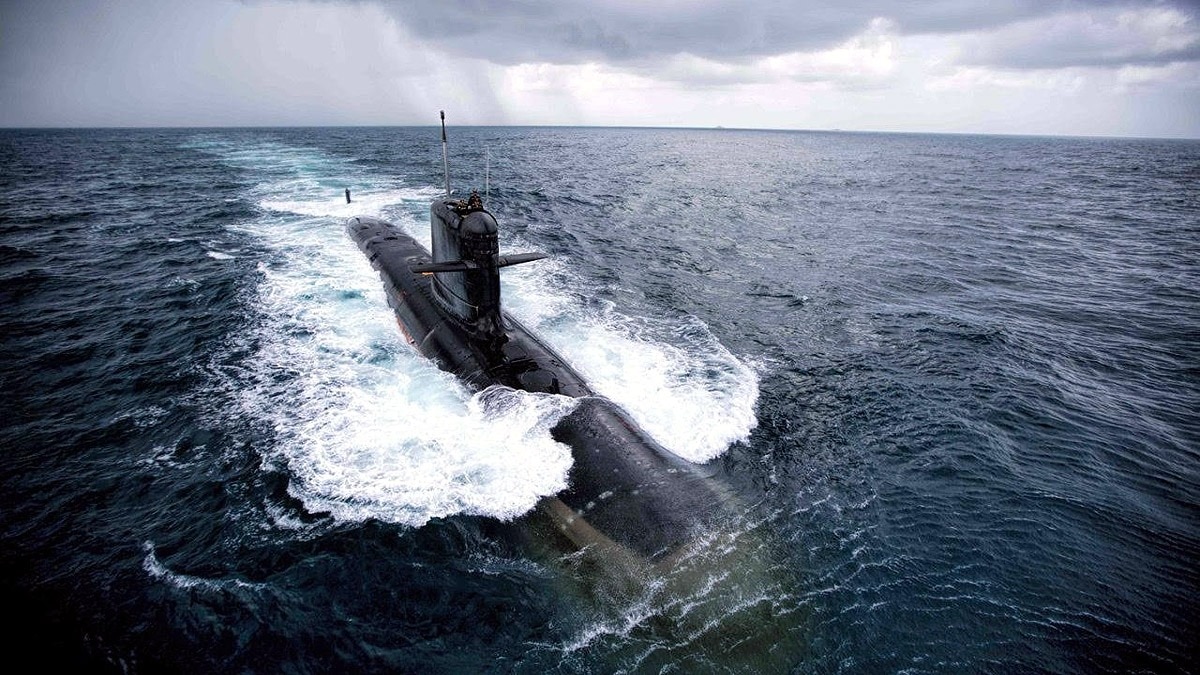
India is set to sign a landmark $9 billion agreement with Germany's TKMS for six diesel-electric submarines. This strategic move aims to modernize the aging naval fleet and counter China's growing influence in the Indian Ocean.
- India to sign a ~$9 billion deal for 6 diesel-electric submarines from TKMS, Germany.
- Construction will take place at Mazagon Dock, Mumbai, via technology transfer.
- Submarines will feature advanced AIP systems, doubling underwater endurance.
- The move reduces India's strategic dependence on Russian military hardware.
In a major boost to its maritime capabilities, India is finalizing a massive defense deal with Germany's ThyssenKrupp Marine Systems (TKMS). Under the ambitious Project 75I, New Delhi will acquire six state-of-the-art diesel-electric submarines. These vessels will be built domestically at Mazagon Dock in Mumbai, ensuring a significant transfer of technology to Indian shipbuilders.
The urgency of this acquisition stems from the deteriorating state of the Indian Navy's conventional fleet. Most of the existing SSK submarines are over 25 years old. A 30-year plan initiated in 1999 aimed for 24 conventional submarines, yet only six have been delivered to date. TKMS emerged as the preferred partner, outperforming competitors from Russia, France, and South Korea on both pricing and technology transfer terms.
Technological Edge and Capabilities
The selected vessels will be an enhanced version of the Type-214 design. The cornerstone of this technology is the Air-Independent Propulsion (AIP) system, which allows the submarines to remain submerged for significantly longer periods, drastically reducing the risk of detection. These submarines will be equipped with torpedoes, anti-ship missiles, and land-attack cruise missiles, enabling precise strikes on coastal targets and effective 'area-denial' missions in the Indian Ocean.
Why This Matters
BozokMedia analysis shows that this deal is a calculated move to shift India's strategic axis. By diversifying its defense procurement away from Russia and toward Germany, India is aligning itself with Western technological standards. Given China's aggressive expansion in the IOR (Indian Ocean Region), these stealthy assets are critical for maintaining a credible deterrent.
"The integration of German stealth technology with Indian operational expertise will create a formidable underwater shield in the Indian Ocean."
However, the deal is not without risks. Historically, Germany has been hesitant with arms exports due to political pressures from coalition partners regarding human rights. To mitigate the risk of future sanctions or supply chain disruptions, experts suggest that India should acquire a strategic equity stake in TKMS, giving New Delhi a voice within the corporate structure.
Furthermore, this deal opens doors for a unique India-Israel-Germany triad. Since Israel already operates TKMS-built Dolphin-class submarines, there is immense potential for pooling spares, joint maintenance, and collaborative AIP development, which would optimize operational costs for both strategic partners.
Frequently Asked Questions
1. What is Project 75I?
Project 75I is an Indian Navy program to build six conventional submarines in India with collaboration from a foreign Original Equipment Manufacturer (OEM) through technology transfer.
2. What is the advantage of an AIP system?
Air-Independent Propulsion (AIP) allows a non-nuclear submarine to operate underwater for weeks instead of days, making it nearly invisible to enemy sonar.