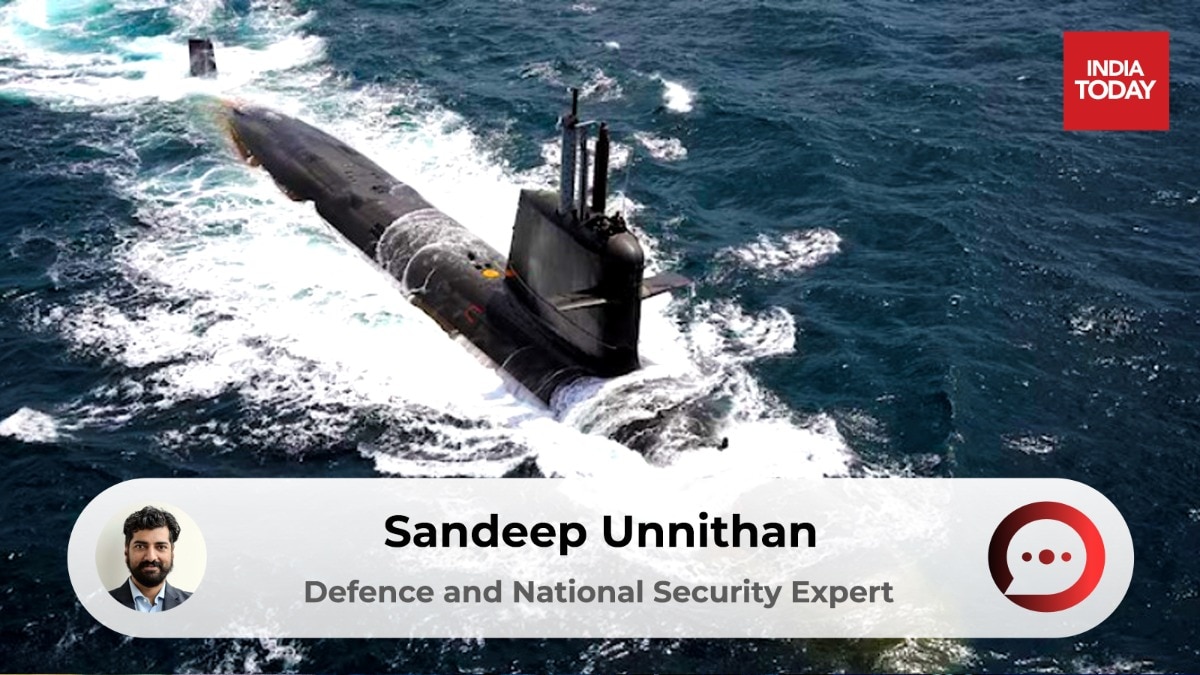
India is set to sign a landmark $9 billion deal with Germany's TKMS for six advanced diesel-electric submarines to replenish its aging fleet. However, experts warn of potential geopolitical risks and the need to 'firewall' the agreement against future political shifts in Berlin.
- India will acquire six advanced diesel-electric submarines from Germany's TKMS for $9 billion.
- The deal includes technology transfer for construction at Mazagon Dock, Mumbai.
- The fleet will feature Air Independent Propulsion (AIP) for extended underwater endurance.
- Strategic shift observed as India diversifies arms procurement away from Russia and the US.
India is on the verge of finalizing its largest-ever arms contract with Germany, a USD 9 billion agreement for six diesel-electric submarines. This strategic move comes at a critical juncture where the Indian Navy's conventional submarine fleet is facing a severe crisis, with two-thirds of its SSK (diesel-electric) platforms having already exceeded their 25-year operational lifespan.
The preferred bidder, Thyssen Krupp Marine Systems (TKMS), outperformed rivals from France, South Korea, Spain, and Russia. The submarines will be based on an enlarged version of the Type-214 design, incorporating state-of-the-art Air Independent Propulsion (AIP) powered by hydrogen fuel cells. This technology is a game-changer, effectively doubling the duration these vessels can remain submerged, thereby enhancing stealth and deterrence in the Indian Ocean Region.
Why This Matters
BozokMedia analysis shows that this deal is not merely about hardware but about strategic autonomy. By insisting on technology transfer to Mazagon Dock Ltd, India aims to bridge a decades-old gap in its indigenous conventional submarine design capabilities. However, the sheer scale of the deal—exceeding TKMS's own market capitalization—highlights India's desperation to fill the gap left by the delayed Project 75I, which has been in the pipeline for over two decades.
Historically, India's naval strategy has been a mix of indigenous nuclear development (the Arihant class) and foreign conventional imports. Yet, the failure to implement the 2016 DRDO proposal for an indigenous P-76 class has left the Navy dependent on European expertise. The new submarines will be equipped to launch torpedoes, anti-ship missiles, and land-attack cruise missiles for precision strikes on shore targets.
"The reliance on a single foreign partner for a 40-year lifecycle creates a strategic vulnerability that must be mitigated through ironclad legal firewalls."
The geopolitical dimension is equally complex. While Berlin views this as a way to decouple India from Russian military dependence, India must remember Germany's history of fickle export licenses. For years, Germany blocked the sale of Heckler & Koch MP5 submachine guns to India due to human rights concerns, while historically providing similar technology to Pakistan during the Cold War.
| Feature | Legacy Type 209 | New TKMS Type-214 Variant |
|---|---|---|
| Propulsion | Standard Diesel-Electric | AIP (Hydrogen Fuel Cells) |
| Endurance | Standard | Double Underwater Duration |
| Capabilities | Basic Patrol/Attack | Land-Attack Cruise Missiles |
| Build Site | Foreign Built | Mazagon Dock (Tech Transfer) |
Given that the first submarine is expected by the early 2030s, India will be tethered to German political stability for nearly four decades. A shift in the German coalition government could potentially lead to sanctions or spares denials if India's relations with Russia remain too close for Berlin's comfort.
Frequently Asked Questions
Q1: Why is India choosing Germany over Russia or France?
TKMS offered the most competitive combination of price and technology transfer, specifically the advanced AIP system which is crucial for stealth.
Q2: When will the first submarine be operational?
The first vessel is slated for delivery seven years after the contract signing, placing the timeline in the early 2030s.