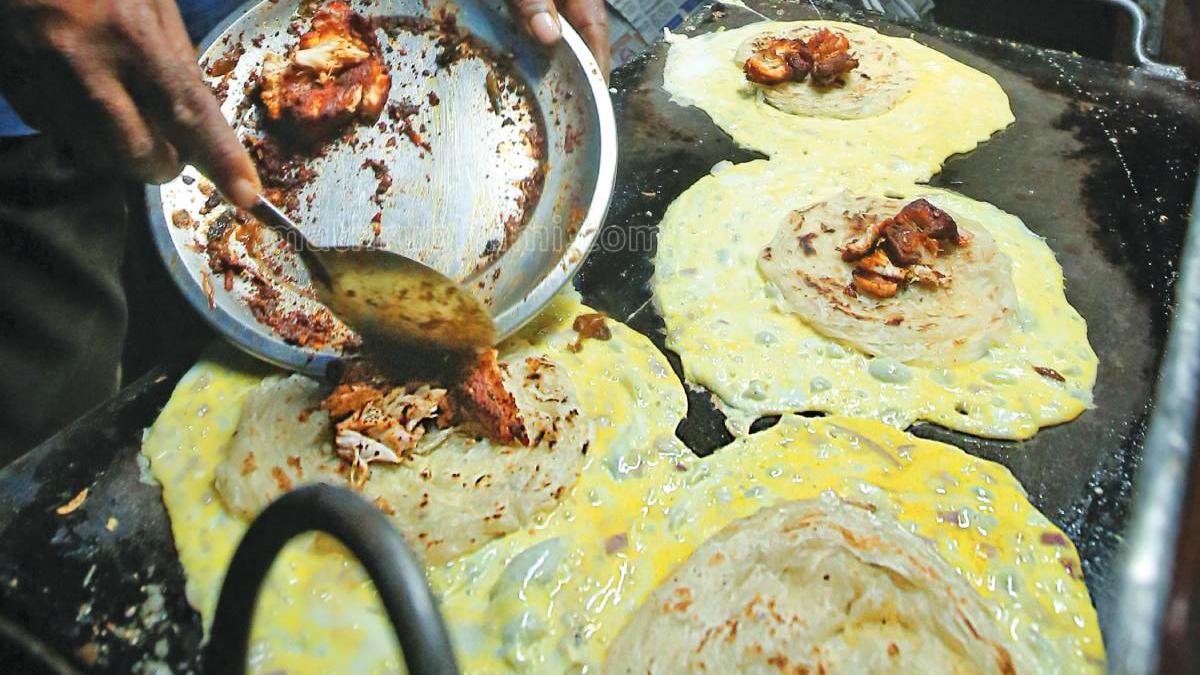
Police in Thiruvananthapuram have uncovered a sophisticated racket where large hotels operated illegal street food stalls (thattukadas) using poor vendors as fronts. Financial audits revealed millions of rupees flowing directly into the accounts of major hotel owners.
- Large hotel owners operated illegal chain-style street food stalls using poor vendors as covers.
- UPI transaction analysis revealed millions of rupees routed to corporate hotel accounts.
- Police eviction drives intensified following Supreme Court mandates on pedestrian rights.
- Police permission from the Traffic Assistant Commissioner is now mandatory for all roadside stalls.
In a startling discovery, the Thiruvananthapuram police have dismantled a large-scale organized racket operating under the guise of street food stalls. Known locally as 'thattukadas', these stalls were found to be operated as a chain by prominent hotel owners, who used marginalized individuals as front-facing vendors to evade legal scrutiny and taxes.
During a series of raids in the Kuravankonam area, officials discovered that only one vendor among dozens possessed a valid license. The investigation took a critical turn when police analyzed the UPI transaction histories of these stalls. The digital footprints revealed that vast sums of money—amounting to lakhs and even crores—were being transferred directly into the bank accounts of major hotels located within the city and surrounding regions.
Why This Matters
BozokMedia analysis shows that this phenomenon represents a dangerous trend of 'corporate encroachment' on the informal economy. By masquerading as small-scale vendors, large hotel owners not only monopolized the street food market but also inflated prices for consumers while avoiding quality control and food safety regulations. This effectively kills the genuine livelihood of independent micro-entrepreneurs.
"When corporate entities hijack the informal sector, they destroy the social fabric of street vending and replace organic growth with predatory profit-seeking."
The police have targeted hotspots including Vazhuthakkad, Palayam University College, Medical College Hostel, and the Karyavattom campus. Despite previous eviction drives a year ago, many stalls had resurfaced with alleged political backing. However, citing a recent Supreme Court ruling that defines unobstructed pedestrian movement as a fundamental right, the police have now been granted full authority to clear these encroachments.
To curb this menace, the administration has mandated that any individual wishing to start a roadside stall must now obtain prior permission from the Traffic Assistant Commissioner. The police will conduct site inspections to ensure that the stall does not cause traffic congestion. Mayor V.V. Rajesh stated that the Corporation will soon designate specific 'Food Streets' where legal vending can take place.
Parallelly, the Corporation has intensified food safety inspections ahead of the Onam festival. The 'Onam Squad' is conducting rigorous checks on the quality and licensing of essential items like ghee, coconut oil, and jaggery, including cloud kitchens and catering services, to ensure public health safety during the festivities.
Frequently Asked Questions
1. What is the new requirement for starting a street food stall?
Vendors must now apply to the Traffic Assistant Commissioner, who will grant permission only after verifying that the stall does not impede traffic flow.
By auditing the UPI payment IDs used by the vendors, police found that the funds were being credited to the corporate accounts of large hotels rather than the individual vendors.