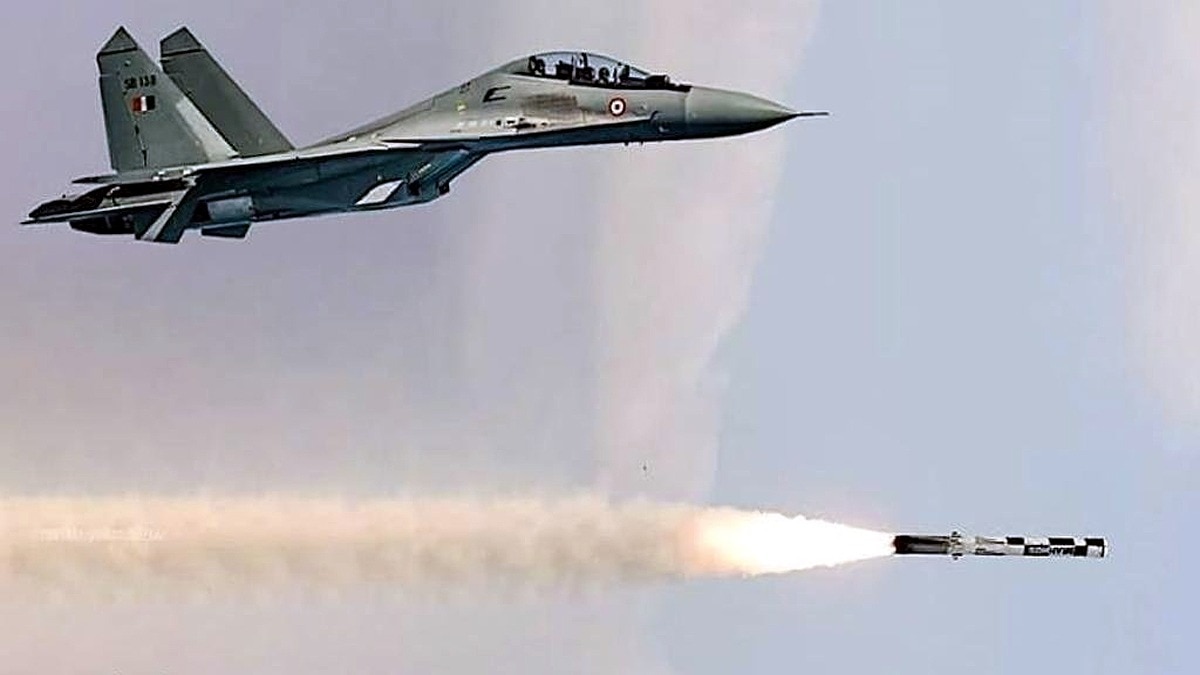
A shocking declassified documentary reveals the harrowing details of 'Operation Sindoor,' where India's precision BrahMos strikes forced Pakistan to beg for a ceasefire after losing multiple airbases.
- BrahMos missiles successfully neutralized 10-11 Pakistani airbases and terror launchpads.
- The Pakistani DGMO explicitly pleaded with India to stop the strikes due to massive infrastructure damage.
- India rejected US-mediated peace talks, insisting on direct military-to-military communication.
- The operation served as a strategic warning against state-sponsored terrorism.
The recently released Discovery Channel documentary, 'Declassified: Operation Sindoor,' has brought to light the visceral details of a high-stakes military operation that left the Pakistani military establishment in shambles. The operation showcased the lethal precision of India's BrahMos missiles and the strategic resolve of the Indian Air Force.
Recalling the intensity of the strikes, Lieutenant General Pratik Sharma, then General Officer Commanding-in-Chief of the Northern Command, described the operational success as a series of flawless hits. The systematic destruction of targets in Bahawalpur ensured that terror infrastructure was completely eradicated without a single glitch in execution.
Why This Matters
BozokMedia analysis indicates that Operation Sindoor marked a pivotal shift in India's defense doctrine. By moving from 'strategic restraint' to 'proactive deterrence,' India has signaled to the global community that it will no longer tolerate cross-border terrorism and possesses the capability to strike deep within enemy territory with impunity.
One of the most striking revelations in the documentary is the conversation between India's then DGMO Rajiv Ghai and his Pakistani counterpart, Major General Kasif Abdullah. Driven by desperation, the Pakistani DGMO bypassed traditional diplomatic decorum to plead for mercy, stating, "Sir, you have hit us with so many BrahMos missiles, you should be calm now. Why don't we stop this?"
"The message to the world was clear: do not mistake India's kindness and tolerance for weakness. India will not endure; India will respond." - Ajit Doval, NSA
The documentary also highlights the geopolitical tug-of-war. Security expert Nikhil Gokhale noted that Pakistan attempted to use the United States as a shield. While Marco Rubio attempted to facilitate a ceasefire via External Affairs Minister S. Jaishankar, India remained firm that any resolution must come through direct military channels, refusing third-party interference.
The operation culminated on May 10, when after intense pressure and visible devastation of 10-11 airbases, Pakistan agreed to a ceasefire. National Security Advisor Ajit Doval ensured that while the strikes stopped, the warning remained permanent: India's patience has a limit.
| Aspect | Indian Position | Pakistani Position |
|---|---|---|
| Strategy | Precision Offensive Strikes | Defensive Plea for Mercy |
| Weaponry | BrahMos / IAF Fighter Jets | Conventional Defenses (Failed) |
| Diplomacy | Direct Bilateral Dialogue | Attempted US Mediation |
Frequently Asked Questions
Q1: What was the primary goal of Operation Sindoor?
A: The primary objective was to dismantle terror hubs and military airbases in Pakistan to deter future cross-border incursions.
Q2: Who initiated the ceasefire request?
A: The ceasefire was initiated by Pakistan's DGMO, Major General Kasif Abdullah, following the catastrophic damage caused by BrahMos missiles.