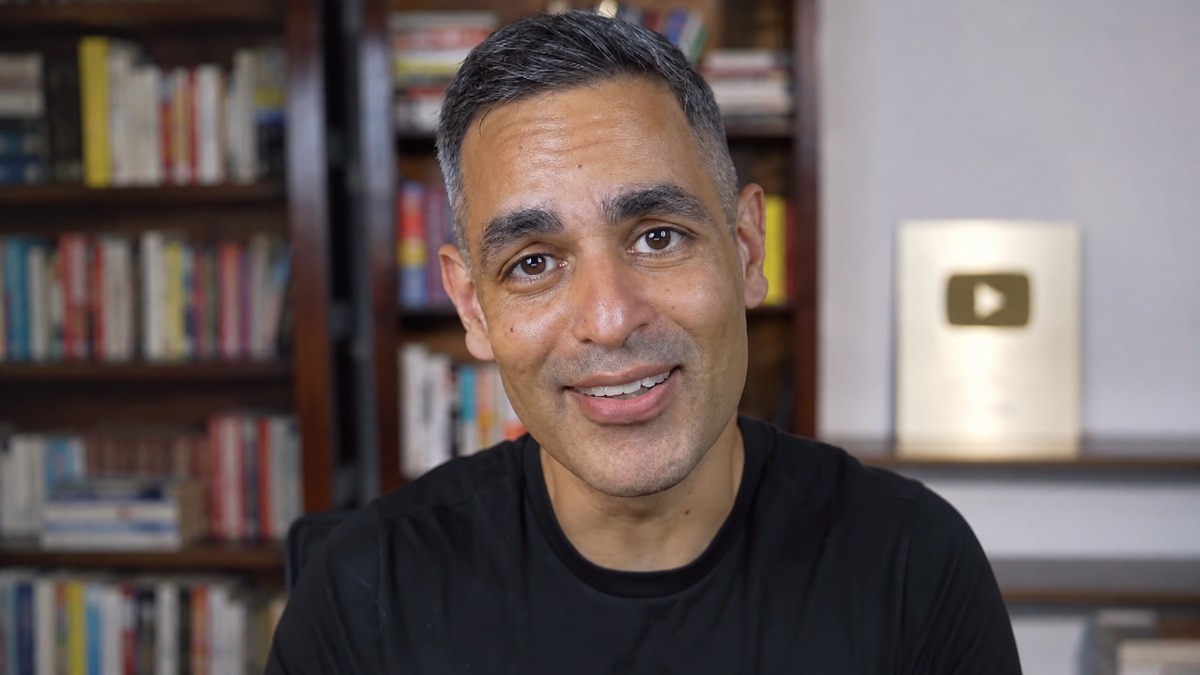
Entrepreneur Ankur Warikoo shares a powerful narrative about a student who turned a JEE failure into a successful career in design. This story challenges the traditional obsession with competitive exams in India.
- Academic failure in competitive exams like JEE is not the end of a career path.
- Self-taught skills in creative fields can lead to high-value professional success.
- The shift from traditional engineering goals to passion-driven design is becoming more viable.
In a recent inspiring narrative shared by renowned entrepreneur and content creator Ankur Warikoo, the spotlight was cast on a remarkable journey of resilience. The story revolves around an individual who faced the crushing disappointment of failing the Joint Entrance Examination (JEE), one of India's most rigorous and high-pressure academic hurdles. While such a failure often leads to a sense of hopelessness in the Indian societal context, this individual chose a path of self-discovery and skill acquisition.
Rather than succumbing to the pressure of pursuing a traditional degree in a field they weren't suited for, the protagonist pivoted toward UI/UX and Graphic Design. Through sheer discipline and the utilization of online resources, they transitioned from a 'failed student' to a highly sought-after self-taught designer. This transition underscores the growing importance of the 'Skill Economy' over the 'Degree Economy'.
Why This Matters
BozokMedia analysis shows that the Indian education system is currently undergoing a paradigm shift. For decades, the JEE has been viewed as the sole gateway to success. However, the rise of the digital economy has created millions of roles in design, product management, and digital marketing that do not strictly require an engineering degree. This story serves as a blueprint for thousands of students who feel trapped by academic expectations.
"Success is not defined by the entrance exams you pass, but by the skills you master and the value you provide to the world."
The historical context of Indian education has long prioritized rote learning and competitive ranking. For years, the social stigma associated with not getting into an IIT or NIT was immense. However, the democratization of education through platforms like YouTube, Coursera, and Udemy has empowered students to bypass traditional gatekeepers.
| Traditional Path | Self-Taught Path |
|---|---|
| Focus on JEE/Competitive Exams | Focus on Portfolio and Projects |
| Degree-based validation | Skill-based validation |
| Fixed Curriculum | Adaptive, Industry-led Learning |
The narrative shared by Warikoo emphasizes that the 'failure' was actually a redirection. By removing the burden of an unsuitable academic path, the designer was able to find a vocation that aligned with their natural strengths, eventually achieving a level of professional satisfaction and financial stability that a forced engineering degree might not have provided.
Frequently Asked Questions
Q1: Can one really get a high-paying job without a degree in design?
Yes, in the creative and tech industries, a strong portfolio of real-world projects often carries more weight than a formal degree.
Q2: How can students start learning design on their own?
By exploring free resources on YouTube, taking certified courses on platforms like Google or Coursera, and practicing with tools like Figma and Adobe XD.