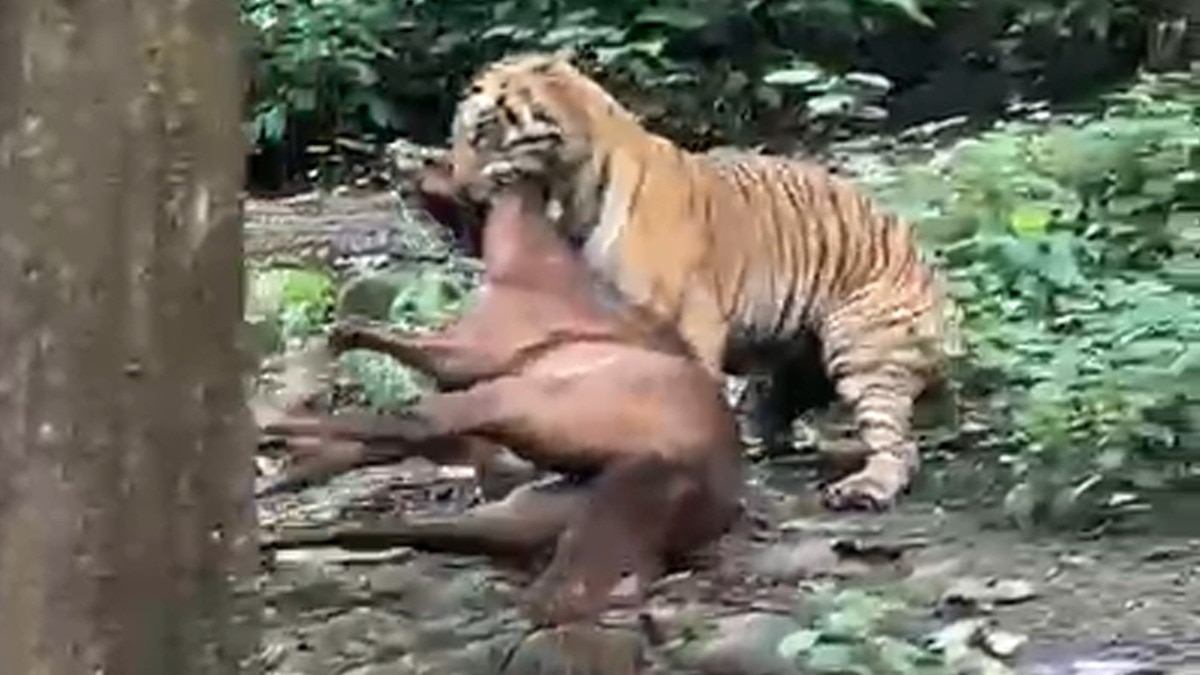
A chilling video has surfaced showing a tiger attacking a horse in a residential area and dragging it into the wild, highlighting the growing tension between humans and wildlife.
- A tiger entered a populated settlement to prey on a horse.
- The predator dragged the horse into the dense forest quickly.
- The incident underscores the rising trend of human-wildlife conflict.
In a shocking turn of events captured on camera, a tiger was seen hunting a horse in the middle of a populated settlement. The sudden attack left residents stunned and has sparked widespread fear across the locality as the predator displayed immense power and precision.
The footage reveals that the tiger utilized the cover of nearby shrubs before launching a lethal strike on the horse. Within seconds, the predator secured its grip and dragged the animal away toward the forest canopy, leaving witnesses helpless and terrified by the speed of the attack.
Why This Matters
BozokMedia analysis shows that such incidents are not isolated but are symptoms of habitat fragmentation. As urban expansion encroaches upon forest lands, predators are forced to venture into human territories for sustenance, significantly increasing the risk of fatal encounters for both humans and livestock.
"The encroachment of wildlife into human settlements is a clear indicator of ecological distress and a lack of natural prey in protected reserves."
Historically, regions bordering national parks have seen a spike in these encounters. The lack of secure wildlife corridors often forces big cats to traverse through villages to reach other forest patches, leading to opportunistic hunting of domestic animals.
Frequently Asked Questions
Q1: Were there any human casualties in this incident?
No, only a horse was targeted and taken by the tiger in this specific occurrence.
Q2: How can residents protect livestock from such attacks?
Securing livestock in reinforced shelters and avoiding grazing in forest-adjacent areas during dawn and dusk can reduce the risk.

