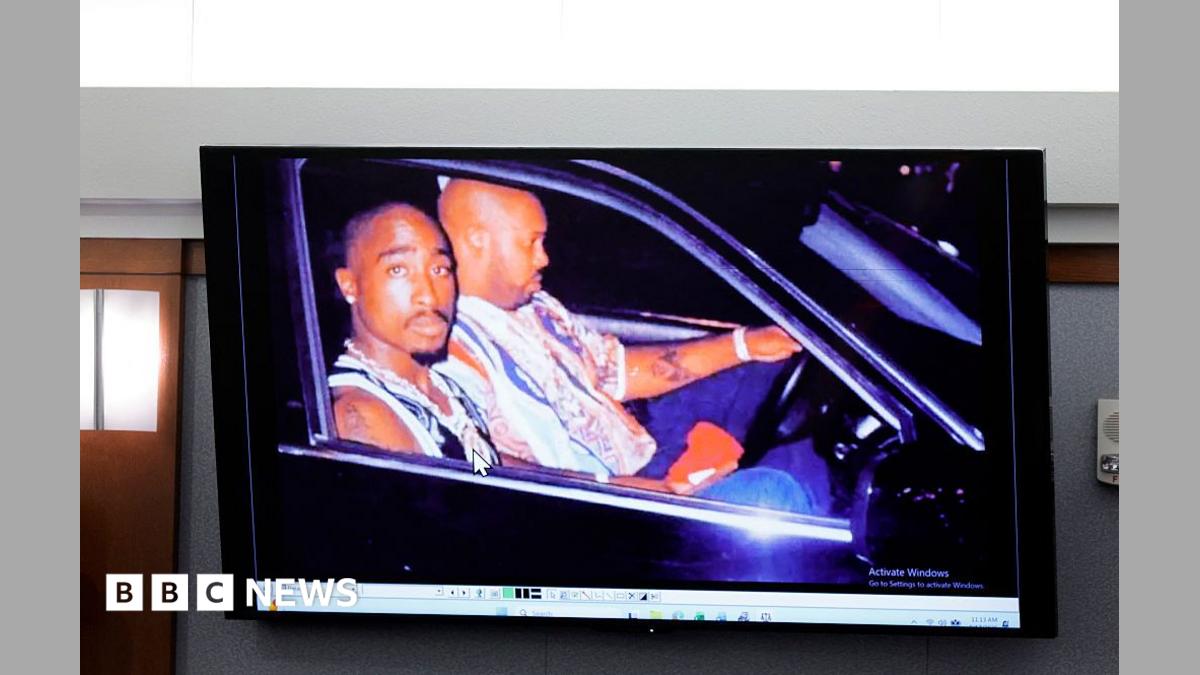
Decades after the shooting, a Las Vegas court hears harrowing testimony regarding the death of Tupac Shakur, highlighting a culture of silence and revenge.
- Duane 'Keffe D' Davis is accused of orchestrating the 1996 drive-by shooting.
- A police officer testified that Tupac refused to name his attackers, stating, "We'll take care of it."
- The prosecution is using a memoir co-authored by Davis as a key piece of evidence.
The opening day of the murder trial for legendary rapper Tupac Shakur has transported a Las Vegas jury back to the volatile atmosphere of the 1990s. Prosecutors have painted a vivid picture of Duane 'Keffe D' Davis, a former gang leader, as the mastermind behind the retaliatory hit that claimed the life of one of the most influential artists in history. The trial seeks to resolve one of the most enduring cold cases of the last century.
Chief Deputy District Attorney Binu Palal argued that while Davis may not have pulled the trigger, he was the strategic architect of the crime. The motive, according to the prosecution, was a street-level vendetta following a physical altercation between Shakur and Davis's nephew, Orlando Anderson. In a surprising turn, the prosecution is relying heavily on a memoir co-authored by Davis himself, which provides a detailed account of the night's events.
Why This Matters
BozokMedia analysis shows that this trial is a collision between the legal system and the 'code of the streets.' The refusal of witnesses and victims to cooperate in the 90s—driven by a philosophy where "silence means survival"—is the primary reason this case remained unsolved for nearly three decades.
A pivotal moment in the testimony came from Garry Dale, a former officer with the Las Vegas Metropolitan Police Department. Dale recalled riding in the ambulance with a bleeding Shakur, who steadfastly refused to provide information about the shooters. The rapper's final defiance, "We'll take care of it," underscores the deep-seated distrust of law enforcement that permeated the hip-hop community during the East Coast-West Coast rivalry.
"The intersection of gang loyalty and celebrity culture created a vacuum of truth that only a memoir could eventually fill."
The defense team, led by attorney Michael Sanft, has dismissed the prosecution's narrative as "fiction." They argue that the memoir was sensationalized to increase book sales and that the investigation has been flawed and biased for thirty years. Sanft questioned the reliability of witnesses who have changed their stories over time, suggesting they are motivated by money or media fame.
The prosecution alleges that Davis coordinated two vehicles, including a white Cadillac, to hunt down Shakur and Death Row Records co-founder Suge Knight. According to the state, Davis passed the murder weapon to his nephew, Anderson, who then fired into the car. Tupac, only 25 at the time, died six days after the September 7, 1996, shooting.
| Perspective | Core Argument |
|---|---|
| Prosecution | Davis planned the murder as revenge for his nephew's beating. |
| Defense | The case is built on unreliable witnesses and a fictionalized book. |
Frequently Asked Questions
1. Who is Keffe D?
Duane 'Keffe D' Davis is a former leader of the South Side Compton Crips and the defendant in the Tupac Shakur murder trial.
2. Why did it take 30 years to bring this to trial?
A combination of a lack of witness cooperation (the 'code of silence') and incomplete police work kept the case cold until Davis's public admissions.