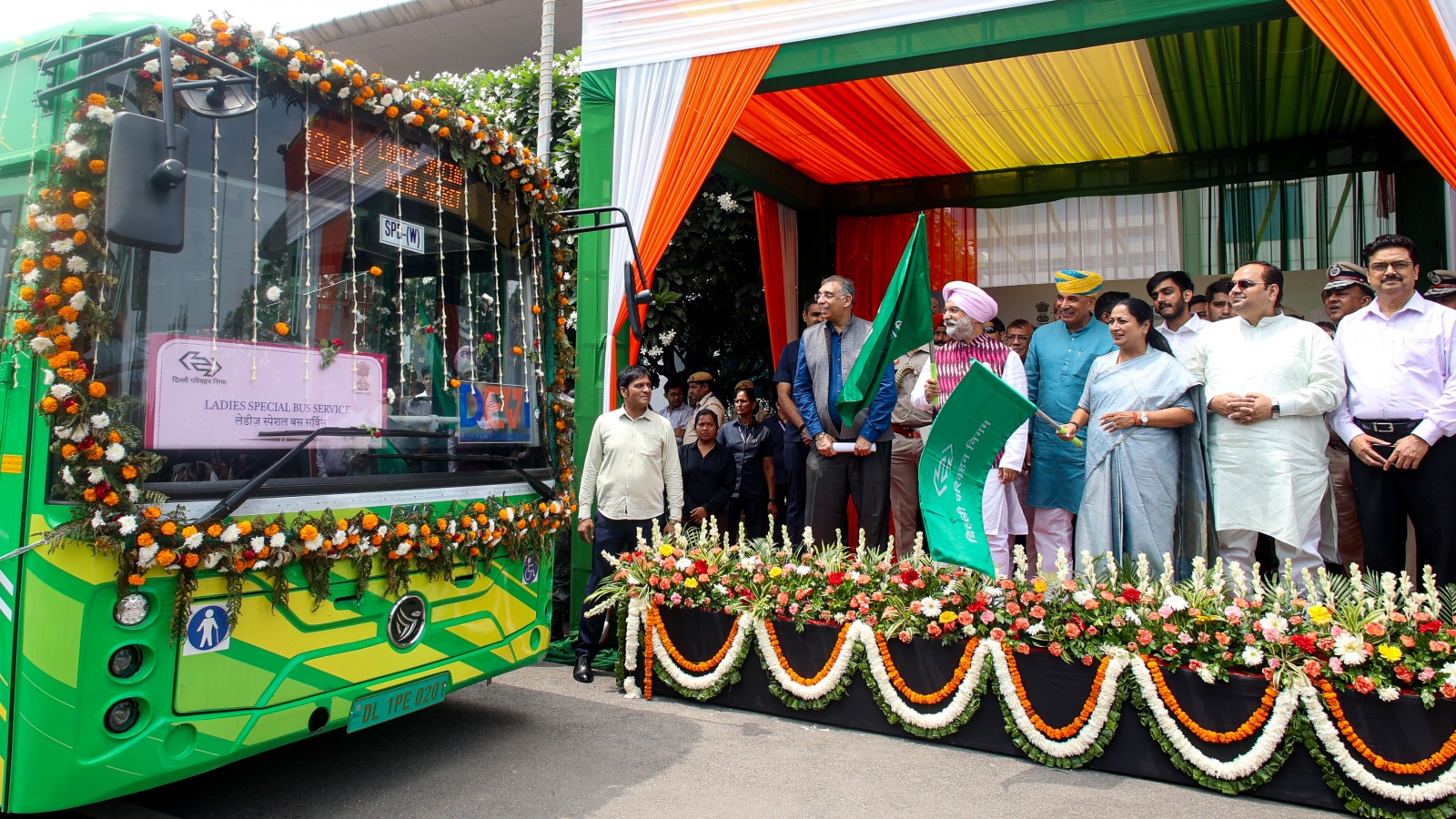
In a massive push for sustainable transit and women's safety, Delhi LG and CM have inaugurated 200 new electric buses and 56 special services for women.
- Delhi's electric bus fleet surpasses 5,000 with 200 new inductions.
- Launch of 56 'Ladies Special' e-bus services for safer commuting.
- Target set to expand the total fleet to 14,000 buses by 2028-29.
- Enhanced security with women police and integrated 112 PCR panic buttons.
New Delhi: In a significant move to modernize the capital's public transport, Lieutenant Governor (LG) Taranjit Singh Sandhu and Chief Minister Rekha Gupta flagged off 200 new electric buses at the Delhi University Sports Complex on Wednesday. This latest induction pushes Delhi’s electric bus fleet past the 5,000 mark, bringing the total bus fleet to approximately 6,800 vehicles.
Prioritizing Women's Safety and Mobility
A cornerstone of this initiative is the launch of 56 women-only e-bus services. These services are strategically designed to cater to high-demand routes and educational hubs. The rollout includes 30 'Ladies Special' trips on 15 major routes and 26 'University Ladies Special' (U-SPL) trips across 13 routes, specifically connecting prominent institutions like Hindu College, Ramjas, Hansraj, and LSR.
To ensure maximum security, these buses will be staffed by women and will feature women police personnel and Home Guard marshals on board. Furthermore, all buses are equipped with panic buttons that are directly integrated with the Delhi Police’s 112 PCR emergency response system, a direct outcome of recent high-level safety reviews led by the LG.
Sustainable Urban Infrastructure
The new fleet consists of 88 twelve-meter electric buses and 112 nine-meter Delhi EV Connector (DEVI) buses. LG Sandhu emphasized that these initiatives are vital for strengthening clean, green, and sustainable public transport while actively combating vehicular pollution in the NCR region.
This strategic expansion not only addresses environmental concerns but also sets a global benchmark for gender-inclusive urban mobility.
Why This Matters: BozokMedia Analysis
BozokMedia analysis shows that this is not merely a fleet expansion but a critical component of Delhi's long-term urban policy. By integrating safety technology with green energy, the government is attempting to solve the dual crisis of air pollution and urban female mobility, which are the two biggest hurdles to the city's economic productivity.
Historical Context of Delhi's EV Transition
The government has maintained a rapid pace of electrification. Following the addition of 500 EV buses in February, 300 in March, 200 in April, and 300 in July, this latest batch reinforces the momentum. The ultimate goal remains ambitious: converting the entire Delhi Transport Corporation (DTC) fleet to electric and reaching a total of 14,000 buses by 2028-29.
Frequently Asked Questions
1. Which colleges will benefit from the University Ladies Special services?
Students from Hindu, Ramjas, Daulat Ram, Shri Ram, LSR, Gargi, ARSD, and Hansraj colleges will see improved connectivity.
2. How is the safety of women ensured on these buses?
Through the presence of women police/marshals and panic buttons linked to the 112 emergency system.