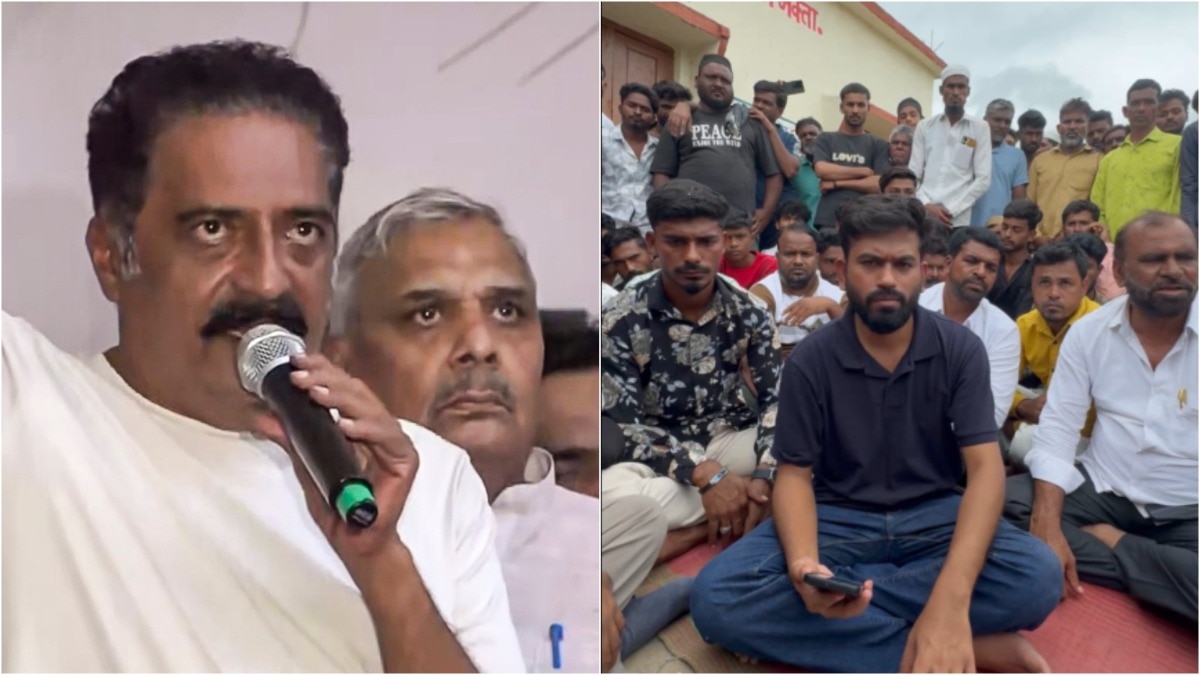
Acclaimed actor-activist Prakash Raj has extended his strong support to Citizens for Justice and Peace (CJP) following their successful school educational campaign. Using the viral slogan "Dimagi bano, andhbhakt nahi," Raj emphasized the critical need for scientific temper and independent thinking among India's youth.
- Actor Prakash Raj endorsed CJP's peaceful school education campaign victory.
- He coined the slogan 'Dimagi bano, andhbhakt nahi' to advocate for rational thinking.
- The CJP campaign focuses on teaching constitutional values and protecting children from communal hate.
Renowned multi-lingual actor and social activist Prakash Raj has once again taken a bold stance on India's socio-political landscape. He has publicly lauded the Citizens for Justice and Peace (CJP), a prominent human rights organization, following the successful implementation of their peace education campaign in schools. Backing the victory of this progressive campaign, Raj delivered a powerful message that has since gone viral: "Dimagi bano, andhbhakt nahi" (Be intellectual/rational, not a blind devotee).
The CJP's school campaign is a grassroots initiative designed to foster empathy, secularism, and constitutional literacy among young students. By engaging children in interactive workshops, the campaign aims to build a shield against sectarian bias, hate speech, and divisive propaganda. Prakash Raj’s high-profile endorsement has brought national attention to the crucial role of critical thinking in modern Indian education.
CJP's Crucial Victory Against Communal Polarization
Citizens for Justice and Peace, co-founded by civil rights advocate Teesta Setalvad, has been at the forefront of defending democratic values and combating hate speech in India. Their peace education program in schools is designed to counter the growing influence of extremist ideologies on impressionable minds. The successful completion of this campaign phase is being hailed as a major victory by civil society groups who advocate for an inclusive and pluralistic educational curriculum.
Why This Matters
BozokMedia analysis shows that as social media algorithms increasingly polarize public discourse and spread misinformation, school-level campaigns focusing on media literacy and critical thinking are the primary defense against communal disharmony. Prakash Raj’s backing elevates this local initiative to a national conversation about the true purpose of education in a democratic society.
Prakash Raj has consistently used his public platform to challenge authoritarian tendencies and majoritarian politics in India. His support for CJP aligns with his long-standing commitment to defending secularism and free speech. By encouraging the youth to "use their brains" rather than blindly following political narratives, Raj seeks to cultivate a more questioning and responsible citizenry.
"True education does not demand blind obedience; it fosters the courage to question the status quo and seek empirical truth."
The table below highlights the fundamental differences between critical thinking-based education and agenda-driven, rote-learning systems:
| Parameter | Peace & Critical Education (CJP Model) | Traditional / Rote Learning Model |
|---|---|---|
| Core Focus | Logic, empathy, and constitutional values | Rote memorization and rigid conformity |
| Primary Goal | Creating independent, secular, and rational citizens | Creating compliant, easily polarized masses |
| Methodology | Encouraging questions and open dialogue | Discouraging dissent and enforcing established dogmas |
Frequently Asked Questions
Q1: What is the primary objective of CJP's school campaign?
A1: The campaign aims to introduce peace education, constitutional values, and critical thinking skills to school children, helping them recognize and reject hate speech and communal propaganda.
Q2: What is the significance of Prakash Raj's slogan 'Dimagi bano, andhbhakt nahi'?
A2: The phrase translates to "Be rational, not a blind follower." It serves as a call to action for citizens, especially the youth, to analyze political and social narratives objectively rather than accepting them without question.