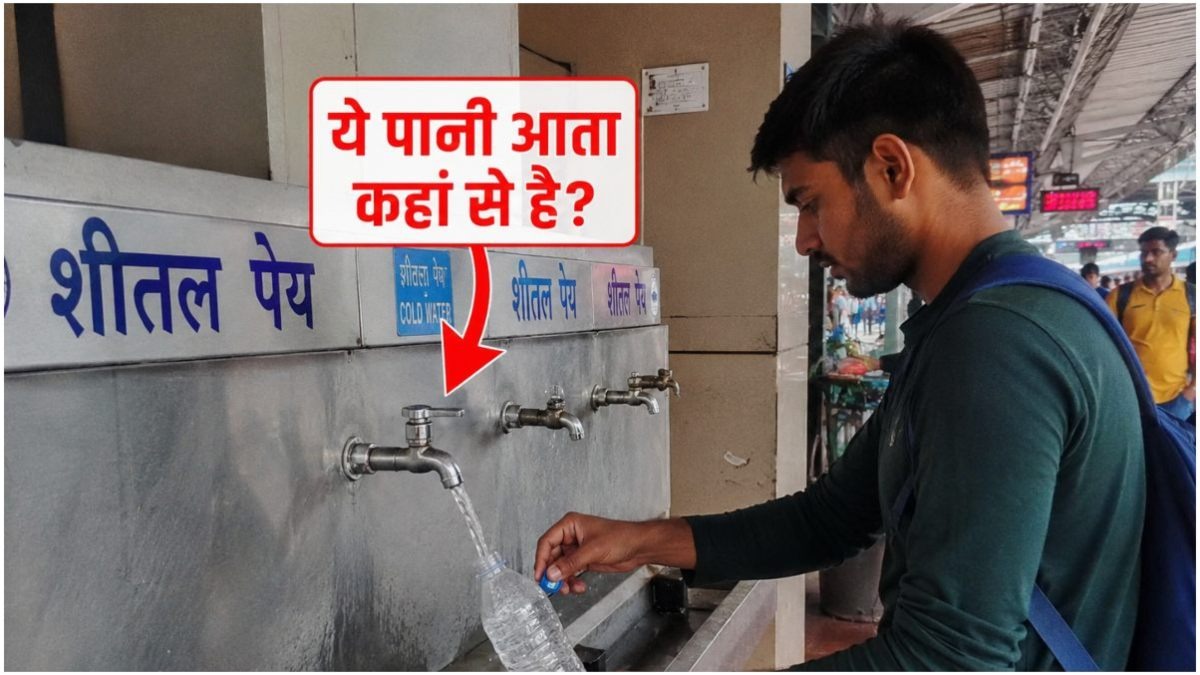
An in-depth look into the sources, purification methods, and recent safety concerns regarding drinking water provided at Indian Railway stations.
- Water sources include tube wells, wells, rivers, canals, or municipal supplies.
- Purification involves filtration, chlorination, and chemical treatments rather than just RO.
- A recent CAG report identified E.coli bacteria in several major railway stations.
- Water is tested for pH, TDS, turbidity, hardness, and fluoride levels.
For the millions of passengers traveling across the vast network of Indian Railways, access to clean drinking water is a fundamental necessity. However, the journey of water from its source to the station's water cooler involves a complex logistical and purification process that is often overlooked by the common commuter.
Sources and Distribution: According to official railway documentation, the source of water varies significantly from one station to another. Depending on the local geography, stations may rely on tube wells, open wells, rivers, canals, or the municipal corporation's pipeline. Once harvested, the water is stored in large centralized tanks before being distributed through a network of pipelines to various parts of the station.
Why This Matters
BozokMedia analysis shows that the integrity of this water supply chain is critical for public health. While the system is designed to be robust, any lapse in the purification or storage stage can lead to widespread waterborne diseases among travelers.
Ensuring water safety requires a rigorous combination of mechanical filtration and chemical disinfection to meet national standards.
Purification Protocols: It is a common misconception that every station utilizes Reverse Osmosis (RO) technology. In reality, the railway employs a multi-stage treatment process including filtration and chlorination. To ensure the water is potable, it must pass stringent tests for parameters such as pH levels, TDS (Total Dissolved Solids), turbidity, hardness, and fluoride content. Only after meeting these specific benchmarks is the water released for public consumption.
The CAG Warning: Despite these protocols, a recent audit by the Comptroller and Auditor General (CAG) has raised significant alarms. The report revealed the presence of E.coli bacteria in water samples taken from coolers at several high-profile stations. Locations identified include Coimbatore and Palakkad (Southern Railway), Hyderabad (South Central Railway), Chhatrapati Shivaji Maharaj Terminus, Kalyan, and Madhupur (Eastern Railway). The presence of E.coli is a direct indicator of fecal contamination and can cause severe gastrointestinal infections.
Frequently Asked Questions
Question 1: Does every railway station use RO filters?
No, while some may use RO, most stations rely on a combination of filtration and chlorination to treat water.
Question 2: Why is E.coli dangerous in drinking water?
E.coli is a bacterium that indicates contamination and can lead to serious health issues like diarrhea and stomach cramps.


