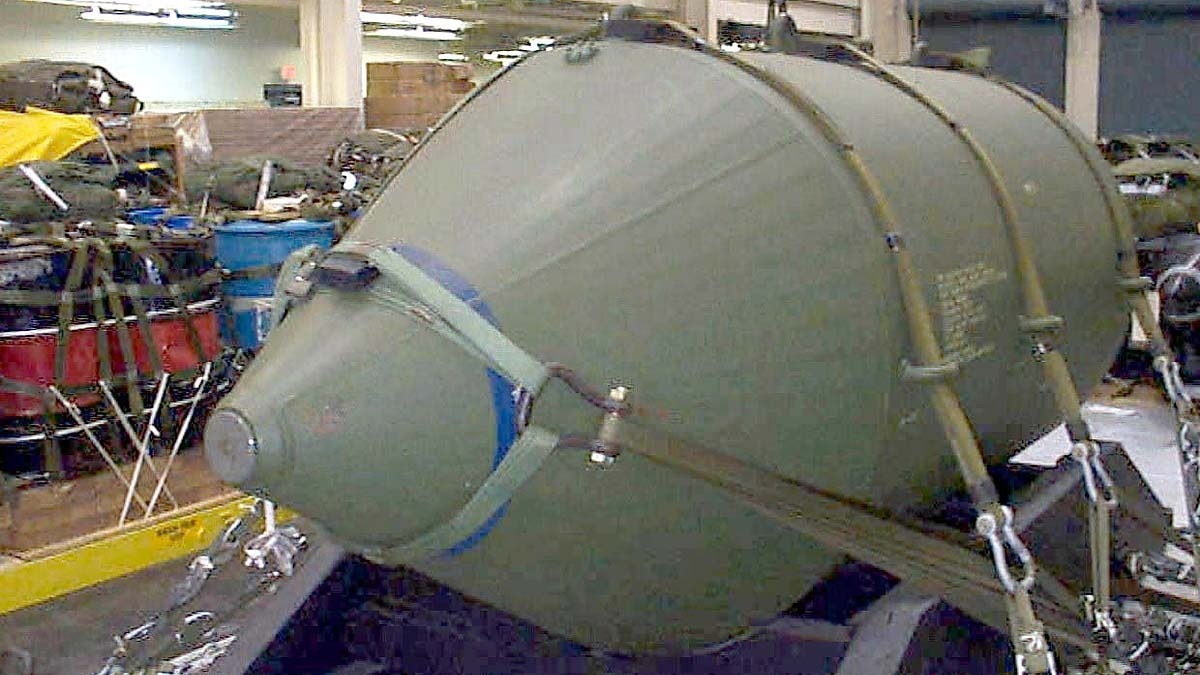
A deep dive into the mechanics and strategic impact of the American 'Daisy Cutter' bomb. Discover how this massive explosive was designed to clear dense jungles and neutralize hidden threats.
- The 'Daisy Cutter' bomb weighs approximately 6,800 kilograms.
- It utilizes a unique fragmentation pattern to clear vast areas.
- It was specifically engineered to penetrate dense jungle canopies.
In the annals of military history, certain weapons possess a psychological impact that is as significant as their physical destruction. The American 'Daisy Cutter' is one such weapon. It is not merely a large explosive; it is a masterclass in tactical engineering designed for environments where conventional munitions fail to reach their full potential due to dense vegetation.
The defining characteristic of the Daisy Cutter is its unique fragmentation mechanism. Upon detonation, the bomb disintegrates into thousands of smaller fragments that expand in a massive, circular wave. This pattern mimics the scattering of flower petals, which gave the weapon its iconic name. This 'petal' effect is designed to uproot trees, flatten shrubbery, and expose enemy positions hidden beneath the canopy.
Why This Matters
BozokMedia analysis shows that the true value of the Daisy Cutter lies not just in its massive 6,800kg weight, but in its 'Area Effect.' While standard bombs focus on a single point of impact, the Daisy Cutter is designed to level an entire landscape. This provides a massive strategic advantage in warfare, particularly in jungle environments where traditional line-of-sight is obstructed.
The Daisy Cutter was not just a tool of destruction, but a strategic instrument used to reshape the battlefield and strip the enemy of their natural camouflage.
Historically, the deployment of this weapon was most notable during the Vietnam War. The objective was to clear vast stretches of jungle to facilitate troop movement and improve the accuracy of aerial reconnaissance and subsequent strikes. This capability fundamentally altered the dynamics of guerrilla warfare in tropical regions.
Historical Background
Following World War II and during the height of the Cold War, military technology underwent a rapid evolution. The United States required ordnance capable of neutralizing threats in environments where visibility was near zero. The development of the Daisy Cutter was a direct response to the challenges posed by dense tropical foliage, marking a shift toward weapons that prioritize environmental manipulation as much as direct combat.
Frequently Asked Questions
Question 1: What is the primary purpose of the Daisy Cutter?
Answer: Its primary purpose is to clear dense vegetation and forest canopies to expose enemy movements and clear paths for ground troops.
Question 2: Is the Daisy Cutter still in active use?
Answer: While legendary, the rise of precision-guided munitions (PGMs) has largely replaced the need for such massive area-effect bombs in modern warfare.