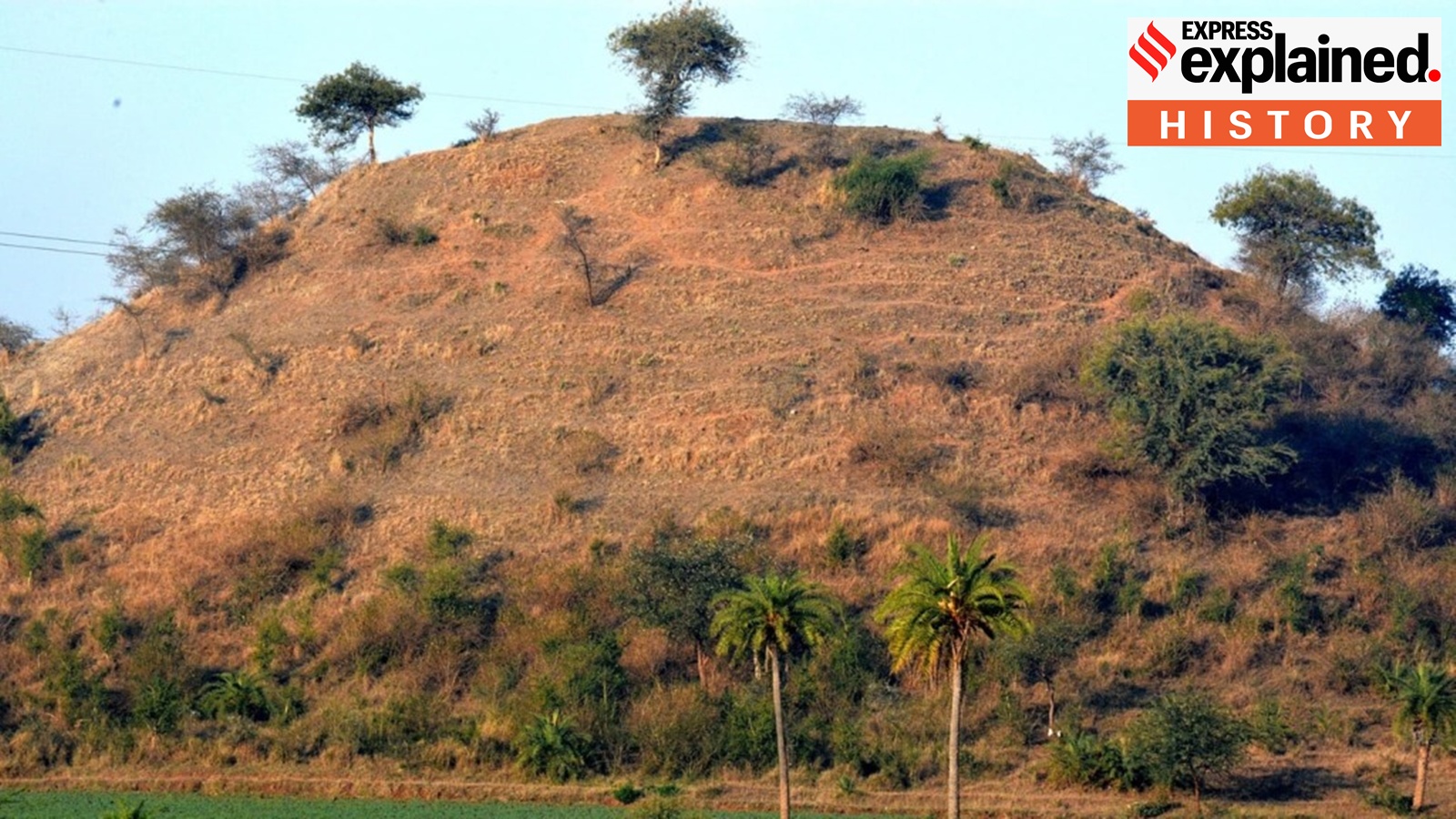
The Madhya Pradesh government has launched fresh excavations at Vaishya Tekri in Ujjain to uncover Buddhist monuments linked to Emperor Ashoka. This move aims to bridge gaps in Mauryan history.
- The Madhya Pradesh government has initiated excavations of Buddhist monuments linked to Emperor Ashoka at Vaishya Tekri.
- Vaishya Tekri features a massive stupa structure that potentially dwarfs the famous Sanchi Stupa.
- Historians debate the direct link between current findings and Ashokan edicts due to the age of previous reports.
The Madhya Pradesh government has commenced a significant archaeological push to restore and investigate monuments linked to the Mauryan Emperor Ashoka. The focal point of this mission is the Vaishya Tekri site in Ujjain, a location steeped in both political and romantic legend. This excavation aims to provide fresh clarity on a period when Ujjain served as a vital administrative hub for the Mauryan Empire.
The Grandeur of Vaishya Tekri
According to archaeological reports, the scale of the structures at Vaishya Tekri is immense. Academic Peter Skilling noted that the largest stupa at the site has an estimated base of 350 feet and a height of 100 feet, significantly larger than the 54-foot stupa at Sanchi. Initial excavations conducted by the Gwalior State Department of Archaeology in 1938–39 unearthed large bricks and punch-marked coins, strongly suggesting a Mauryan origin.
Ashoka’s Life in Avanti
Historian Romila Thapar highlights that Ujjayini (modern Ujjain) was the capital of Avanti and a massive commercial crossroads. Ashoka was sent here as a viceroy by his father, Bindusara. Unlike his brief stint in Taxila, Ashoka is believed to have spent roughly a decade in Ujjain. It was during his journey to this region that he met Devi, the daughter of a prominent merchant in Vidisha, leading to a relationship that would shape his personal history.
Ujjain was not just a provincial outpost but a sophisticated urban center that functioned as the 'Greenwich of India' for ancient astronomers.
Scientific Caution and Historical Debate
Despite the excitement, some scholars urge prudence. Historian Himanshu Prabha Ray suggests that we may be 'jumping the gun' by relying on decades-old excavation reports. She points out that while the mounds are impressive, there is a lack of definitive Ashokan pillars in the immediate vicinity of the stupas to provide conclusive proof of his direct involvement in the site's construction.
Why This Matters
BozokMedia analysis shows that these excavations are critical for reconstructing the socio-political landscape of ancient India. Understanding the link between Ashoka’s administrative duties in Ujjain and his subsequent transformation into a Buddhist patron can provide vital insights into the evolution of the Mauryan state and its religious policies.
Frequently Asked Questions
1. Why is Ujjain important to Ashoka's history?
Ujjain was the headquarters of his viceroyalty, where he spent a significant portion of his early career before ascending the throne.
2. What is the significance of Vaishya Tekri?
It is believed to be a massive Buddhist stupa site, potentially linked to the merchant class and Ashoka's personal connections.


