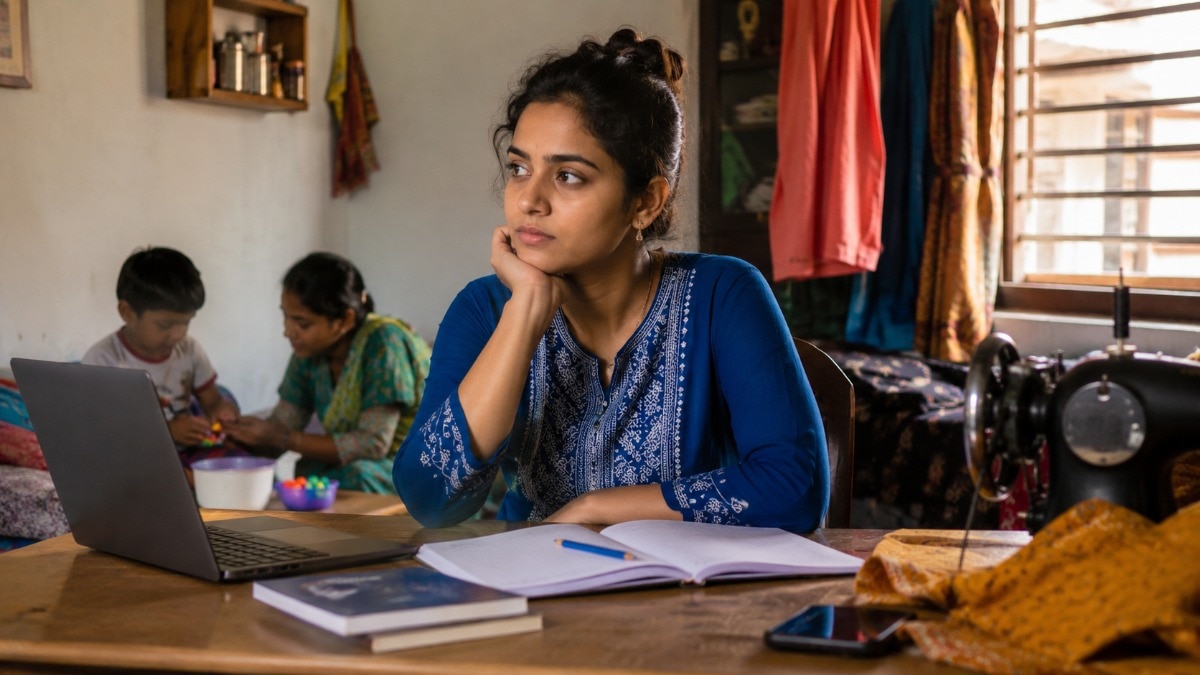
A staggering 8.7 crore Indian youth are currently not in jobs, education, or training. Alarmingly, 88% of this group is occupied with domestic responsibilities.
- 8.7 crore Indian youth are currently outside the formal workforce and education systems.
- A massive 88% of these individuals are engaged in domestic duties.
- The trend poses a significant threat to India's economic growth and demographic dividend.
A critical report has highlighted a significant gap in India's human capital utilization. Approximately 8.7 crore Indian youth are currently categorized as being outside of employment, education, or vocational training. This massive demographic is not participating in the formal economic engine of the country, raising concerns about long-term productivity.
The data further reveals a profound social dimension: 88% of these youth are primarily involved in domestic duties. This suggests that a vast majority of those not in the workforce are not merely 'unemployed' in the traditional sense, but are instead absorbed by unpaid care work and household management, which often limits their ability to pursue formal career paths.
Why This Matters
BozokMedia analysis shows that this phenomenon creates a significant bottleneck for India's economic aspirations. While the country aims to become a global manufacturing and service hub, a large segment of its most energetic workforce is sidelined by domestic obligations, leading to a potential loss in potential GDP.
The massive diversion of youth into unpaid domestic labor represents a significant untapped economic potential that requires structural policy intervention.
Historically, domestic roles in many societies have been undervalued in economic metrics. However, in the context of a modernizing India, the lack of formal training and education for those performing these roles can lead to a permanent skill gap, making reintegration into the professional workforce increasingly difficult.
Addressing this requires a multi-pronged approach, including better childcare infrastructure, flexible learning models, and a societal shift in how domestic labor is perceived and supported. Without these, the 'demographic dividend' risks becoming a demographic burden.
Frequently Asked Questions
1. What is the scale of youth inactivity in India?
About 8.7 crore youth are currently not engaged in jobs, studies, or training.
2. Why are these youth not in the workforce?
The majority (88%) are occupied with domestic responsibilities and household duties.