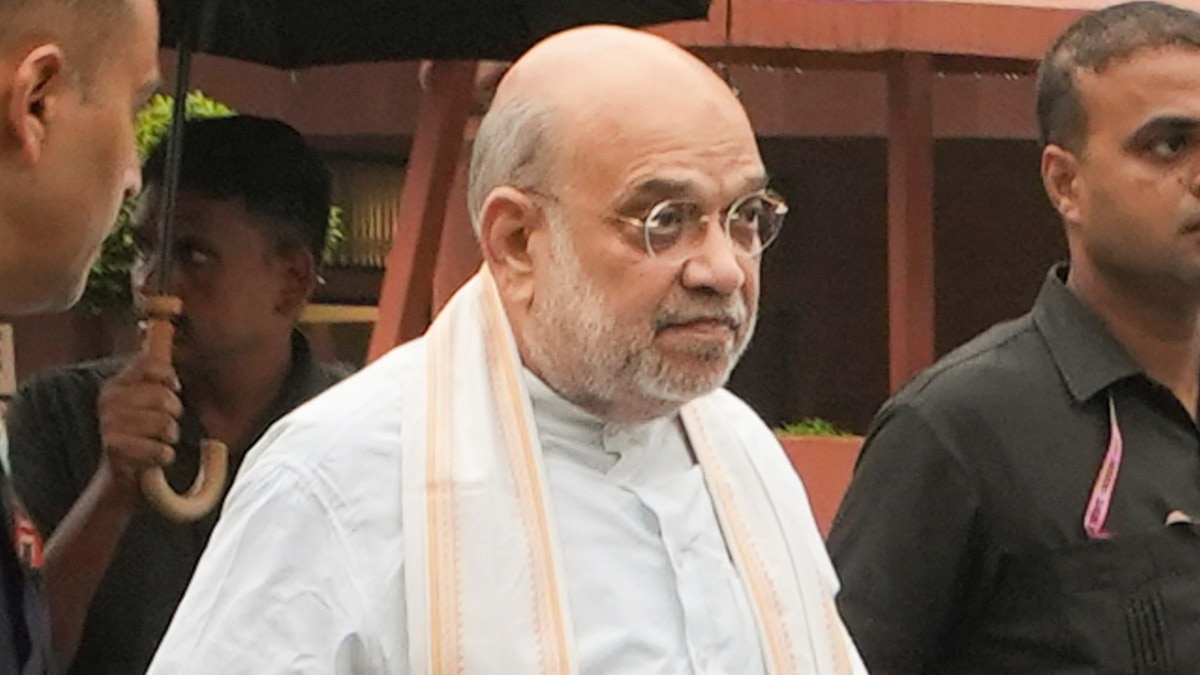
Union Home Minister Amit Shah is on a high-stakes visit to Siliguri to review border security in the critical 'Chicken Neck' corridor. The visit focuses on strengthening the SSB and upgrading infrastructure near the borders of China, Nepal, and Bangladesh.
- Home Minister Amit Shah is visiting Siliguri to inaugurate and lay the foundation stones for key border security projects.
- The focus is on the 'Chicken Neck' (Siliguri Corridor), a 22km wide strategic lifeline for Northeast India.
- A high-level meeting on August 22 will review border management and inter-agency coordination.
- Exhibitions on new criminal laws (BNS, BNSS, BSA) will also be inaugurated.
Union Home Minister Amit Shah has commenced a significant two-day visit to Siliguri, West Bengal. This visit is strategically vital as it centers around the 'Chicken Neck', or the Siliguri Corridor—a narrow strip of land approximately 22 kilometers wide that serves as the sole terrestrial link between mainland India and its eight Northeastern states.
The geography of this corridor makes it one of the most sensitive zones in the world. It is flanked by Bangladesh on one side, and Nepal and Bhutan on the other, while facing the Tibetan region controlled by China to the north. Any disruption in this corridor could potentially isolate the entire Northeast region from the rest of the country.
Why This Matters
BozokMedia analysis shows that the Siliguri Corridor is not just a geographical bottleneck but a critical vulnerability in India's national security architecture. With shifting geopolitical dynamics in South Asia, ensuring the seamless connectivity and impenetrable security of this corridor is a top priority for the Ministry of Home Affairs.
Modern border security has evolved beyond physical presence into a sophisticated layer of drones, sensors, and real-time digital surveillance.
During his visit, the Home Minister will visit the Sashastra Seema Bal (SSB) Frontier Headquarters. He is scheduled to lay the foundation stones for several new security projects aimed at enhancing the operational capabilities of the forces stationed there. The SSB is currently tasked with guarding the 1,751 km India-Nepal border and the 699 km India-Bhutan border.
A pivotal moment of this visit will be the high-level meeting scheduled for August 22. Chaired by Amit Shah, the meeting will include top officials such as Home Secretary Govind Mohan and Intelligence Bureau Director Mahesh Dixit. The agenda includes reviewing the progress of infrastructure projects and improving real-time coordination between various intelligence and security agencies.
Beyond border security, the visit holds legal significance. Shah will inaugurate an exhibition showcasing the three new criminal laws: the Bharatiya Nyaya Sanhita (BNS), Bharatiya Nagarik Suraksha Sanhita (BNSS), and Bharatiya Sakshya Adhiniyam (BSA). These laws, which replaced colonial-era codes on July 1, 2024, are being promoted to educate the public on India's modernized legal framework.
Frequently Asked Questions
1. Why is the Siliguri Corridor called the 'Chicken Neck'?
It is called so because of its narrow shape that connects the large landmass of Northeast India to the rest of the country.
2. Which agencies are involved in the security of this region?
The Sashastra Seema Bal (SSB) plays a primary role in managing the borders with Nepal and Bhutan in this sector.