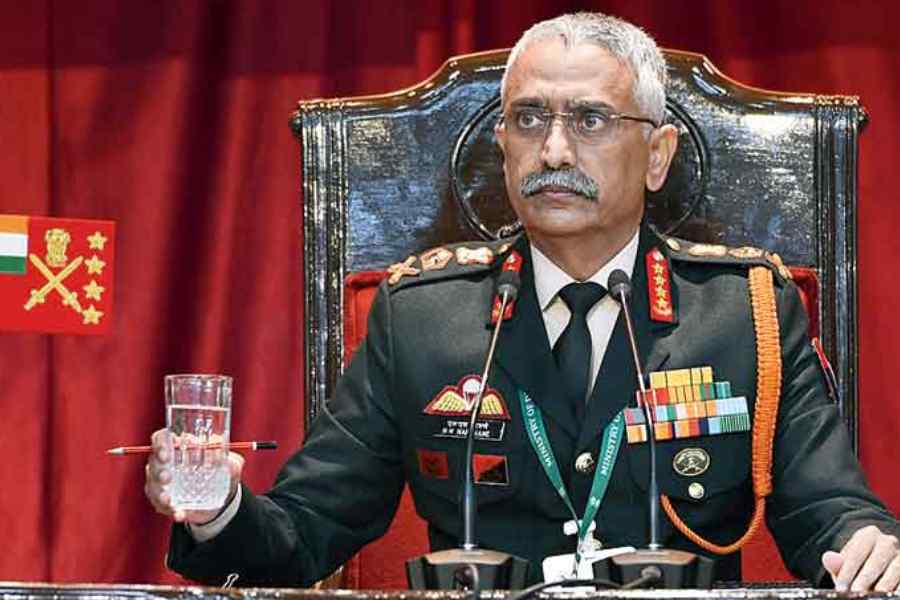
Former Army Chief General Manoj Naravane warns that China will emerge as India's primary long-term competitor across political, economic, and military domains.
- China is identified as India's primary long-term competitor in all sectors.
- Military deterrence is essential to prevent potential misadventures.
- Pakistan remains a continuous threat due to state-sponsored terrorism.
- Regional stability in neighboring countries is vital for India's internal security.
Former Indian Army Chief General Manoj Naravane has underscored that China is poised to become India's principal long-term competitor. This competition, he noted, will not be limited to the battlefield but will extend across political, economic, trade, and military dimensions.
Speaking at the launch of his new book, 'The Curious and the Classified: Unearthing Military Myths and Mysteries', Naravane provided a nuanced view of India's security landscape. He distinguished between the threats posed by Pakistan and China, noting that while both involve unsettled borders and historical conflicts, the nature of the challenge differs significantly.
Comparing Regional Threats
While Pakistan continues to pose an immediate threat through cross-border terrorism, Naravane emphasized that China represents a much broader, multi-domain challenge. He deliberately chose the term "competitor" over "enemy" to describe the complex relationship with Beijing.
| Feature | Pakistan Threat | China Threat |
|---|---|---|
| Primary Domain | Terrorism & Western Border | Political, Economic & Military |
| Nature of Challenge | Immediate/Asymmetric | Long-term/Systemic |
| Border Status | Unsettled | Unsettled |
Why This Matters
BozokMedia analysis shows that Naravane's perspective highlights a shift in India's strategic doctrine. As India grows economically, the friction with China in trade and political influence becomes as critical as the physical presence of troops on the Line of Actual Control (LAC).
If you want peace, prepare for war.
The Importance of a Stable Neighborhood
The former Army Chief also touched upon the critical importance of regional stability. He argued that India cannot choose its neighbors and must work toward the stability of nations like Nepal, Bhutan, Bangladesh, and Myanmar. Instability in these regions often leads to cascading issues for India, including refugee influxes, drug trafficking, and illegal arms smuggling.
Frequently Asked Questions
1. Why does Naravane emphasize military deterrence?
Deterrence is necessary to prevent misadventures by ensuring that any potential aggressor realizes the high cost of conflict.
2. How does instability in neighboring countries affect India?
It leads to security risks such as the movement of narcotics, illegal goods, and uncontrolled refugee flows.