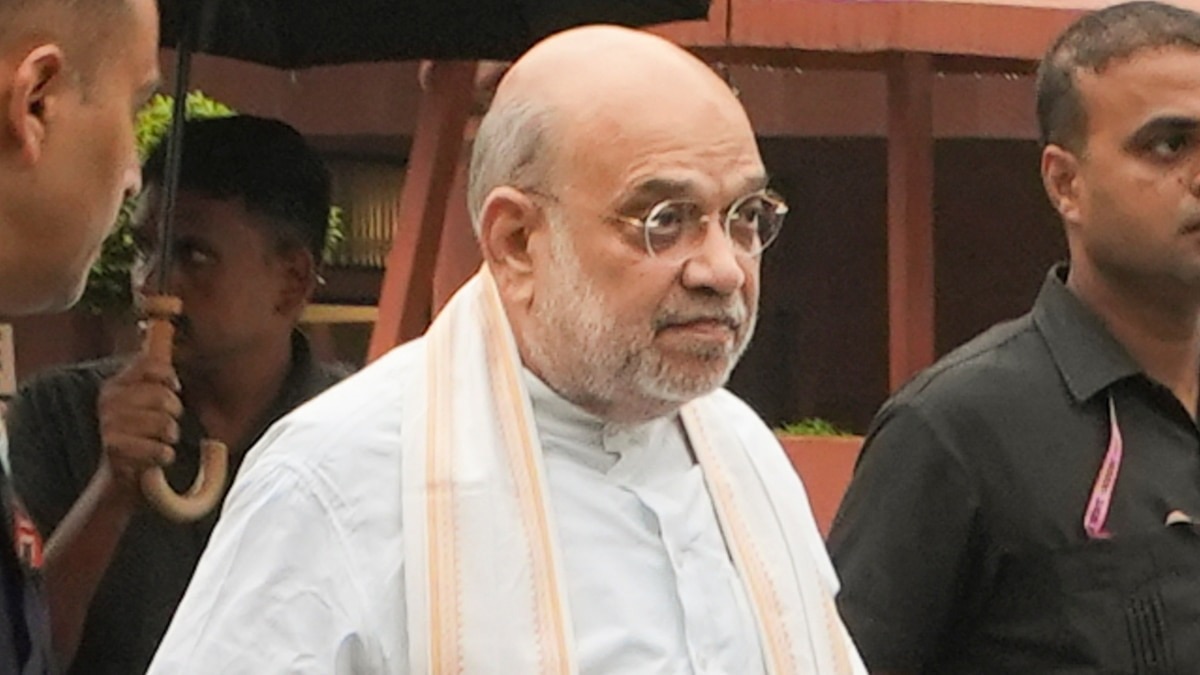
Union Home Minister Amit Shah has arrived in West Bengal's Siliguri for a crucial three-day visit focusing on border security, infrastructure development, and the implementation of India's three new criminal laws. The visit also aims to address the long-standing demands of the Gorkha community for a permanent political solution.
- Union Home Minister Amit Shah begins a three-day strategic visit to Siliguri, West Bengal.
- Focus lies on reviewing border security, inaugurating SSB infrastructure, and promoting the three new criminal laws.
- High-level meetings scheduled with Gorkha representatives to discuss a permanent political solution in the Darjeeling hills.
Union Home Minister Amit Shah is scheduled to attend a series of high-level programs in West Bengal's strategically vital town of Siliguri. The visit, which spans three days, places border security, infrastructure development, and awareness about India's three newly enacted criminal laws at the top of the national agenda.
The strategic importance of Siliguri cannot be overstated. Located in close proximity to the international borders of Nepal, Bhutan, and Bangladesh, the region is home to the Siliguri Corridor, popularly known as the "Chicken's Neck." This narrow strip of land serves as the single crucial link connecting the northeastern states with the rest of India.
Why This Matters
BozokMedia analysis shows that Siliguri's geographical vulnerability makes border coordination not just a regional necessity, but a cornerstone of India's national security architecture. Any security breach in this corridor has the potential to isolate the entire northeastern region, making proactive defense measures and robust infrastructure absolutely imperative.
According to official sources, Shah will visit the Sashastra Seema Bal (SSB) Frontier Headquarters in Siliguri to unveil several key infrastructure projects designed to boost border monitoring. He is also scheduled to participate in a traditional 'Bara Khana' with SSB personnel, a gesture aimed at boosting the morale of the troops stationed at these sensitive borders.
"The security of the Siliguri Corridor is paramount to India's sovereignty, and enhanced coordination among security forces is the only way to deter external threats."
Later, the Union Home Minister will visit an exhibition on the three new criminal laws—the Bharatiya Nyaya Sanhita (BNS), Bharatiya Nagarik Suraksha Sanhita (BNSS), and Bharatiya Sakshya Adhiniyam (BSA)—at the Kawakhali Ground. Titled "Five Pillars: Transformed Justice System," the exhibition will run until August 26 to help familiarize the public and legal professionals with the modernized criminal justice framework.
On the political front, Shah's visit is highly anticipated as he is scheduled to hold talks with public representatives from the Darjeeling hills. The discussions will center on finding a "permanent political solution" to the long-standing issues of the Gorkha and other hill communities. Leaders from the Gorkha Janmukti Morcha (GJM), including Bimal Gurung and Roshan Giri, are expected to participate.
Historical Background and Administrative Comparison
The demand for a separate administrative identity or statehood for the Gorkha community in the Darjeeling hills has spanned several decades. Over the years, different state administrations have implemented various governance models to address these demands. The table below outlines the differences between these administrative setups:
| Feature | Darjeeling Gorkha Hill Council (DGHC) | Gorkhaland Territorial Administration (GTA) |
|---|---|---|
| Year of Establishment | 1988 | 2012 |
| Government in Power | Left Front Government | Trinamool Congress (TMC) |
| Autonomy Level | Limited administrative powers | Enhanced financial and administrative powers |
Frequently Asked Questions
Q1: Why is the Siliguri Corridor strategically vulnerable?
Answer: The corridor is extremely narrow (just 22 km wide at points) and bordered by three foreign nations—Nepal, Bhutan, and Bangladesh—making it highly susceptible to geopolitical tensions and illegal migration.
Q2: What are the three new criminal laws showcased at the exhibition?
Answer: The three new laws are the Bharatiya Nyaya Sanhita (BNS), Bharatiya Nagarik Suraksha Sanhita (BNSS), and Bharatiya Sakshya Adhiniyam (BSA), which replaced the British-era IPC, CrPC, and Indian Evidence Act respectively.