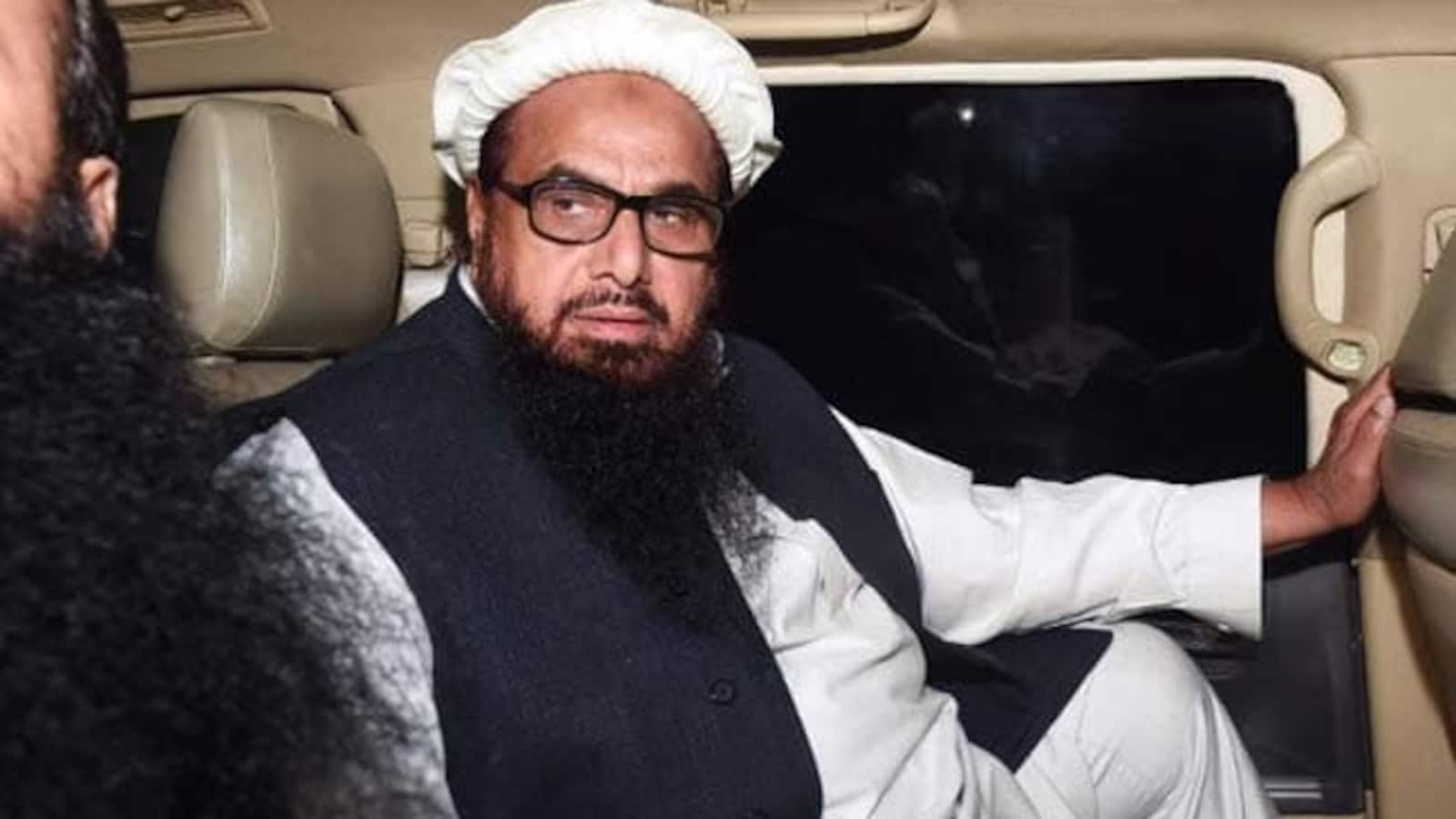
In a significant legal escalation, India plans to serve court summons to Pakistan-based terror leader Hafiz Saeed through diplomatic channels regarding the 2025 Pahalgam terror attack.
- India will serve court summons to Hafiz Saeed via the Ministry of External Affairs to Pakistan's Foreign Ministry.
- The NIA has identified Saeed as a key conspirator in the 2025 Pahalgam terror attack.
- A special NIA court in Jammu has already issued a non-bailable warrant against him.
- This move paves the way for declaring him a 'Proclaimed Offender'.
New Delhi: The Indian government is set to initiate a high-stakes diplomatic move by sending court summons to Pakistan-based terrorist leader Hafiz Saeed through official diplomatic channels. This action pertains to the investigation into the 2025 Pahalgam terror attack, a devastating incident that claimed 27 lives at a prominent tourist destination in Jammu and Kashmir.
According to sources, the summons will be transmitted from the Indian Ministry of External Affairs (MEA) to the Pakistani Foreign Ministry. This procedural step is crucial to establish in legal records that the accused has been afforded sufficient opportunity to appear before the court and present a defense.
Legal Implications and the 'Proclaimed Offender' Status
The National Investigation Agency (NIA) has officially named Hafiz Saeed as an accused in the conspiracy case. Following a non-bailable warrant issued by a special NIA court in Jammu, the process of serving summons is now in motion. If Pakistan fails to comply, India intends to declare Saeed a Proclaimed Offender (PO).
Under Section 356 of the Bharatiya Nagarik Suraksha Sanhita, Indian law permits the investigation, trial, or judgment to proceed in the absence of a proclaimed offender. This provides a legal pathway to conduct trials in absentia.
By utilizing diplomatic channels, India is effectively stripping away the veil of plausible deniability that Pakistan often uses to shield terrorists.
Why This Matters
BozokMedia analysis shows that this move is strategically designed to bypass the lack of an extradition treaty between India and Pakistan. By formally serving summons, India creates a documented trail of legal due process, which is vital for any future international legal actions or sanctions via bodies like the UN.
The NIA has further highlighted Saeed's leadership roles in both Lashkar-e-Taiba (LeT) and the terror outfit known as The Resistance Front (TRF).
Frequently Asked Questions
1. Why is India using diplomatic channels instead of Interpol alone?
While Interpol is used for tracking, serving formal court summons to a state's foreign ministry via diplomatic channels provides a stronger legal foundation for declaring someone a Proclaimed Offender in domestic courts.
2. Can India conduct a trial without the accused being present?
Yes, once an individual is declared a Proclaimed Offender, Indian law allows for trials to proceed in their absence.