A deep dive into the educational crisis in Pimpri-Chinchwad, where overcrowded classrooms, missing teachers, and broken digital tools are hindering student progress.
- Over 1,100 students are squeezed into five different school units within a single three-storey building.
- Critical shortages exist in teaching staff, specifically for Science and Mathematics, along with no lab assistants.
- Digital infrastructure is failing, with 11 out of 13 smart boards being non-functional.
- School land has been diverted to a PCMC-run hospital, exacerbating the space crisis.
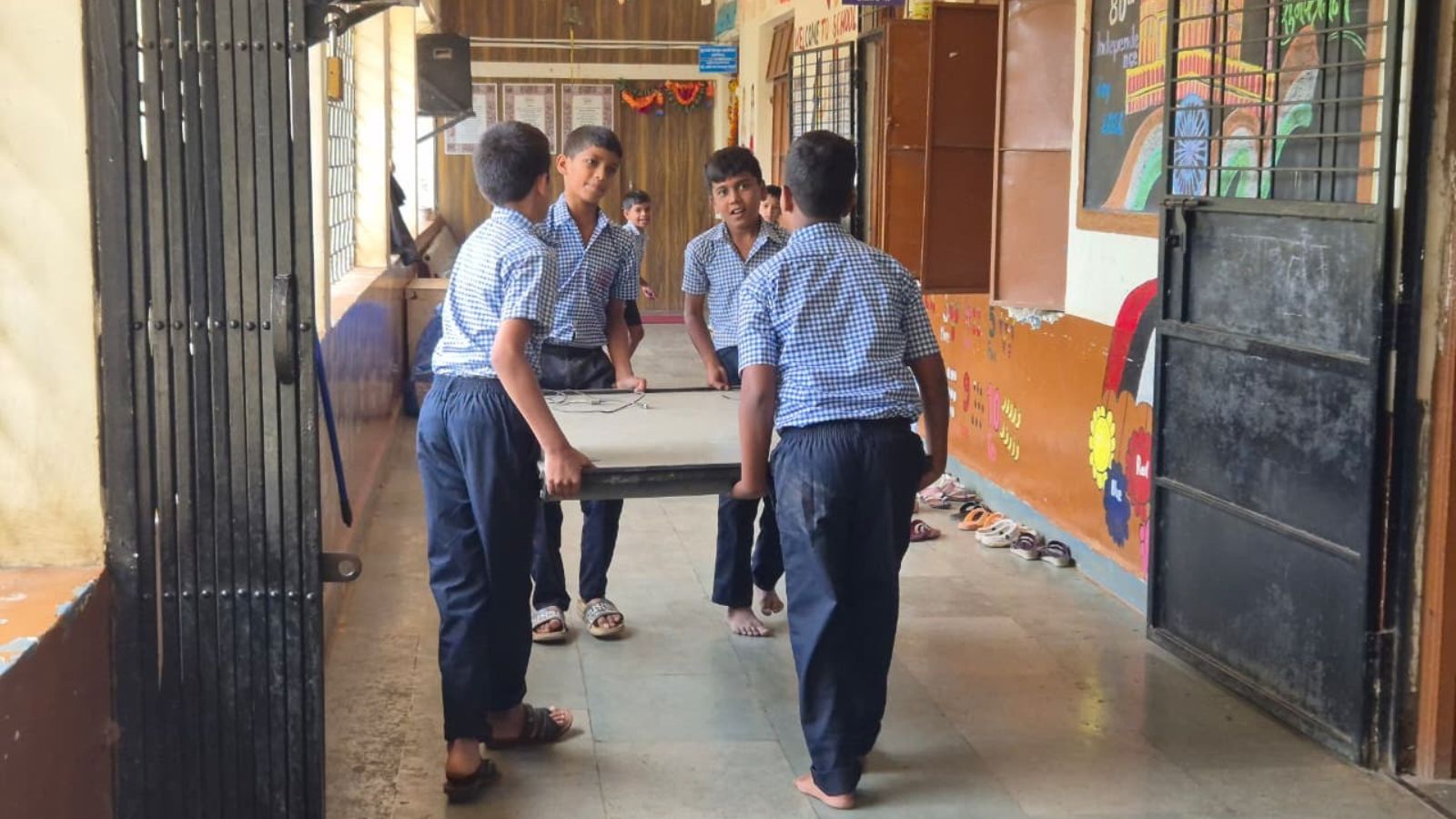
The educational landscape in Pimpri-Chinchwad is facing a severe crisis, as reported from the ground in Nigdi. A single three-storey building is currently struggling to accommodate five different school units, including the Bharat Ratna Maulana Abdul Kalam Azad Urdu School and Thakare Secondary School. With over 1,100 students enrolled across these units, the lack of space, staff, and functional equipment has reached a breaking point.
Teachers at the Thakare Secondary School have raised alarms regarding the acute shortage of personnel. Out of the 380 students, there are only 13 teachers available, and none of them are full-time specialists for Science or Mathematics. Furthermore, the absence of lab assistants for science, computer, and STEM sections means that practical learning is virtually non-existent. Adding to the burden, teachers are frequently diverted to handle clerical duties and RTI-related paperwork, significantly reducing actual teaching time.
Why This Matters
BozokMedia analysis shows that the systemic failure to provide adequate staffing and physical space in urban government schools creates a widening educational gap. When students are denied access to laboratories and specialized teachers, they are effectively being left behind in an increasingly competitive global economy.
'The burden of administrative work and the lack of subject specialists is making it nearly impossible to complete the syllabus on time.'
The digital divide is also starkly visible. Despite the push for digital literacy, 11 of the 13 smart boards installed in these schools have been non-functional since 2022. Teachers allege that maintenance requests are ignored, and inspections are often mere formalities where technicians sign off without performing actual repairs. In the computer labs, the ratio is equally grim: 130 students must share just 13 computers, forcing nearly ten students to crowd around a single machine.
The physical environment of the schools is equally concerning. A significant portion of land originally belonging to the school has been handed over to a PCMC-run hospital, leaving the schools with a severe space crunch. Even cultural halls have been partitioned into makeshift classrooms, leaving no room for extracurricular activities. Furthermore, poor drainage leads to waterlogged playgrounds, and broken play equipment in the pre-school section poses a safety risk to younger children.
| Facility | Current Status | Required Status |
|---|---|---|
| Smart Boards | 11/13 Non-functional | All functional |
| Computer Ratio | 10 students per PC | 1 student per PC |
| Science Staff | Zero full-time specialists | Dedicated subject teachers |
Frequently Asked Questions
1. What is the primary cause of the space shortage in Pimpri schools?
The shortage is caused by multiple school units sharing one building and the diversion of school land to a local hospital.
2. How does the staff shortage affect students?
Students lack specialized instruction in Science and Math and have limited access to practical laboratory learning.

