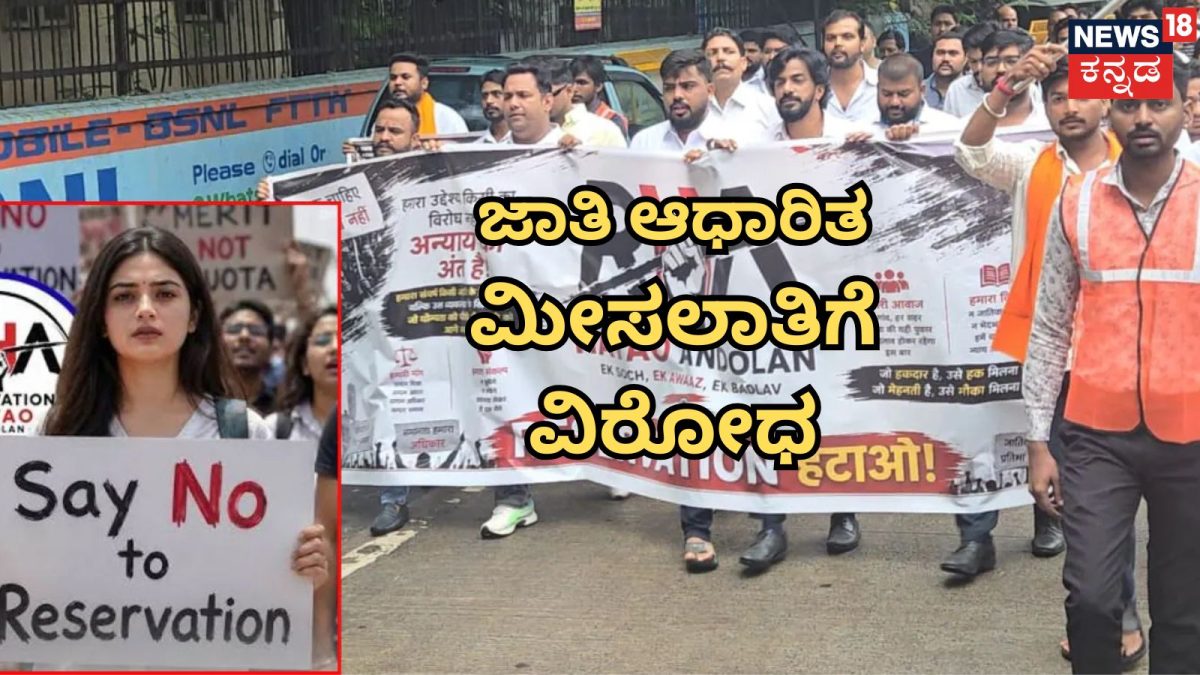
A massive protest erupted at Delhi's Jantar Mantar under the banner of 'Reservation Hatao', demanding an end to caste-based reservations in India. Protesters clashed with security forces, leading to several detentions by the Delhi Police and Rapid Action Force (RAF) as demands grew for shifting to economic-based criteria.
- Massive 'Reservation Hatao' protests held at Jantar Mantar in New Delhi against caste-based reservation systems.
- Protesters demanded a shift from caste-based quotas to economic criteria and strict implementation of the 'creamy layer' rule.
- Delhi Police and Rapid Action Force (RAF) detained several demonstrators to maintain law and order.
Capital city New Delhi witnessed intense demonstrations on Friday as hundreds of protesters gathered at the historic Jantar Mantar under the slogan of "Reservation Hatao" (Remove Reservation). The massive rally was organized to voice strong opposition against the existing caste-based reservation system in India. Demonstrators, comprising students, youth, and various social organizations, demanded a complete overhaul of the current affirmative action policy.
As the crowd swelled and slogans reverberated through the heart of the national capital, tension escalated. The Delhi Police, along with the Rapid Action Force (RAF), had deployed heavy security cordons around the protest site. When demonstrators tried to breach the barricades, security personnel moved swiftly to detain several key leaders and active participants to prevent any breakdown of law and order.
The core demand of the "Reservation Hatao" movement is the replacement of the caste-based quota system with an economic-based criteria. Protesters argued that reservation should benefit the financially underprivileged across all communities, rather than being determined solely by birth or caste identity. Additionally, they demanded immediate reforms, particularly the strict implementation of the "creamy layer" provision to exclude affluent individuals within reserved categories from receiving benefits.
Why This Matters
A detailed BozokMedia analysis shows that the resurgence of anti-reservation protests reflects a growing anxiety among the general category youth regarding shrinking employment opportunities and highly competitive academic admissions. As the Supreme Court of India recently debated the sub-classification of Scheduled Castes and the application of the 'creamy layer' principle, the public discourse has reignited. This protest indicates that the debate is no longer confined to courtrooms but is actively spilling onto the streets, posing a significant political challenge for the administration.
The debate over reservation in India has a long and complex history. Originally envisioned by the makers of the Indian Constitution as a temporary ten-year measure to uplift historically marginalized Scheduled Castes (SCs) and Scheduled Tribes (STs), the system was later expanded. The landmark implementation of the Mandal Commission recommendations in 1990 introduced a 27% quota for Other Backward Classes (OBCs), sparking widespread national protests. Over the decades, the system has become deeply entrenched in India's socio-political fabric.
"The shift in public demand from absolute caste-based quotas to economic-based affirmative action highlights the evolving class dynamics within traditional social structures in modern India."
| Criteria | Current Reservation System | Proposed Reform (Reservation Hatao) |
|---|---|---|
| Primary Basis | Caste and social backwardness (SC/ST/OBC) | Economic status and annual household income |
| Creamy Layer | Applicable mainly to OBCs; debated for SCs/STs | Strictly applied across all categories to exclude the wealthy |
| Objective | Social representation and historical rectification | Poverty alleviation and equal opportunity for needy |
Frequently Asked Questions
1. What is the 'Reservation Hatao' protest about?
The protest at Jantar Mantar is aimed at opposing the current caste-based reservation system in India, demanding instead that affirmative action be based on economic criteria and that the 'creamy layer' rule be strictly implemented.
2. Why did the Delhi Police detain the protesters?
The Delhi Police and Rapid Action Force detained several protesters to maintain law and order and prevent any potential violence as the demonstration at Jantar Mantar grew highly intense.