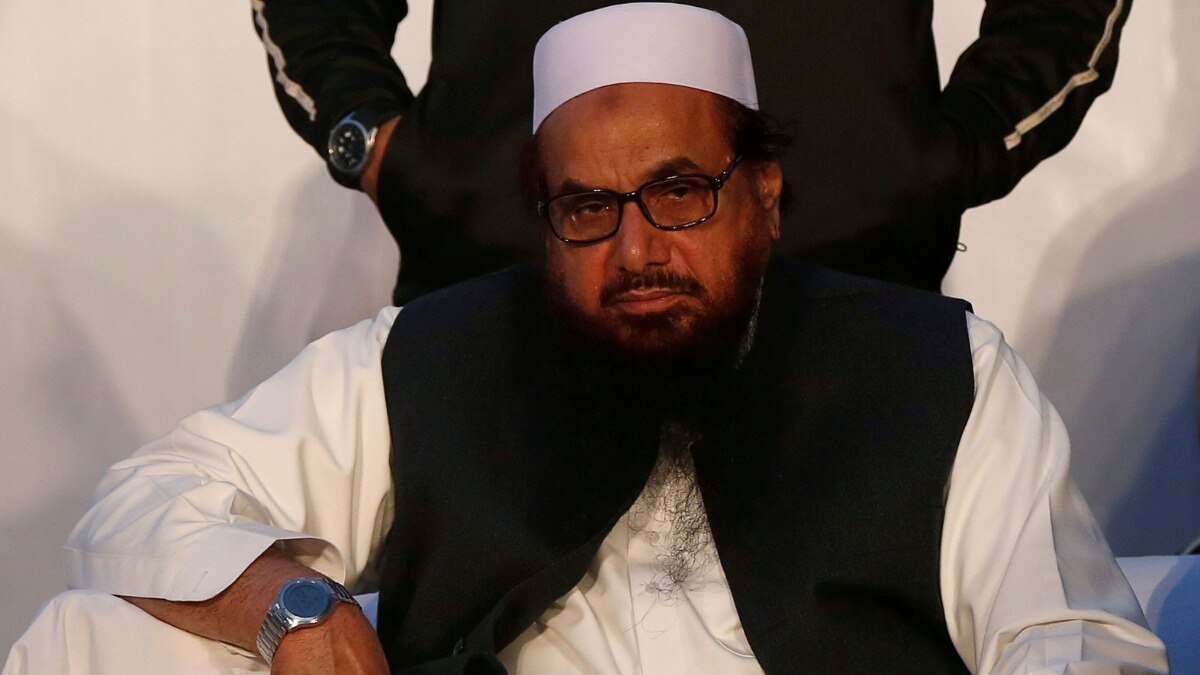
The National Investigation Agency (NIA) is set to send a court summons to Lashkar-e-Taiba chief Hafiz Saeed via the Ministry of External Affairs regarding the Pahalgam terror attack.
- NIA has named Lashkar-e-Taiba founder Hafiz Saeed as an accused in the Pahalgam terror attack.
- Summons will be routed through the Ministry of External Affairs (MEA) to Pakistan.
- The Jammu NIA court has already issued a non-bailable warrant against Saeed.
- Legal proceedings can continue 'in absentia' under Section 356 of the BNSS.
In a major escalation of the investigation into the Pahalgam terror attack, the National Investigation Agency (NIA) is moving to serve a formal court summons to Hafiz Saeed, the founder of the Pakistan-based terror outfit Lashkar-e-Taiba. The summons, which aims to compel his appearance before the NIA court in Jammu, will be officially routed through the Ministry of External Affairs (MEA).
The agency's decision follows a supplementary chargesheet filed in July, in which Saeed was explicitly named as a primary mastermind behind the conspiracy. The chargesheet provides detailed insights into the logistical and strategic planning involved in the attack, linking Saeed directly to the execution of the terror strike.
Legal Framework and In-Absentia Trials
The special NIA court in Jammu has already taken significant steps by issuing a non-bailable warrant against the terror leader. However, given the jurisdictional challenges of apprehending a high-profile individual based in Pakistan, the NIA is relying on the robust provisions of the Bharatiya Nagarik Suraksha Sanhita (BNSS), 2023.
If Saeed fails to comply with the summons, the court is prepared to proceed under Section 356 of the BNSS. This specific provision allows the judiciary to conduct inquiries, trials, and deliver judgments even in the absence of a 'proclaimed offender' who has absconded to evade the law and has no immediate prospect of arrest.
Why This Matters
BozokMedia analysis shows that this move signifies India's evolving legal strategy to combat cross-border terrorism. By utilizing the MEA and domestic laws like the BNSS, India is building a foolproof legal dossier that can withstand international scrutiny and put pressure on the host nation of such terrorists.
The use of in-absentia trial provisions marks a decisive shift in how India intends to prosecute global terror masterminds who operate from safe havens.
Historically, the struggle against terror organizations like Lashkar-e-Taiba has been hampered by the lack of physical custody of their leaders. This legal maneuver seeks to bypass that physical barrier, ensuring that justice is not indefinitely delayed by the perpetrator's flight from the law.
Frequently Asked Questions
1. How will the summons reach Hafiz Saeed in Pakistan?
The summons will be sent through official diplomatic channels via the Indian Ministry of External Affairs.
2. Can a trial happen if the accused is not present?
Yes, under Section 356 of the BNSS, the court can conduct a trial 'in absentia' if the accused is a proclaimed offender who has absconded.