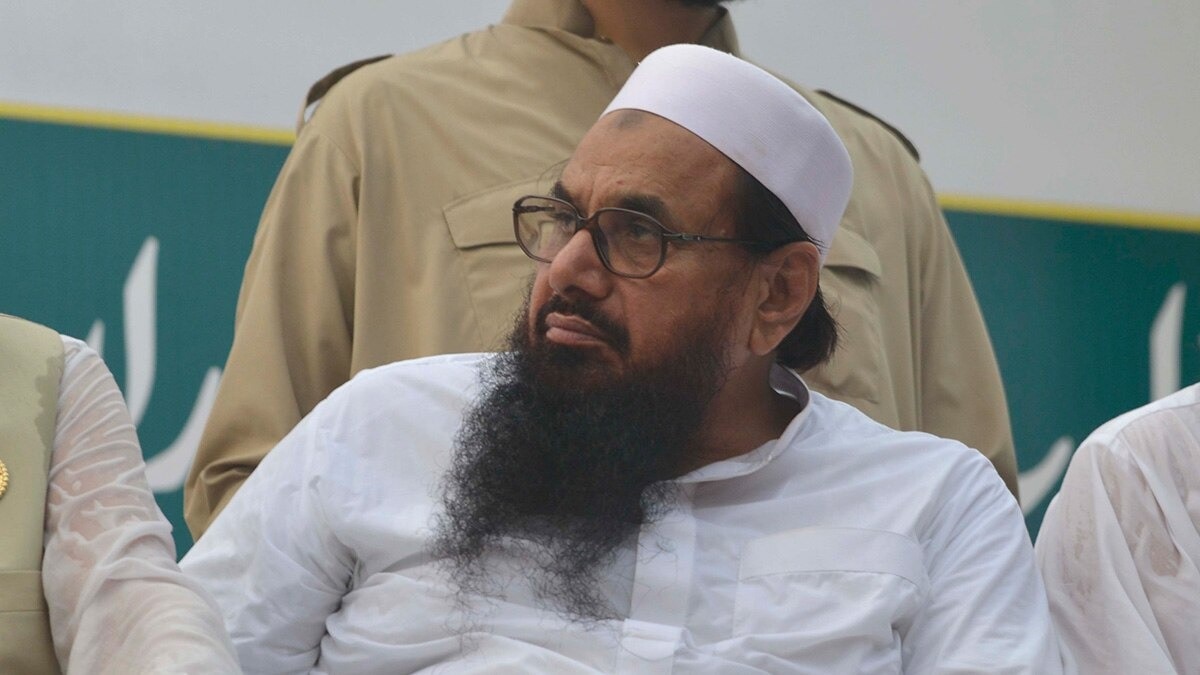
The Ministry of External Affairs will serve a court summons to Lashkar-e-Taiba chief Hafiz Saeed regarding the Pahalgam terror attack. NIA is prepared to begin trial in absentia.
- Lashkar-e-Taiba chief Hafiz Saeed is being summoned for the Pahalgam terror attack.
- India's Ministry of External Affairs (MEA) will facilitate the summons to Pakistan.
- Trial in absentia may proceed under Section 365 of BNSS-2023.
- The attack occurred on April 22, 2025, targeting tourists in Pahalgam.
In a significant legal escalation, the National Investigation Agency (NIA) has moved to summon the notorious Lashkar-e-Taiba chief, Hafiz Saeed, in connection with the Pahalgam terror attack. The NIA court in Jammu has directed that the summons be sent to Saeed, currently stationed in Pakistan, through India's Ministry of External Affairs (MEA).
The NIA has already filed a supplementary charge sheet naming Saeed as a key accused in the conspiracy. With non-bailable warrants already outstanding against him, the legal machinery is now set to move forward regardless of his presence in the courtroom.
Legal Framework: Trial in Absentia
Under the newly implemented BNSS-2023, specifically Section 365, the court has the authority to commence a 'Trial in Absentia'. This means that if the accused fails to appear despite the summons, the judicial proceedings will continue without him, ensuring that justice is not delayed by the fugitive's evasion of the law.
The use of Trial in Absentia marks a paradigm shift in India's ability to prosecute transnational terrorists.
Historical Context: The Pahalgam Tragedy
The case stems from the brutal terror attack on April 22, 2025, in the Baisaran Valley of Pahalgam, Jammu & Kashmir. Terrorists targeted unsuspecting tourists, an act that sent shockwaves through the nation and heightened regional tensions between India and Pakistan.
Why This Matters
BozokMedia analysis shows that this move is part of a broader strategic push by New Delhi to hold Pakistan accountable for cross-border terrorism. The legal pressure on Saeed coincides with India's recent decision to place the Indus Waters Treaty in abeyance, signaling that the era of separating terror from diplomacy is officially over.
Frequently Asked Questions
Question 1: How will the summons reach Hafiz Saeed in Pakistan?
Answer: The summons will be officially dispatched through the Indian Ministry of External Affairs.
Question 2: What happens if Saeed refuses to appear?
Answer: The court will initiate a trial in absentia under Section 365 of BNSS-2023.